Stress Corrosion Cracking Testing of Aluminium Alloys: What ASTM G47 and G44 Mean for Aerospace Manufacturers in India
NABL-accredited ASTM G47 and G44 stress corrosion cracking testing for aerospace aluminium alloys at TCR Engineering, Navi Mumbai.

Group
Industries
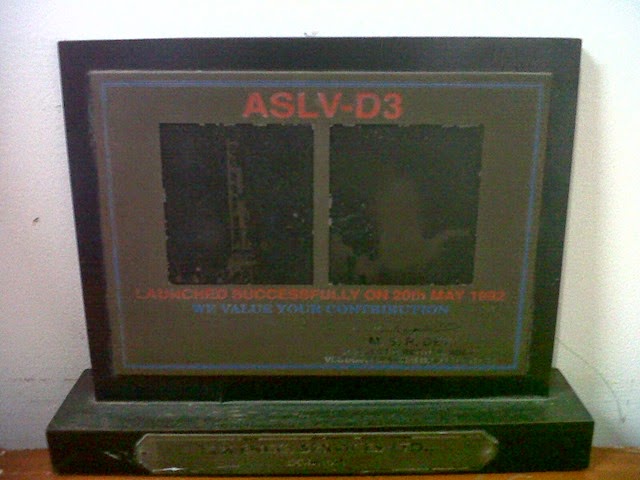
From Project ASLV, which earned ISRO's written appreciation, to the Chandrayaan-3 rocket-motor casing hardware, this bench has carried India's flight-critical materials work, alongside a long-term naval materials contract with DRDO's NMRL.
Request a QuoteNADCAP AC7101 and NABL ISO 17025 accredited signature and a fifty-three-year operating record undertaking indepeth materials testing and failure analysis on SAE Aerospace Material Specifications (AMS) series; SAE AMS 2750 Pyrometry (heat-treatment process specification); and SAE AMS-H-6875 (heat treatment of steel raw material)
| TCR serves ISRO, DRDO, NPCIL, HAL, MIDHANI and Bharat Forge, and holds NADCAP AC7101 Materials Testing accreditation. |
|---|
| POTENTIAL FAILURES WE SERVICE: Cracking, fastener failures and process escapes in 7xxx and 2xxx aluminium, titanium and nickel-base flight hardware, forgings and rocket-motor casings. TCR investigates stress corrosion cracking, hydrogen embrittlement, low- and high-cycle fatigue, fracture-toughness shortfalls, inclusion and grain-size non-conformities, and verifies heat-treatment on NADCAP-route samples. |
| MARQUEE PROJECT: Rocket-motor casing hardware tested for the Chandrayaan-3 India’s moon mission landing programme through Larsen and Toubro Defence for VSSC-ISRO, with no non-conformity observed. |
|---|
Indian aerospace has moved from promise to order book. HAL closed FY26 with orders of about Rs 2.54 lakh crore against annual revenue near Rs 33,000 crore, repair and overhaul alone contributed over Rs 20,000 crore of that revenue, and the FY26 defence budget of Rs 6.81 lakh crore earmarked more than Rs 1.1 lakh crore for domestic procurement.
Every airframe, engine, and overhaul cycle in that pipeline pulls a supply chain behind it, and every supplier in that chain must prove material conformance through accredited testing. TCR serves the ecosystem with NABL ISO/IEC 17025 accredited mechanical, chemical, metallurgical, and fatigue testing, aerospace SCC programmes, and NADCAP AC7101 materials testing accreditation.
The Indian aerospace and defence vertical sits at a structural inflection point. The Vande Bharat Mission for indigenisation of defence equipment, the Atmanirbhar Bharat framework on defence-vendor sourcing, the Indian Space Research Organisation's mature programme cadence (Chandrayaan-3 moon-mission success, Aditya-L1 solar mission, Gaganyaan crewed-flight programme, the LVM3 launch vehicle and the Reusable Launch Vehicle development), the Defence Acquisition Procedure 2020 with its emphasis on Indian-IDDM (Indigenously Designed, Developed and Manufactured) categorisation, and the export-oriented thrust under the Strategic Partnership model collectively expand the aerospace verification-testing surface area.
TCR's ISRO relationship runs back to Project ASLV, the Augmented Satellite Launch Vehicle programme, where the bench carried materials testing and earned ISRO's written appreciation. Set beside the Chandrayaan-3 rocket-motor casing work, the two engagements place TCR on both India's early launch-vehicle development and its lunar-mission hardware.
The buyer pool spans defence public-sector undertakings (HAL, BEL, BEML, BDL, MIDHANI, Bharat Forge), the Defence Research and Development Organisation (DRDO) and its laboratories (DMRL, DMSRDE, R&DE, NMRL the long-term contract), ISRO and its centres (VSSC, LPSC, SHAR, SAC), the Atomic Energy framework (NPCIL, BARC), private aerospace component manufacturers (Bharat Forge Aerospace, Tata Advanced Systems, Mahindra Aerostructures, Dynamatic Technologies), and the captive aerospace manufacturing programmes at HAL Bangalore, Nashik, and Koraput.
Hydrogen-fuelled aviation (cross-vertical with Refining and Fertilisers; expanded API 941 HTHA discipline and ASTM F519 / F1624 / API 20E hydrogen embrittlement bench) brings new material qualification scope. Sustainable Aviation Fuel (SAF) production at Indian refineries brings cross-vertical capex (Refining vertical, refinery efficiency block). Electric Vertical Take-Off and Landing (eVTOL) and the urban-air-mobility frame bring battery-cell mica thermal-insulation testing (cross-vertical with Automotive). Lightweight composite-aerostructure adoption brings ASTM D3039, D6641, D3479, D3518 testing scope. Rocket reusability programmes (ISRO Reusable Launch Vehicle, the LVM3 evolution) bring fatigue, CTOD, and re-qualification scope on heritage hardware.
| Cluster | Equipment / Material |
|---|---|
| Aerospace structural alloys | 7xxx series aluminium (7050, 7075, 7150, 7475 wrought and forged); 2xxx series aluminium (2024, 2090, 2099, 2219); titanium alloys (Ti-6Al-4V, Ti-6Al-2Sn-4Zr-2Mo, Ti-15-3, Ti-10-2-3); nickel-base superalloys (Inconel 718, 625, Waspaloy, Rene 95); maraging steel; PH stainless (15-5 PH, 17-4 PH, A286); high-strength low-alloy steel (300M, 4340, 4330V) |
| Aerospace fasteners | NAS series, MS series, AN series; titanium fasteners; high-strength bolts under MIL-DTL-spec |
| Defence component | Forged shafts, gears, transmission housings, armour-grade rolled homogeneous armour (RHA) plate, naval-grade HSLA |
| Rocket motor and launch | Solid-rocket-motor casing hardware (the Chandrayaan-3 anchor), nozzle, igniter, propellant-grain interface, payload fairing structure |
| Satellite | Aluminium honeycomb panel, CFRP composite, optical-bench substrate (Invar 36) |
| Aero engine | Turbine disc, turbine blade, combustor liner, bearing component (cross-vertical with the Pillar 1 fatigue and fracture-toughness bench) |
| Naval | Submarine pressure-hull plate (HY-80, HY-100), surface-vessel hull plate (E36, EH36), naval-grade fastener |
| Aircraft component | Landing-gear forging, wing-spar forging, fuselage frame |
| Heat-treatment verification | Hardness, microstructure, grain size, case depth, retained austenite, mechanical properties on samples submitted by NADCAP-accredited heat treaters |
| Category | Mechanisms |
|---|---|
| Aerospace SCC | Stress corrosion cracking on 7xxx and 2xxx aluminium per ASTM G47 (alternate immersion) and ASTM G44 (cyclic immersion); chloride-induced SCC on stainless |
| Hydrogen embrittlement | Internal hydrogen embrittlement on plated and coated fasteners (ASTM F519, ASTM F1624 incremental step-load, API 20E); environmental hydrogen embrittlement |
| Fatigue | Low-cycle fatigue per ASTM E606; high-cycle fatigue per ASTM E466; fatigue crack growth rate per ASTM E647; turbine-disc burst margin |
| Fracture toughness | K1c per ASTM E399; J1c per ASTM E1820; CTOD per BS 7448 |
| Creep and thermal | Creep on turbine-disc and combustor liner alloys; thermal-mechanical fatigue |
| Microstructural | Inclusion rating per ASTM E45, grain size per ASTM E112, retained austenite per ASTM E975, decarburisation depth per ASTM E1077 |
| Corrosion | Pitting (ASTM G48), intergranular (ASTM A262 for stainless), galvanic (ASTM G71), salt-spray (ASTM B117), exfoliation per ASTM G34 (aluminium) |
| Heat-treatment verification | Hardness traverse, case-depth profiling per SAE J423, retained austenite, microstructure characterisation per AMS 2750, AMS-H-6875 |
NADCAP / Aerospace Materials: SAE Aerospace Material Specifications (AMS) series; SAE AMS 2750 Pyrometry (heat-treatment process specification); SAE AMS-H-6875 (heat treatment of steel raw material); SAE J423 (case-depth methods); MIL-DTL-spec series (US military fastener and material specifications); ASTM E18, E10, E92, E384 (hardness); ASTM E112 (grain size); ASTM E407 (etching); ASTM E45 (inclusion rating); ASTM E1077 (decarburisation depth).
Aerospace SCC: ASTM G47 (alternate immersion stress corrosion cracking); ASTM G44 (alternate immersion procedure); ASTM G34 (exfoliation corrosion of 7xxx and 2xxx aluminium).
Hydrogen Embrittlement: ASTM F519 (mechanical hydrogen embrittlement, plated and coated fasteners); ASTM F1624 (incremental step-load); API 20E (alloy and carbon steel bolting for use in the petroleum and natural gas industries; also applicable to defence-vendor frameworks).
Aerospace Prime Specifications: Boeing BAC, Airbus AIPS, Pratt & Whitney PWA, GE EM&S, Rolls-Royce RPS (where relevant under heat-treatment verification scope).
Fatigue and Fracture: ASTM E466, E606, E647, E399, E1820, E1290, E561; BS 7448; ISO 12108; API 5L3.
Composite: ASTM D3039 (tensile properties of composite materials); ASTM D6641 (compressive properties of composites); ASTM D3479 (tension-tension fatigue of composites); ASTM D3518 (in-plane shear of composites).
Defence-Specific: Indian defence specifications (JSS, Naval, Air Force material specifications); CEMILAC framework (Centre for Military Airworthiness and Certification); CQAE empanelment for defence-vendor evaluation.
Aerospace does not run shutdowns; it runs qualification gates. The five-stage Continuum therefore adapts to the component lifecycle: material qualification, process verification, production surveillance, maintenance-repair-overhaul inspection, and failure analysis with life assessment.
The recurring problems are raw material pedigree in a supply chain where a mis-certified bar can ground a programme, heat treatment verification for aerospace heat treaters, hydrogen embrittlement and stress corrosion cracking of high-strength fasteners and landing gear steels, and fatigue as the governing failure mode of nearly everything that flies. TCR Advanced Engineering and TCR Engineering both own NADCAP AC7101 accreditation; together the group serves the aerospace, space, and defence ecosystem across this adapted lifecycle.
Stage One, Material Qualification (Sourcing and Procurement): Raw material entering aerospace production is verified against AMS, ASTM, and programme specifications: tensile testing per ASTM E8/E8M including elevated temperature per ASTM E21, hardness, chemical analysis by optical emission spectrometry and X-ray fluorescence, microstructure and grain size per ASTM E112, inclusion rating per ASTM E45, and fastener testing, with vendor audits and sample picking on bar, plate, forging, and casting supply.
Stage Two, Process Verification (Construction Equivalent): Manufacturing processes are qualified rather than constructed: heat treatment verification testing for aerospace heat treaters, the core of the NADCAP AC7101 verification scope, weld and braze procedure qualification, case depth and decarburisation measurement, residual stress determination by X-ray diffraction, and coating and plating evaluation including hydrogen embrittlement relief verification.
Stage Three, Production Surveillance (In-Service Equivalent): Through the production run, TCR provides batch and lot conformance testing, periodic requalification of processes, stress corrosion cracking testing of aerospace alloys (see Corrosion & Sour Service), and third-party witness of acceptance testing, giving primes and their suppliers an independent laboratory signature on continuing conformance.
Stage Four, Maintenance, Repair, and Overhaul (Shutdown Equivalent): For operators and maintenance-repair-overhaul shops, TCR supports component inspection during overhaul: non-destructive testing by penetrant, magnetic particle, ultrasonic, and radiographic methods, metallurgical evaluation of service-exposed parts, and hardness and conductivity verification after repair heat treatment.
Stage Five, Failure Analysis and Life Assessment (Continuum): When a component fails or a life extension is contemplated, TCR delivers failure analysis with scanning electron microscopy fractography, fatigue and fracture toughness testing per ASTM E466, ASTM E606, ASTM E399, and ASTM E1820 including sub-zero temperature programmes for defence and naval aviation work, and the materials research that supports indigenisation of aerospace components under Indian defence procurement preference.
ISRO and Space: ISRO (Indian Space Research Organisation) headline appreciation for Project ASLV; VSSC (Vikram Sarabhai Space Centre) for the Chandrayaan-3 rocket motor casing hardware engagement (delivered through the Larsen and Toubro Defence IC); LPSC (Liquid Propulsion Systems Centre); SHAR (Satish Dhawan Space Centre); SAC (Space Applications Centre).
DRDO and Atomic Energy: Defence Research and Development Organisation (DRDO) across multiple laboratories; DMRL (Defence Metallurgical Research Laboratory); DMSRDE; R&DE; NMRL (Naval Materials Research Laboratory; long-term contract); NPCIL (Nuclear Power Corporation of India Limited) for elevated-temperature tensile and pressure-boundary qualification; BARC (Bhabha Atomic Research Centre); Heavy Water Projects.
Defence Public-Sector Undertakings: HAL (Hindustan Aeronautics Limited; Bangalore, Nashik, Koraput, Lucknow); BEL (Bharat Electronics Limited); BEML; BDL (Bharat Dynamics Limited); MIDHANI (Mishra Dhatu Nigam Limited); Bharat Forge (defence forging division); Tata Advanced Systems Limited; Mahindra Aerostructures; Dynamatic Technologies; Walchandnagar Industries.
Defence-Adjacent EPC and OEM: Larsen and Toubro Defence IC (the VSSC-ISRO Chandrayaan-3 anchor); Tata Advanced Systems Limited; Reliance Aerostructure; Naval shipyards (Mazagon Dock, Garden Reach, Goa Shipyard, Cochin Shipyard, Hindustan Shipyard; cross-vertical with Marine and Offshore).
Private Aerospace Suppliers: SQuAD Forging (the aerospace SCC ASTM G47/G44 anchor); Bharat Forge Aerospace; Anand Group; Sansera Engineering; Arjas Steel.
Empanelment: CQAE (Centre for Quality Assurance for Electronics; defence vendor framework); CEMILAC framework reach where applicable.
The aerospace and defence base centres on precision-component and forging suppliers to the space and defence programmes: MTAR Technologies, the Vikram Sarabhai Space Centre, Sri Venkateswara Aerospace, Gemsons Precision Engineering, Shalco Industries, Bhukhanvala Industries, SE Forge, Walchandnagar Industries, and Bharat Aerospace Metals. The work runs to mechanical and metallurgical testing, fracture and fatigue testing, and qualification of flight- and mission-critical materials, and is the home of the NADCAP AC7101 Materials Testing programme.
| Project | Service Anchor | Year |
|---|---|---|
| Larsen and Toubro Defence IC for VSSC-ISRO | Rocket Motor Casing Hardware testing for the Chandrayaan-3 moon mission | 2023 |
| ISRO Project ASLV | Materials testing appreciation | Multiple |
| DRDO/NMRL | Long-term contract for naval materials testing | Continuous |
| NPCIL | Elevated-temperature tensile (300/500/800 °C protocol; cert dated 6 December 2013, returned in service 2025-26) | 2013 to 2026 |
| SQuAD Forging | Aerospace SCC ASTM G47/G44 on 7xxx and 2xxx aluminium | 2025 to 2026 |
| HAL Bangalore, Nashik, Koraput, Lucknow | Materials testing, NDT, source inspection | Continuous |
| MIDHANI Hyderabad | Special-alloy materials testing and certification | Continuous |
| Bharat Forge (defence and aerospace forging) | Forging-grade material testing, hardness verification, microstructural evaluation | Continuous |
| Tata Advanced Systems Limited | Aerospace component materials testing | Continuous |
4 published insights on this site carry the Aerospace tag. The 4 most recent are below.
NABL-accredited ASTM G47 and G44 stress corrosion cracking testing for aerospace aluminium alloys at TCR Engineering, Navi Mumbai.
Expert weld & braze inspections across India, with ASME IX-certified methods for defence & industrial components. Trusted by top sectors.
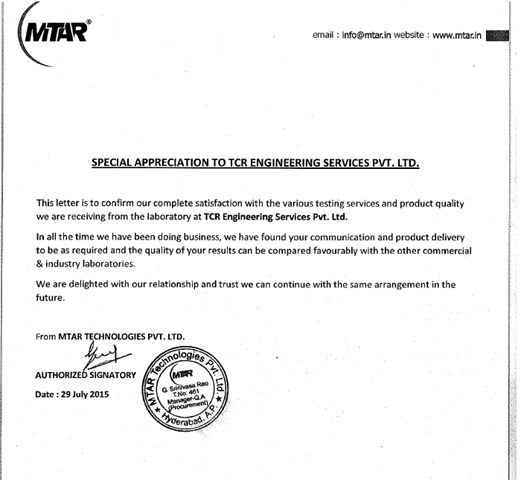
TCR Engineering undertakes material testing at its lab in Mumbai for MTAR
TCR contribution and award from ISRO for ASLV-D3 Rocket launched into space by India.
Yes. TCR Engineering holds NADCAP AC7101 Materials Testing accreditation, awarded in 2026 under PRI certificate 29415245997 and valid to 31 May 2027. Within the group, TCR Advanced Engineering also holds NADCAP AC7101. TCR is the verification-testing partner for aerospace heat treaters and suppliers, not the heat treater.
Yes. The rocket-motor casing hardware for the Chandrayaan-3 moon mission was tested through Larsen and Toubro Defence for VSSC-ISRO in 2023, with no non-conformity observed. The ISRO relationship runs back to Project ASLV, where TCR carried materials testing and earned ISRO's written appreciation.
Stress corrosion cracking on 7xxx and 2xxx aluminium runs per ASTM G47 alternate immersion and ASTM G44, with exfoliation corrosion per ASTM G34. Hydrogen embrittlement of plated and coated fasteners is tested per ASTM F519, ASTM F1624 incremental step-load and API 20E.
Yes. The bench covers low-cycle fatigue per ASTM E606, high-cycle fatigue per ASTM E466, fatigue crack growth rate per ASTM E647, K1c per ASTM E399, J1c per ASTM E1820 and CTOD per BS 7448, including sub-zero temperature programmes for defence and naval aviation work.
Yes. Heat-treatment verification on samples from NADCAP-accredited heat treaters is core AC7101 scope: hardness traverse, microstructure, grain size per ASTM E112, case depth per SAE J423, retained austenite per ASTM E975 and decarburisation depth per ASTM E1077, characterised against AMS 2750 and AMS-H-6875.