Boiler Tube Failure Analysis
Boiler tube failure analysis reveals the metallurgical evidence behind costly power plant outages and provides proven solutions to prevent recurrence.

Group
Services · Asset Integrity and Engineering Consulting
Two independent routes to a boiler life number: a calculation-based approach reading temperature and cycling data against creep and fatigue, and a design-based approach reading stress. In-situ metallography, ultrasonics, magnetic particle, and ferrite measurement supply the field evidence.
TCR Engineering Services Pvt. Ltd., an IBR approved and NABL ISO/IEC 17025:2017 accredited laboratory in Navi Mumbai, conducts boiler audits and remaining life assessments for utility and captive power plants across India. The scope spans Level II and Level III assessments, internal oxide scale measurement, Omega and accelerated creep rupture testing, and EMAT thickness surveys.
At TCR, we adopt two proven methodologies to determine boiler life:
TCR’s Expertise in Remaining Life Assessment includes:
Comprehensive Boiler Life Assessment:
By partnering with TCR Engineering, plant owners can make informed decisions on maintenance, repair, and equipment upgrades, minimising risks and maximising operational efficiency. Our proven expertise in boiler RLA ensures that your critical assets are evaluated and maintained with the highest standards of safety and performance.
TCR Engineering, ensuring your boilers operate safely, efficiently, and reliably for years to come.
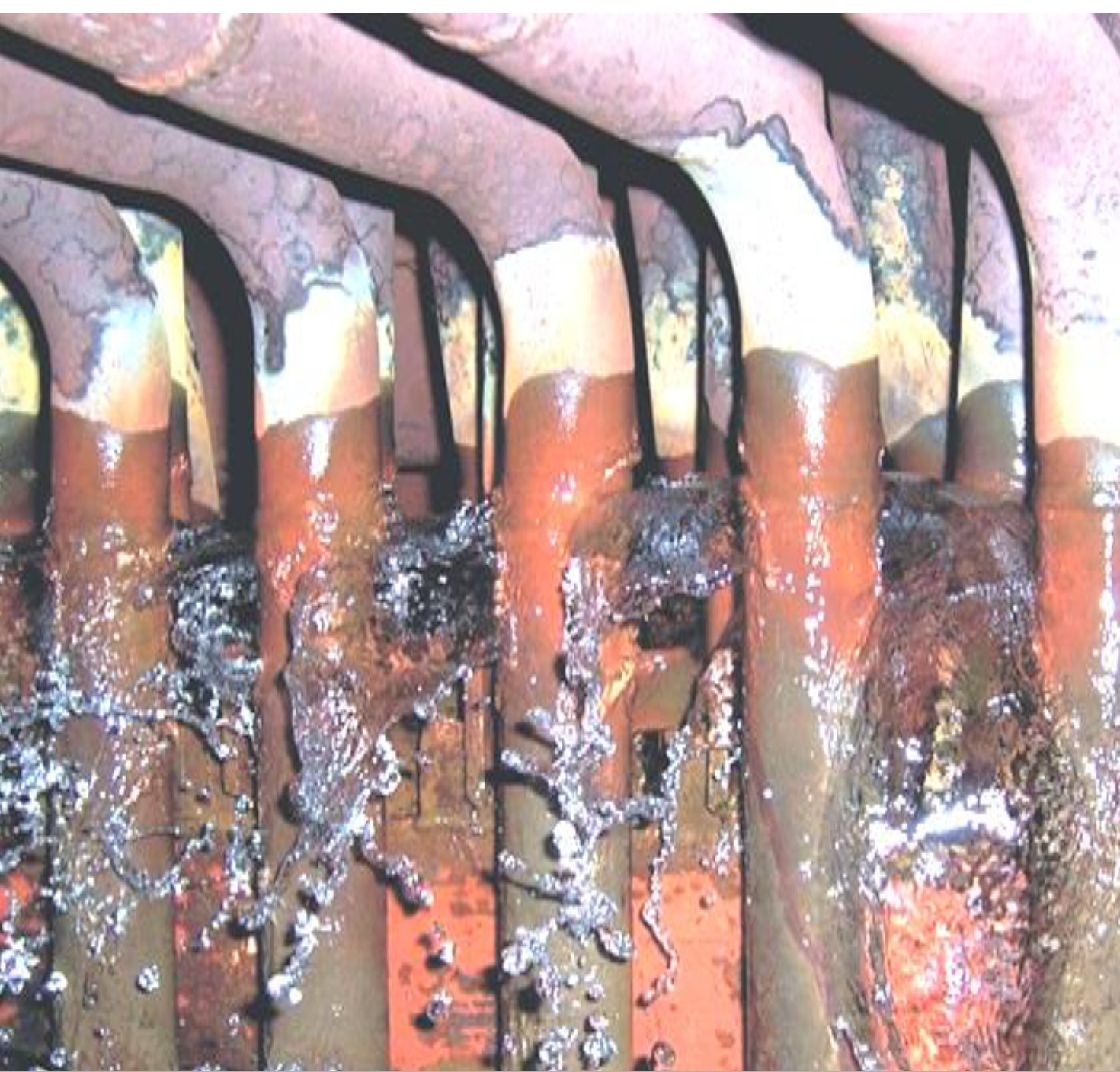
TCR Engineering's dedicated team serves customers in the power industry by conducting comprehensive Remaining Life Assessments (RLA) for critical boiler components. Our expertise covers a wide range of issues, including but not limited to boiler tube leaks (BTL), metallurgical degradation, creep damage, erosion, pitting, general corrosion, high-temperature hydrogen attack, and fatigue-related damage mechanisms.
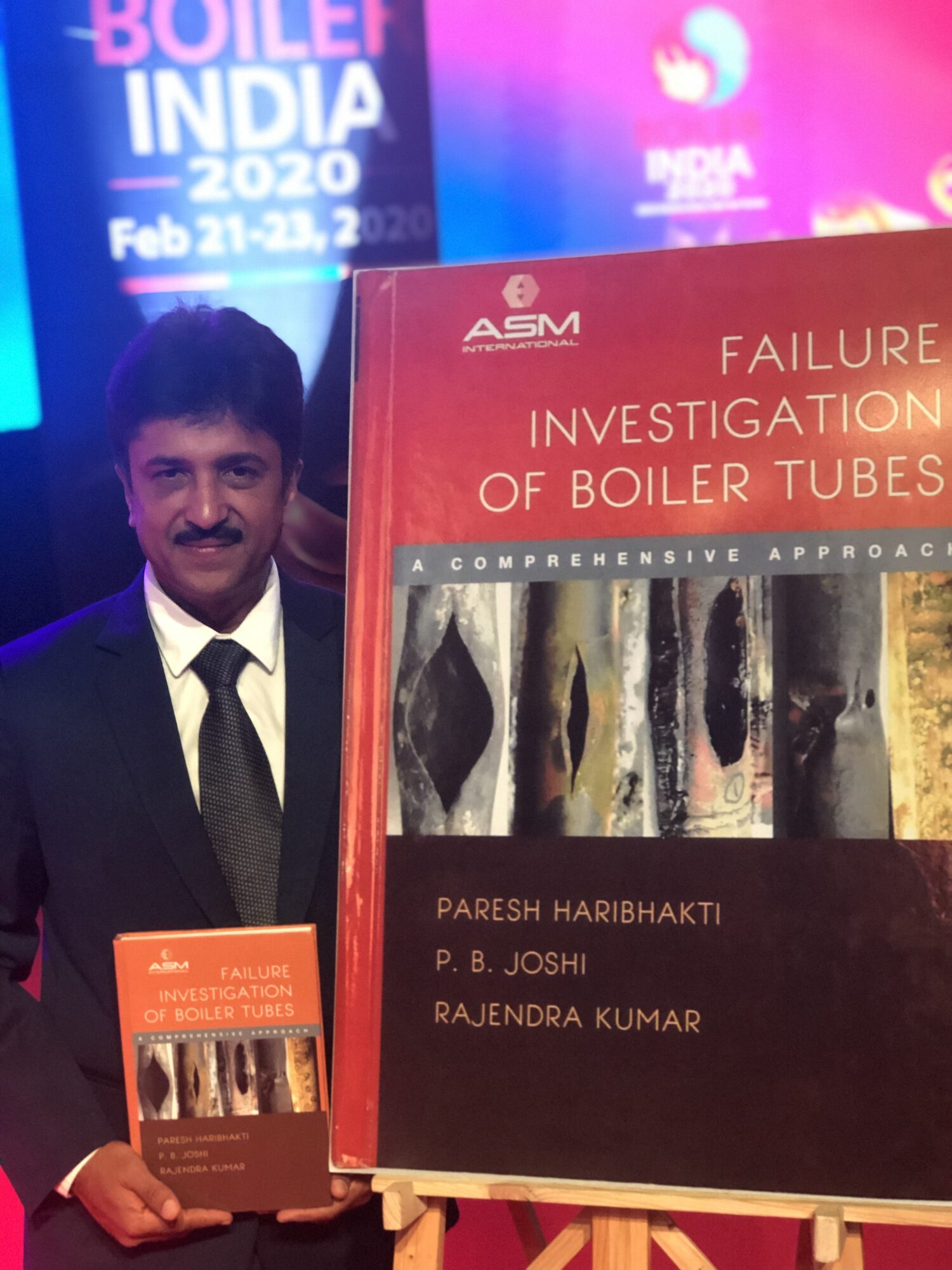
Paresh Haribhakti, Managing Director of TCR Advanced Engineering, has co-authored the ASM International book "Failure Investigation of Boiler Tubes" (2018), offering valuable insights into boiler tube failure mechanisms and prevention strategies.
With TCR’s advanced assessment services and an expertise base of 400+ boiler remaining life assessments and 1,500+ boiler tube failure investigations, we help ensure the reliability, safety, and extended operational life of your boilers.
TCR Engineering offers specialised Internal Oxide Scale Measurement services for steam boilers, ensuring optimal performance, extended lifespan, and operational safety. High-temperature boiler operations, especially those exceeding 1000°F (500°C), lead to the formation of brittle iron oxide, known as magnetite, on the inner surfaces of tubing.
This magnetite layer reduces heat transfer, increases the operating temperature of tube walls, and significantly shortens the tube's creep life. Early detection and accurate measurement of this oxide scale can guide critical maintenance decisions such as descaling, which can enhance efficiency and prolong the service life of your boiler.
Benefits of TCR Engineering’s Oxide Scale Measurement:
Omega Creep Testing for Fired Heater and Boiler Tubes
TCR Engineering offers comprehensive Omega Creep Testing and Creep Remaining Life Assessment services to help you ensure the safety and longevity of your fired heater and boiler tubes. With over 5 years of experience and expertise in Omega testing, we provide clients with critical insights into the current condition of their materials, detecting service-induced material degradation, creep damage, and remaining operational life.
TCR's detailed report will cover calculating the consumed life fraction, covering key factors such as accumulated strain, current creep rate, remaining life, total damage, and damage rate. Comprehensive evaluation of future operational scenarios, providing tables and curves to guide decision-making.
Applicable Technical Standards:
By choosing TCR Engineering, clients receive Omega Creep Testing services, backed by extensive expertise, advanced equipment, and a commitment to providing reliable assessments. We help ensure your critical assets operate safely and efficiently for years to come.
Accelerated Creep Rupture Testing (ACRT) for Boiler Tubes
TCR Engineering offers Accelerated Creep Rupture Testing (ACRT) services to assess the long-term durability and remaining life of boiler tubes operating under high temperature and pressure conditions. Our ACRT tests are designed to simulate real-world operational stresses and provide critical insights into the material's behaviour over time, ensuring safety and optimal performance for your equipment.
TCR Engineering’s expertise in boiler tube testing helps plant operators avoid unexpected failures, enhance safety, and extend the life of their critical assets.
Electro-Magnetic Acoustic Transmission (EMAT) Thickness Measurement
TCR Engineering utilises Electro-Magnetic Acoustic Transmission (EMAT) technology to provide highly accurate surface thickness measurements in high-temperature environments, ensuring safe and efficient operations of industrial equipment. With the ability to perform non-contact ultrasonic testing, EMAT offers a reliable solution for inspecting metallic surfaces without the need for couplants, making it ideal for extreme temperature conditions.
High-Temperature Thickness Measurement: Using EMAT with Panametric probes, TCR can accurately measure surface thicknesses up to 325°C. Beyond this temperature, readings may become unstable and non-repeatable, and alternative testing methods may be recommended.
Painted Surfaces: Thickness measurements can be conducted on painted surfaces, provided there are no blisters or peeling paint. For critical corrosion rate calculations or remaining life assessments, paint removal is recommended before performing the thickness survey.
Benefits of EMAT Testing by TCR Engineering:
Applications:
TCR publishes its own work on YouTube. 7 films are below, recorded on the bench, in the field and at the plant. Each one loads only when you press play: nothing is requested from Google before that.
16 of the 86 published insights tagged to Asset Integrity bear directly on Boiler Audit. The 6 most relevant are below.
Boiler tube failure analysis reveals the metallurgical evidence behind costly power plant outages and provides proven solutions to prevent recurrence.
Boiler tube failure analysis reveals the metallurgical evidence behind costly power plant outages and provides proven solutions to prevent recurrence.
"TCR Engineering: Mumbai's IBR-approved boiler inspection experts. 50+ years experience, IBR approved. NABL certified, serving 5000+ clients…
Mr. Paresh Haribhakti has co-authored a book on “Boiler Tube Failures” and this book is published by ASM.
Understanding will be developed for different damage mechanism prevailing in the boiler tube failures.
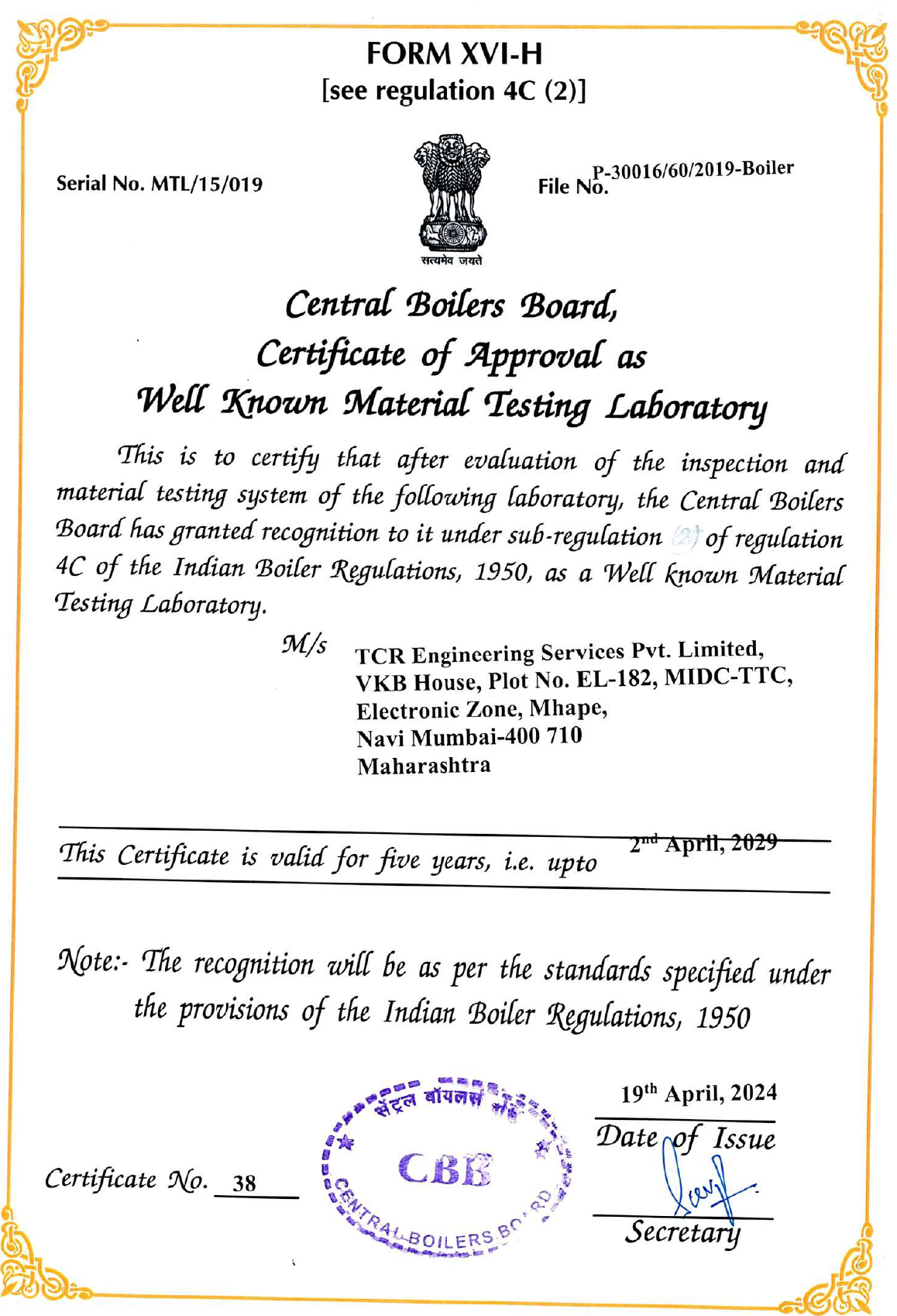
Indian Boiler Regulation (IBR) recognizes TCR Engineering as a “well known laboratory.”
The assessment identifies degradation mechanisms including fatigue, thermal ageing, creep, embrittlement and corrosion. It combines visual examination, in-situ metallography, ultrasonic testing, magnetic particle inspection, DP testing and ferrite measurement with stress analysis and laboratory testing, then closes with fitness judgments and repair recommendations covering Level II and Level III assessments.
High-temperature operation forms a brittle magnetite layer on the inner tube surface. The layer reduces heat transfer, raises the operating temperature of the tube wall and shortens creep life. Measuring scale thickness guides descaling decisions, supports remaining life estimation and helps prevent overheating failures under high pressure and temperature.
Omega creep testing evaluates the creep properties of fired heater and boiler tube samples, supported by tensile, hardness, microstructure and XRD analysis. The report calculates the consumed life fraction, accumulated strain, current creep rate, remaining life and damage rate. Applicable standards are API 579-1/ASME FFS-1, API 530 and API 573.
EMAT provides non-contact ultrasonic thickness measurement without couplants, which suits high-temperature surfaces up to 325 degrees Celsius. Applications include boilers and pressure vessels, refinery and chemical plant piping, heat exchangers and steam generators. Painted surfaces can be measured, though paint removal is recommended before critical corrosion rate calculations.