+91 98335 30200  ·  sales@tcreng.com
A process plant at dusk reduced to horizontal geometry under a graded navy sky

Services · Asset Integrity and Engineering Consulting

AiOM, the Asset Integrity and Optimisation Management Platform

Twelve modules, one asset database. AiOM carries API 580 and API 581 risk-based inspection methodology, fitness-for-service tools, root-cause analysis, and turnaround planning inside a single platform developed in-house at TCR Advanced.


Request a Quote

Overview

AiOM is the Asset Integrity and Optimisation Management platform developed by TCR Advanced Engineering, the TCR Group's asset integrity and consulting arm in Vadodara. The platform carries RBI per API 580/581, Integrity Operating Windows per API RP 584, and FFS tools, delivered subscription-led and bundled with consulting, backed by the group's NABL ISO/IEC 17025:2017 accredited laboratories.

The AiOM Digital Backbone

AiOM is the indigenously developed Asset Integrity and Optimisation Management platform from TCR Advanced.

The architecture sits on six pillars (Asset Master, Asset Strategy, Asset Maintenance, Asset Integrity and Reliability, Asset Optimisation, Asset Analytics), with Integrity Operating Windows anchored in API RP 584, an Intelligent Plant module on the P&ID-driven graphical interface, and an Asset Troubleshooting Guide as the AI-assisted knowledge-retention engine.

The six pillars are the architectural layer of the platform. They are distinct from the twelve software modules that ship in the product, catalogued at Asset Integrity. The two counts describe the same platform at different levels and are not interchangeable. The damage-mechanism library covers approximately 70 mechanisms. The AiOM-CCP application extends the platform to cross-country pipelines (10 km to 1,000 km, buried or above-ground, crude petroleum, refined products, natural gas, water, chemicals, sewage), with a documented anonymised undersea pipeline case study (API 5L X46N, 21 km by 355 mm by 15.9 mm, ID-side CO2/H2S corrosion).

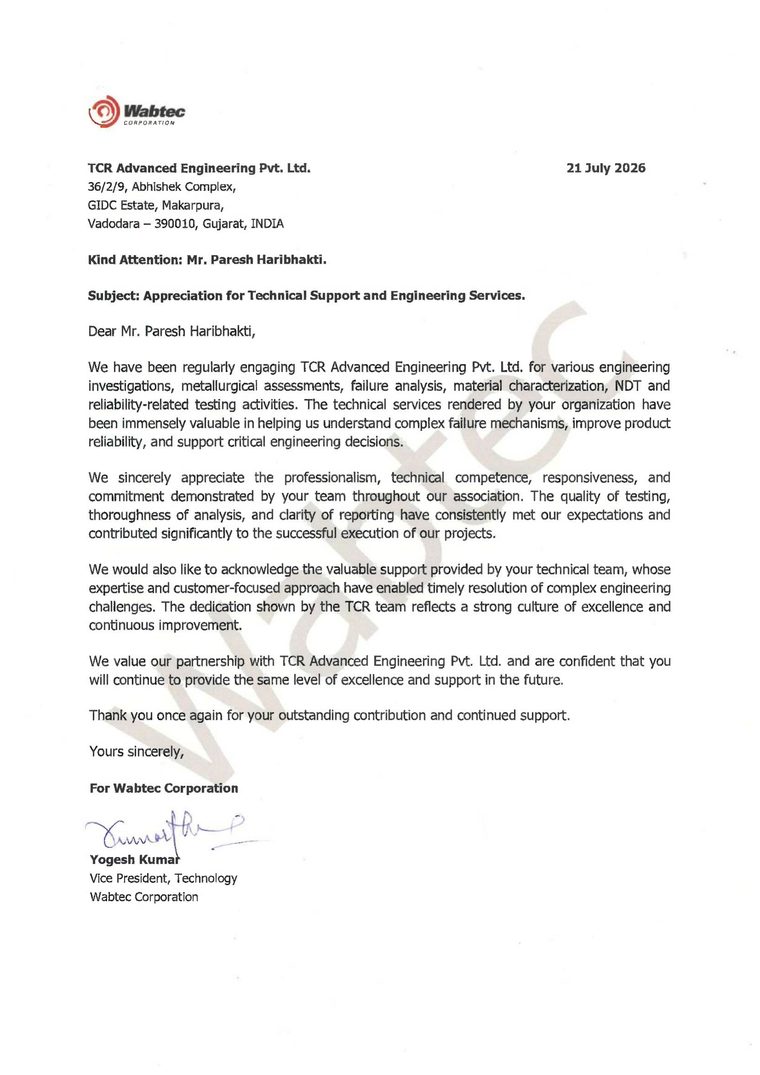
The platform is bundled with consulting; it is not a standalone software licence pursuit. Chambal Fertilisers GP-I plant RBI with AiOM software implementation, awarded 11 December 2025 (51 equipment under AiOM scope at Ammonia-I Plant Areas 02 and 05), is the anchor commercial reference.

The 12-Module Catalogue

AiOM is built around twelve integrated modules that enhance decision-making and accountability across the asset lifecycle, from a centralised asset database and risk-based inspection (API 580/581) to Fitness-for-Service assessment, RCA, and work-order tracking.

  1. Centralised Asset Database

    A single-source asset database structures and standardises data, enabling quick and easy configuration. The platform includes a comprehensive asset classification system, making it simple to add and update equipment data.

  2. Integrated Maintenance, Materials, and Spares Management

    AiOM's maintenance management module offers a holistic view of asset maintenance, including cost analysis and risk assessment for high-failure-rate equipment. Integration with spares and materials management ensures quick decision-making, facilitating timely interventions.

  3. Enhanced Maintenance Strategies

    The software incorporates predefined maintenance strategies to improve safety, asset availability, and reliability while optimising costs. Each strategy aligns with regulatory standards and best practices to minimise risks and streamline plant operations.

  4. Asset Optimisation Tools

    AiOM's Fitness-for-Service (FFS) tools support the continuous assessment of critical assets, monitoring efficiency, and health to detect potential failures early. Real-time insights enable proactive, rather than reactive, asset management.

  5. Advanced Analytics and Dashboard Visualisation

    Customisable dashboards provide at-a-glance data visualisations for reliability trends, downtime analysis, and cost tracking. This empowers asset managers with actionable insights to spot problem areas, facilitating data-driven decisions to enhance reliability and efficiency.

  6. Risk-Based Methodologies for Optimised Resource Allocation

    AiOM utilises API 580/581 RBI methodologies for asset risk management, allowing for a strategic approach to inspection scheduling. This helps balance inspection intervals and maintenance priorities, minimising plant shutdowns and ensuring compliance with safety standards.

  7. Material Search and Root Cause Analysis (RCA) Tools

    AiOM includes a material search engine that helps engineers access critical material information quickly. The RCA tool provides a structured method for analysing failures, identifying root causes, and implementing effective mitigation to reduce repeat failures.

  8. Turnaround and Shutdown Planning

    The platform facilitates turnaround planning by flagging maintenance notifications tied to shutdowns, enabling strategic planning for maintenance events. This functionality aids in efficient resource allocation and minimises unplanned outages.

  9. Quality Assurance and Inspection Plans

    AiOM's quality assurance module supports the creation and maintenance of standard QA plans and inspection schedules. This ensures that all equipment meets rigorous standards and helps maintain a consistent level of asset quality across the plant.

  10. Accelerated Learning and Troubleshooting Tools

    Asset engineers gain access to a vast database of failure case studies and a troubleshooting guide powered by AI. This unique feature offers rapid access to problem-solving resources, allowing engineers to address equipment issues quickly and effectively.

  11. Engineer's Toolbox for Design Calculations

    The Engineer's Toolbox provides essential tools for on-the-fly engineering and design calculations. With tools for corrosion loops and Integrity Operating Windows (IOW) based on API 584, engineers can monitor the health of piping circuits and other critical equipment.

  12. Work Order Management and Action Tracking

    AiOM includes a work order management system for structured issue tracking, prioritisation, and resource planning. Asset histories, recommendations, and action statuses are documented and easily traceable, ensuring accountability and seamless problem resolution.

Anchor Sub-Modules

Integrity Operating Windows: The IOW module is anchored in API RP 584 (1st Edition 2014, 2nd Edition December 2021). Ammonia plant trains, refining hydroprocessing units, and fertiliser ammonia synthesis loops are configured against critical, standard, and informational IOW limits.

Intelligent Plant: The P&ID-driven graphical interface that links any tag on a piping and instrumentation diagram to its inspection history, RBI risk score, current IOW status, and next-due action.

Asset Troubleshooting Guide: The AI-assisted knowledge-retention engine built on TensorFlow and Keras. Captures the institutional memory of the senior bench in retrievable form so the next reformer-tube inspection at QAFCO does not start from a blank page.

Damage Mechanism Library: Approximately 70 mechanisms aligned to API RP 571 (refining), WRC 489 (refining), WRC 488 (pulp and paper), WRC 490 (fossil power), and the ASM Handbook Volume 11A (failure of boilers and related equipment).

Standards Stack

API 580 (RBI), API 581 (RBI methodology), API 584 (IOW), API 579-1/ASME FFS-1 (FFS), BS 7910 (FFS), API 510 (pressure vessel inspection), API 570 (piping inspection), API 653 (tank inspection), API 571 (damage mechanisms), API 5L (line pipe), ASME Section I (power boilers), ASME Section VIII (pressure vessels), ASM Handbook Volume 11A.

AiOM-CCP, the Cross-Country Pipelines Application

AiOM-CCP extends the six-pillar platform to pipelines beyond facility boundaries: 10 km to 1,000 km, buried or above-ground, carrying crude petroleum, refined products, natural gas, water, chemicals, or sewage.

ModuleCapability
Defect cataloguePipeline-specific damage mechanisms (external corrosion, internal corrosion under deposit, third-party damage, geohazard, stress corrosion cracking)
In-Line Inspection ingestionMFL primary; UT and EMAT data ingestion roadmapped
Cathodic Protection modulePipe-to-Soil Potential tracking against the negative 0.85 V to negative 1.20 V band against Cu/CuSO4
Coating surveysCIPL, Pearson, CAT, DCVG, conductance, casing-and-carrier short; 5-year frequency framework
Quantitative Risk AssessmentDesign-stage with fatality frequency curve, then once-in-5-years through design lifespan

Documented case study: Anonymised undersea pipeline, API 5L X46N, 21 km by 355 mm by 15.9 mm, ID-side CO2/H2S corrosion.

Standards embedded: API 584, API 5L, API 580/581.

Roadmap standards: API 1160, ASME B31.4 / B31.8S, NACE SP0102 / 0204 / 0206, DNV-RP-F101, External Corrosion Direct Assessment / Internal Corrosion Direct Assessment / Stress Corrosion Cracking Direct Assessment, Inertial Measurement Unit geometry, EMAT-ILI, High Consequence Area / Moderate Consequence Area / Class Location, composite Type B sleeve repair.

AiOM-CCP is the digital backbone of the Tier 2 (Operator Condition Assessment) and Tier 3 (Engineering Analysis) pipeline service tracks.

Standards: API 1160 (integrity management for hazardous-liquid pipelines), ASME B31.4 (liquid) and ASME B31.8 / B31.8S (gas), DNV-RP-F101 (assessment of corroded pipelines), and API 5L (line pipe).

Anchor Commercial Reference

Chambal Fertilisers G-1 plant RBI per API 580/581 plus AiOMĀ® software implementation. Awarded 11 December 2025. Order CFCL/PUR/260/49004678. 51 equipment under scope (pressure vessels, towers, heat exchangers, and connecting piping at the G-1 / Ammonia-I Plant); 12 user licences.

AiOM on video

TCR publishes its own work on YouTube. One film is below, recorded on the bench and in the field. Each one loads only when you press play: nothing is requested from Google before that.

Asset Integrity Optimization & Management | Failure Analysis, Fitness for Service, Asset Management

Related insights

1 published insight on this site bears directly on AiOM Platform. It is shown below alongside the most recent Asset Integrity work, and the full index carries all 86.

Asset Integrity · 2026-05-01

Boiler Tube Failure Analysis

Boiler tube failure analysis reveals the metallurgical evidence behind costly power plant outages and provides proven solutions to prevent recurrence.

Read all 86 Asset Integrity insights →All insights →

Frequently asked questions

What is AiOM?

AiOM is the Asset Integrity and Optimisation Management platform developed indigenously by TCR Advanced Engineering. It carries twelve modules across asset data, maintenance, RBI per API 580/581, Integrity Operating Windows per API RP 584, FFS tools, root cause analysis, turnaround planning, and work order management, delivered subscription-led and bundled with consulting.

Which standards does AiOM implement?

The platform embeds API 580 and API 581 for risk-based inspection, API RP 584 for Integrity Operating Windows, API 579-1/ASME FFS-1 and BS 7910 for fitness for service, API 510, API 570 and API 653 for inspection planning, API 571 for damage mechanisms, and ASME Sections I and VIII.

What is AiOM-CCP?

AiOM-CCP extends the platform to cross-country pipelines from 10 km to 1,000 km, buried or above ground, carrying crude, refined products, natural gas, water, chemicals or sewage. Modules cover pipeline defect catalogues, in-line inspection data ingestion, cathodic protection monitoring, coating surveys and quantitative risk assessment.

How large is the damage mechanism library?

Approximately 70 mechanisms, aligned to API RP 571 for refining, WRC 489 for refining, WRC 488 for pulp and paper, WRC 490 for fossil power, and ASM Handbook Volume 11A for boilers and related equipment. Ammonia trains, hydroprocessing units and synthesis loops are configured against IOW limits.

Manage the asset, not just the inspection report.

Request a Quote