Preserving Pipelines, Protecting Investments: TCR's Cathodic Protection Solutions
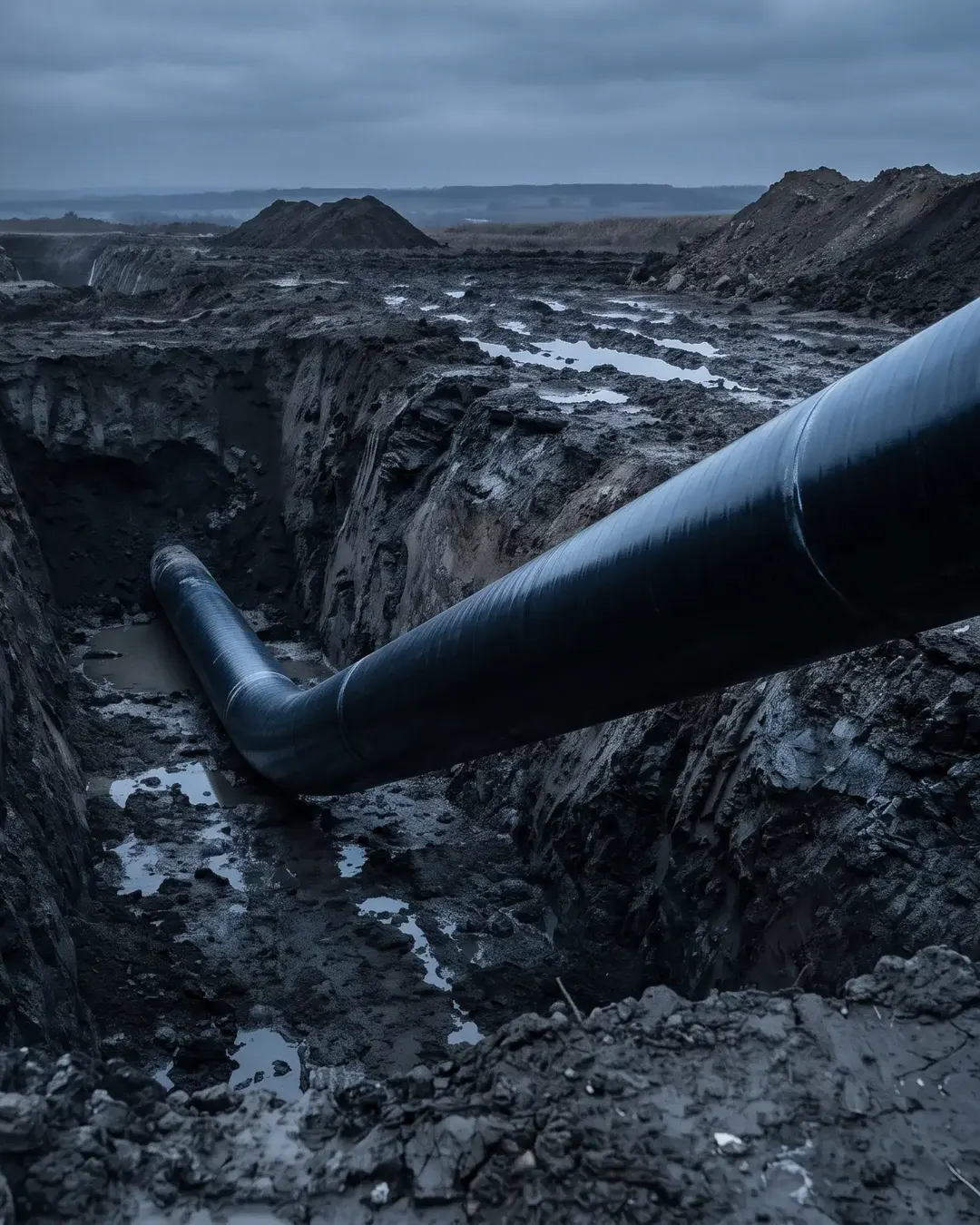
Safeguard pipelines with TCR's expert cathodic protection solutions, ensuring durability and cost efficiency in oil & gas.

Group
Services · Asset Integrity and Engineering Consulting
Pipe-to-soil potential is tracked against the negative 0.85 V to negative 1.20 V band versus Cu/CuSO4, with CIPS, DCVG, Pearson, and conductance attenuation surveys. Design and installation follow NACE SP0169, ISO 15589, and DNV-RP-B401 offshore.
TCR Engineering Services Pvt. Ltd., a NABL ISO/IEC 17025:2017 accredited laboratory headquartered in Navi Mumbai, delivers cathodic protection services pan-India from Vadodara with a regional office in Bhubaneswar. The practice covers sacrificial anode and impressed current system design, installation and monitoring, and coating surveys for pipeline and city gas distribution operators.
TCR Engineering offers comprehensive Cathodic Protection (CP) monitoring services as per GAIL to assess the effectiveness of installed permanent CP units at feeding points. This essential service helps prevent corrosion in pipelines and other metallic structures by ensuring that the CP systems function optimally.
Through our CP monitoring, we utilise advanced techniques to evaluate the performance of CP units, measuring key parameters such as voltage and current levels. This proactive approach enables us to identify any potential issues that may compromise the integrity of the CP system and allows for timely interventions to enhance corrosion protection.
Our dedicated team of experts employs advanced equipment and methodologies to conduct thorough inspections, providing clients with detailed reports and actionable insights. By ensuring the effective operation of CP units, TCR Engineering supports the longevity and reliability of critical infrastructure, safeguarding against corrosion-related failures.
J.N. Agarwal (33 years at GAIL, ICorr Level 4 Fellow, AMPP Corrosion Awareness Award 2023, CP4-certified, 40+ years O&G, author of 3 books on CP) sits on the consultant bench supporting the CP Division.
| Capability | Detail |
|---|---|
| Sacrificial anode systems | Design, installation, maintenance per NACE SP0169 |
| Impressed current systems | Design, installation, transformer-rectifier sizing, anode bed configuration |
| Coating survey | Close Interval Potential Survey (CIPS), Direct Current Voltage Gradient (DCVG), Pearson, Conductance Attenuation Test (CAT), casing-and-carrier short |
| Pipe-to-Soil Potential | Tracking against the negative 0.85 V to negative 1.20 V band against Cu/CuSO4 |
| Cross-pillar integration | Feeds the AiOM-CCP CP module |
Standards: NACE SP0169 (control of external corrosion on underground metallic piping); NACE SP0102 (in-line inspection); NACE SP0204 (stress corrosion cracking direct assessment); NACE SP0206 (internal corrosion direct assessment); ISO 15589; DNV-RP-B401 (cathodic protection of offshore structures, 2021 update).
Half-cell potential per ASTM C876 maps the corrosion likelihood across reinforced concrete elements. Linear polarisation resistance and macrocell current measurement add quantitative corrosion-rate data. The CP Division designs and installs impressed-current cathodic protection on reinforced-concrete structures.
TCR publishes its own work on YouTube. One film is below, recorded on the bench and in the field. Each one loads only when you press play: nothing is requested from Google before that.
2 published insights on this site bear directly on Cathodic Protection. They are shown below alongside the most recent Asset Integrity work, and the full index carries all 86.
Safeguard pipelines with TCR's expert cathodic protection solutions, ensuring durability and cost efficiency in oil & gas.
Pipeline integrity assessment services India with 50+ years expertise. TCR Engineering prevents failures through advanced NDT and AI technology.
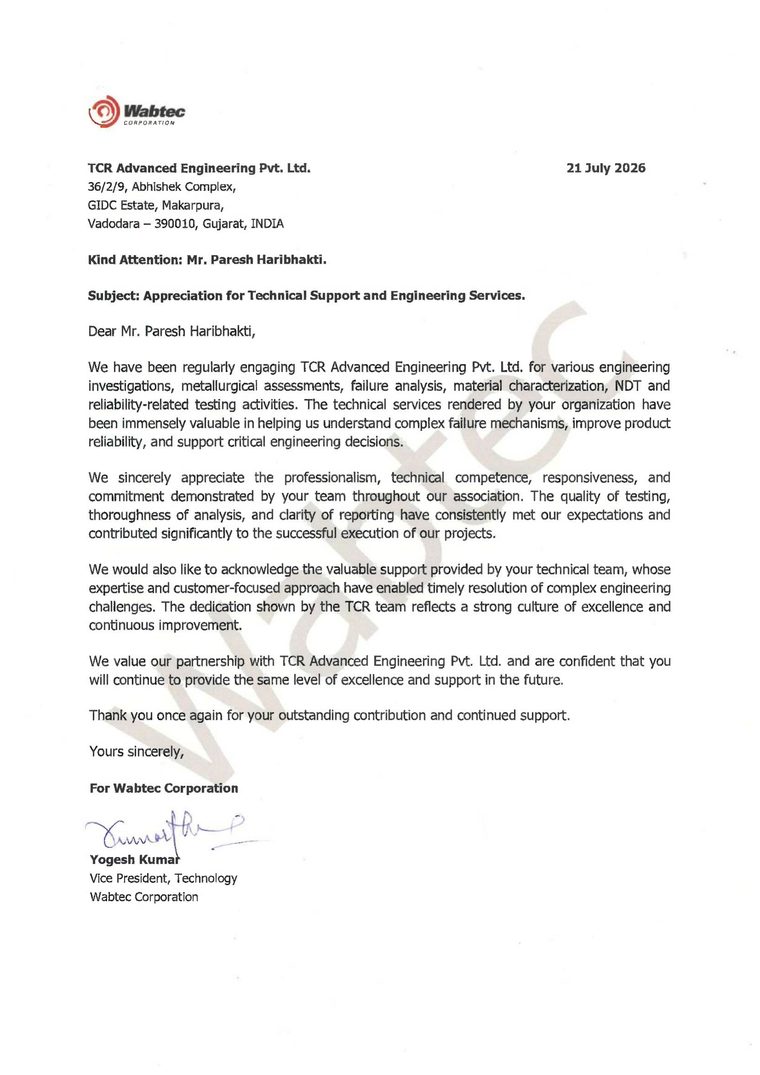
Wabtec Corporation has written to TCR Advanced Engineering to record its appreciation for engineering investigations, metallurgical assessments,…
Download the reference documents for this page. Every file is hosted on this domain and is also listed in the site document library.
The CP Division runs Close Interval Potential Survey, Direct Current Voltage Gradient, Pearson survey, Conductance Attenuation Test and casing-and-carrier short detection. These surveys locate coating defects and, with voltage and current measurements at feeding points, verify that installed cathodic protection units are performing, feeding detailed reports and actionable insights to pipeline operators.
TCR tracks pipe-to-soil potential against the negative 0.85 V to negative 1.20 V band measured against a copper/copper sulphate reference electrode, per NACE SP0169. Monitoring voltage and current levels at feeding points confirms that installed permanent cathodic protection units are functioning and allows timely intervention before corrosion damage develops.
Yes. Half-cell potential mapping per ASTM C876 establishes corrosion likelihood across reinforced concrete elements, while linear polarisation resistance and macrocell current measurement add quantitative corrosion-rate data. The CP Division designs and installs impressed-current cathodic protection systems on reinforced-concrete structures based on these measurements.
The practice works to NACE SP0169 for control of external corrosion on underground metallic piping, NACE SP0102 for in-line inspection, NACE SP0204 for stress corrosion cracking direct assessment, NACE SP0206 for internal corrosion direct assessment, ISO 15589, and DNV-RP-B401 (2021 update) for cathodic protection of offshore structures.