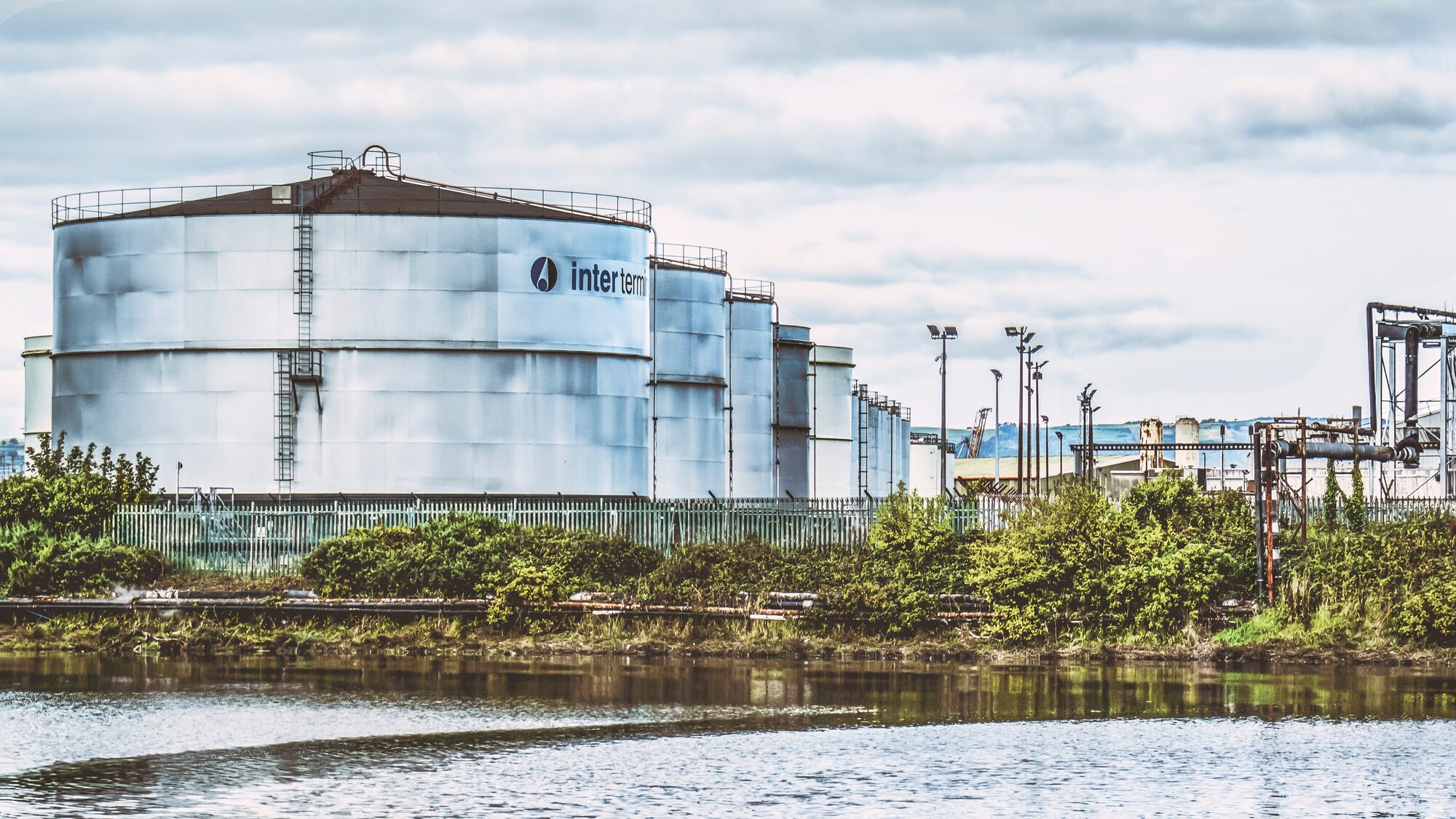
How TCR Advanced Ensures Storage Tank Integrity Through Comprehensive Condition Assessment
Expert insights on storage tank and silo condition assessment from TCR Advanced's MD Paresh Haribhakti, combining standards with innovation.

Group

Services · Asset Integrity and Engineering Consulting
After a plant fire the question is which equipment can return to service and which cannot. The assessment infers peak metal temperature across the affected footprint and converts that reading into an item-by-item fitness judgment.
TCR Engineering, NABL ISO/IEC 17025:2017 accredited in Navi Mumbai, assesses fire-damaged plant per API 579-1/ASME FFS-1 Part 11: temperature-zone mapping from Zone I to Zone IV by inferred peak temperature, deformation analysis, and post-fire fitness-for-service decisions on which equipment returns to service.
Fire damage assessment is carried out per API 579-1/ASME FFS-1 Part 11, the fire-damage part of the Fitness for Service code.
The workflow maps the damaged plant footprint into temperature zones (Zone I through Zone IV by inferred peak temperature), runs deformation analysis, and adds hardness and in-situ metallographic surveys to map the heat-affected zones. Structural condition assessment and a post-fire Fitness for Service run then draw the repair-versus-replace boundary on measurement.
Fire damage on process equipment is assessed to API 579-1/ASME FFS-1 Part 11; fire-damaged concrete is assessed to BS 8408.
| Standard | Scope |
|---|---|
| API 579-1/ASME FFS-1 Part 11 | Fire damage assessment of process equipment |
| BS 8408 | Fire-damaged concrete assessment |
The damaged footprint is divided into four zones by inferred peak temperature, from Zone I to Zone IV, so that inspection and repair effort concentrates where the metal actually saw the highest heat.
Zone assignment is supported by hardness mapping and in-situ metallographic surveys of the heat-affected zones, with deformation analysis where members have distorted.
TCR has assessed fire damage on refinery process assets.
15 of the 86 published insights tagged to Asset Integrity bear directly on Fire Damage Assessment. The 6 most relevant are below.
Expert insights on storage tank and silo condition assessment from TCR Advanced's MD Paresh Haribhakti, combining standards with innovation.
Pipeline integrity assessment services India with 50+ years expertise. TCR Engineering prevents failures through advanced NDT and AI technology.
Noteworthy RLA projects undertaken by TCR
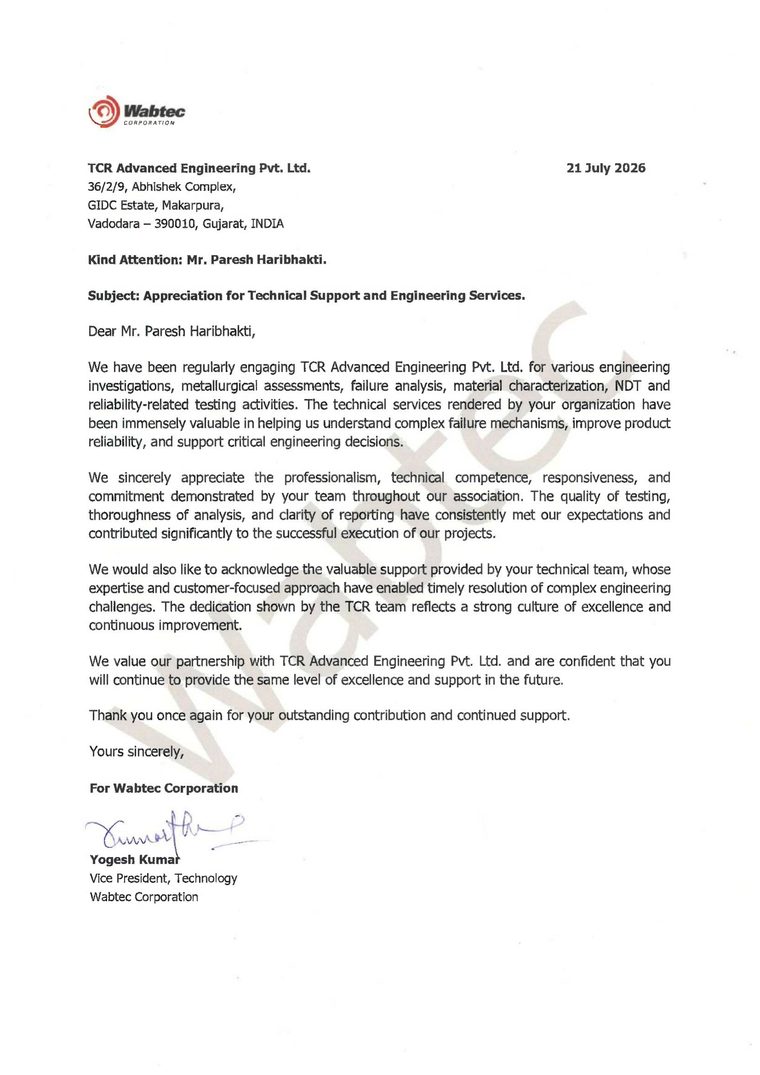
Wabtec Corporation has written to TCR Advanced Engineering to record its appreciation for engineering investigations, metallurgical assessments,…
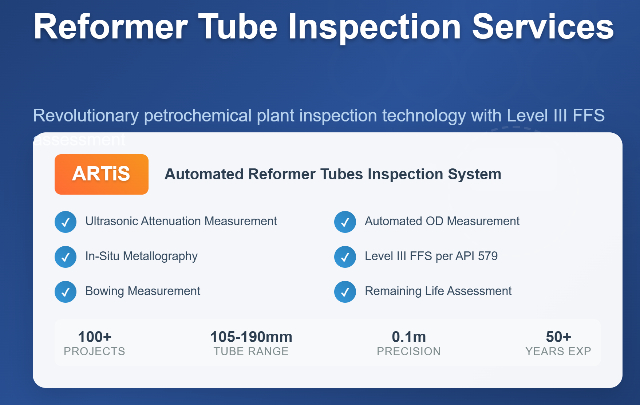
ARTiS revolutionises reformer tube inspection with Level III FFS assessment per API 579, predicting failures months ahead of traditional methods.
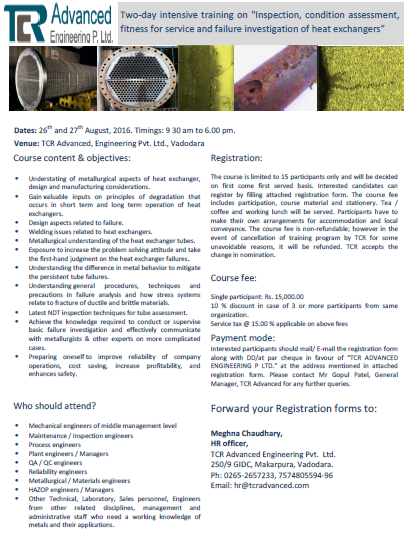
Inspection, condition assessment, fitness for service and failure investigation
API 579-1/ASME FFS-1 Part 11 for process equipment, with BS 8408 for fire-damaged concrete assessment.
By temperature-zone mapping of the damaged plant footprint (Zone I through Zone IV by inferred peak temperature), deformation analysis, and hardness and in-situ metallographic surveys that map the heat-affected zones.
A post-fire Fitness for Service assessment and a repair-versus-replace boundary drawn on measurement.
Yes. TCR assessed the HMEL Bathinda VGO reactor following a 2024 fire, a Fitness for Service of the VGO reactor under API 579-1 Part 11, and carried out damage assessment of hydrocracker reactors at Baiji Refinery, Iraq.