General Approach for ECA of Girth Welds in Pipelines: A Practical Guide for Large-Diameter Gas Lines
Engineering Critical Analysis of girth welds transforms weld acceptance from guesswork into science-backed decisions for pipeline integrity

Group
Services · Asset Integrity and Engineering Consulting
TCR has delivered API 1104 Option 2 assessments on pipeline girth welds for the Jafurah Gas Compression Plants and PWIS Package-1 project, with Saudi Aramco as end client. CTOD, impact, and tensile coupons feed the failure assessment diagram.
TCR Engineering Services Pvt. Ltd., a NABL ISO/IEC 17025:2017 accredited laboratory in Navi Mumbai, performs Engineering Critical Analysis of pipeline girth welds per API 1104 Annex A, combining CTOD fracture toughness testing on 50, 250 and 1,000 kN frames with finite element analysis and Failure Assessment Diagram calculations.
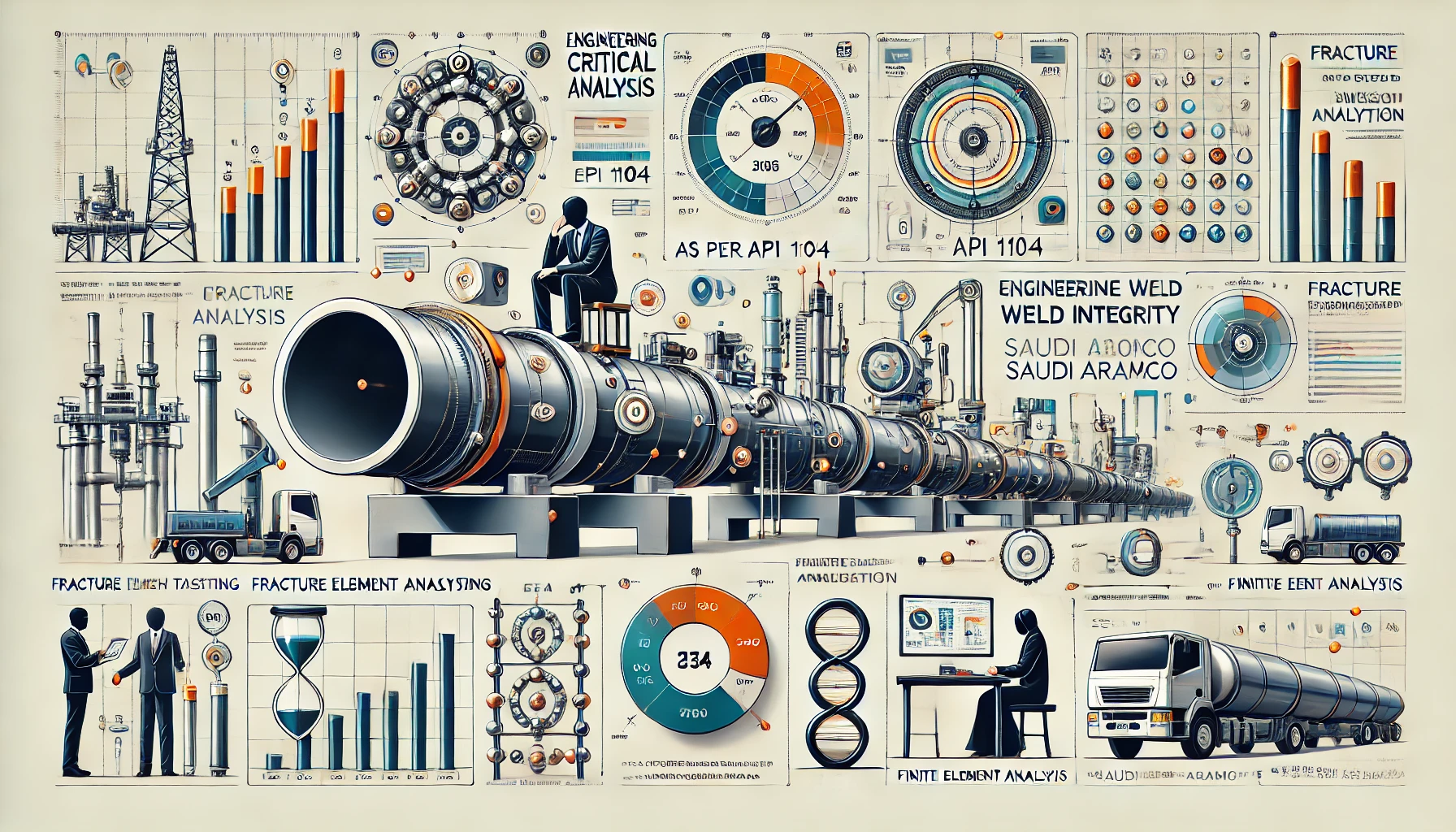
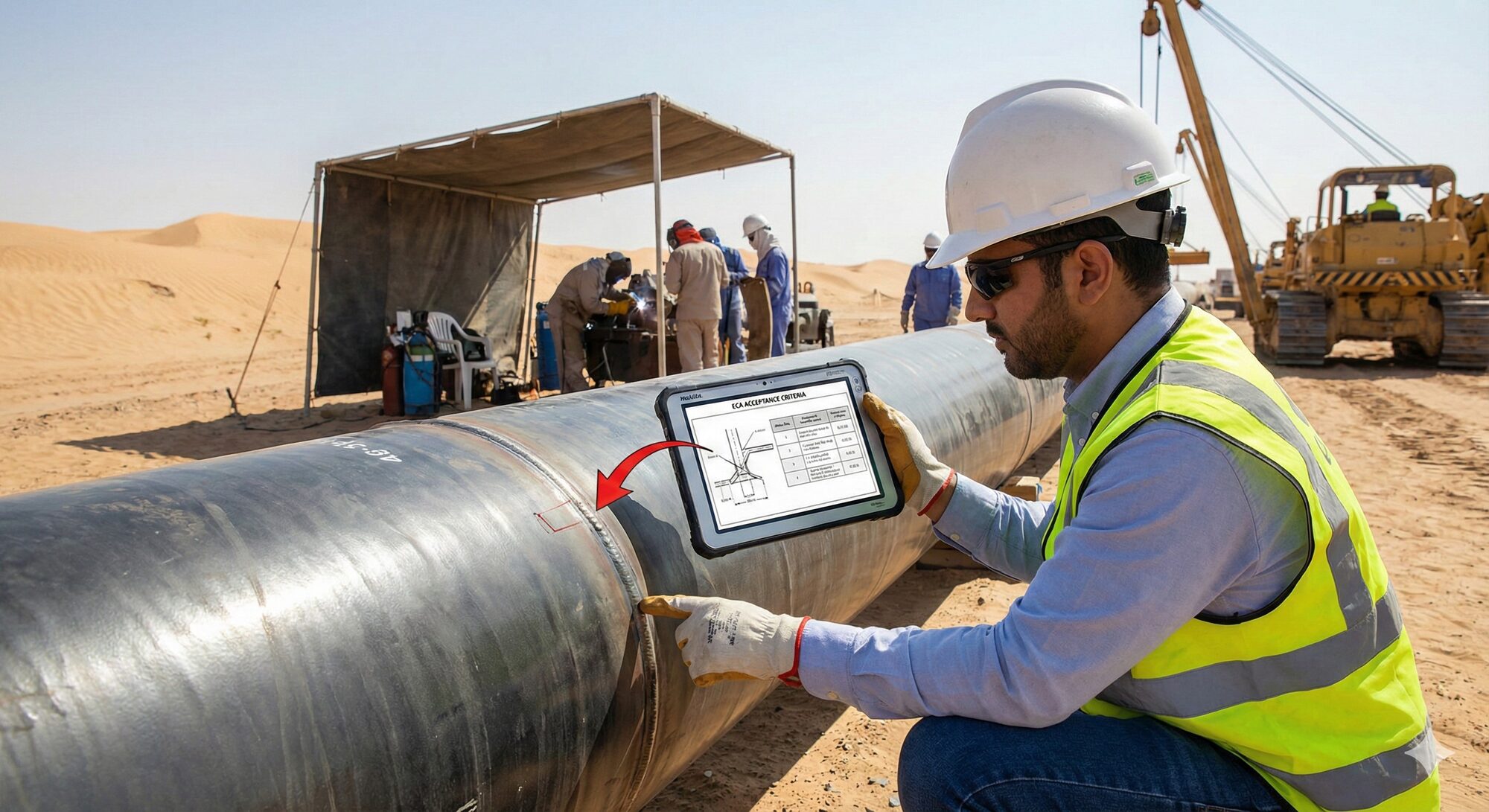
Engineering Critical Analysis (ECA) is a sophisticated approach employed to determine alternative acceptance criteria for weld defect lengths versus depths. As per the guidelines outlined in API 1104 – Option 2, ECA provides a framework to assess the structural integrity of pipeline girth welds by considering critical parameters such as fracture toughness, residual stresses, and combined axial stresses.
TCR has undertaken this work as a vendor for a client in KSA with Saudi Aramco being the end client in connection with the Jafurah Gas Compression Plants and PWIS (Package-1) project.
TCR’s expertise in performing advanced ECA ensures comprehensive evaluation of pipeline girth welds. With capabilities extending to CTOD assessments, FEA, and real-world damage analysis, we deliver actionable insights to ensure the structural integrity and safety of critical pipeline systems. Whether you require API 1104-compliant evaluations or customized solutions, TCR in India as well TCR Arabia in Saudi Arabia are your partner in achieving excellence in engineering assessments.
Codes: API 579-1/ASME FFS-1, BS 7910, ASME Section VIII, and API 1104 Annex A for pipeline girth welds (Method 1 or Method 2 = Failure Assessment Diagram), ASTM E1820 (CTOD), ISO 15653, and ISO 12135.
Design stage. Material selection, weld procedure design, defect tolerance establishment for new construction.
Fabrication stage. Sentencing of as-built defects against an FAD, allowing acceptable flaws to remain rather than triggering repair.
In-service stage. Disposition of newly detected flaws during turnaround inspection, with monthly tolerable-defect-height tracking through next inspection.
50, 250 and 1000 kN Fatigue CTOD machine per ASTM E1820.
Saudi Aramco Jafurah Gas Compression Plants ECA (PWIS Package-1), engineering critical analysis of 42-inch underground oil trunkline girth welds (2024-2025).
A 48-inch API 5L X60 sweet-gas pipeline, 42 kilometres, assessed per API 1104 Annex A Option 2 with six CTOD tests per pipeline (three weld, three heat-affected zone) on 350 mm mock-up coupons, Caesar II stress input separating installation from operating stress.
34 of the 86 published insights tagged to Asset Integrity bear directly on Engineering Critical Analysis. The 6 most relevant are below.
Engineering Critical Analysis of girth welds transforms weld acceptance from guesswork into science-backed decisions for pipeline integrity
TCR undertakes Engineering Critical Analysis (ECA) as per API 1104 for Saudi Aramco's Jafurah Gas Compression Plants and PWIS Project
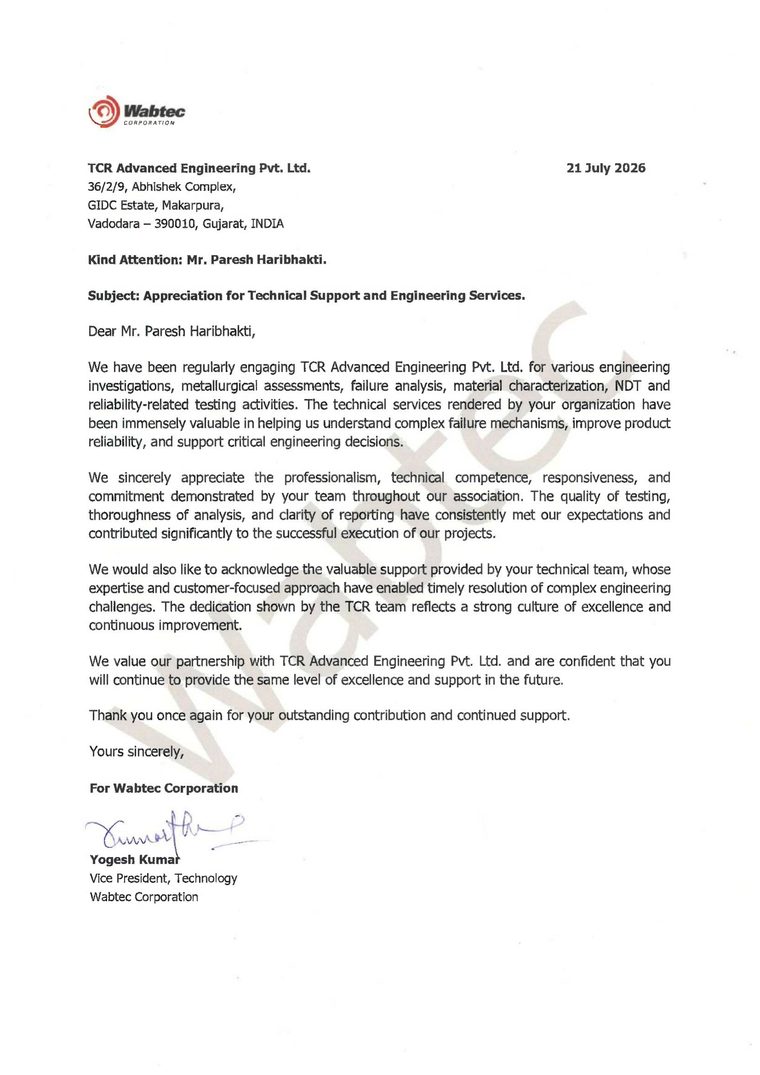
Wabtec Corporation has written to TCR Advanced Engineering to record its appreciation for engineering investigations, metallurgical assessments,…
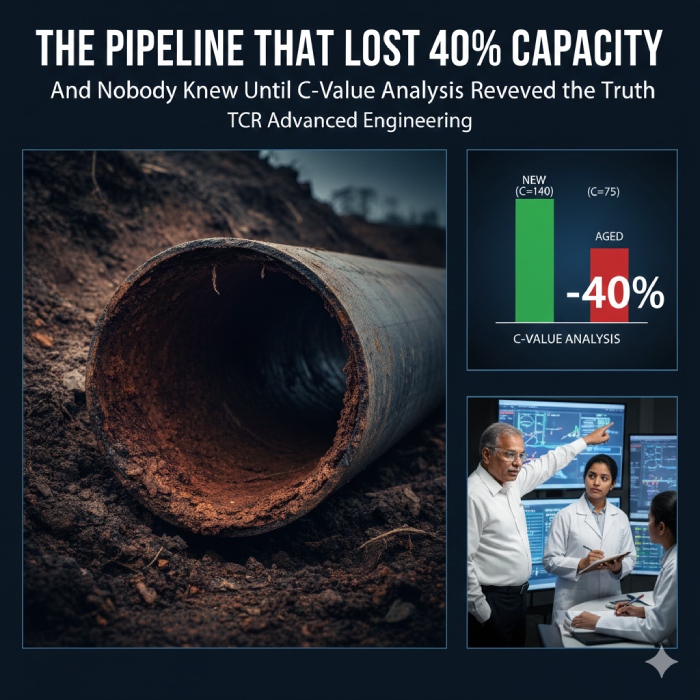
C-Value analysis reveals true hydraulic condition of ageing pipelines. TCR Advanced Engineering's expertise prevents costly capacity losses.
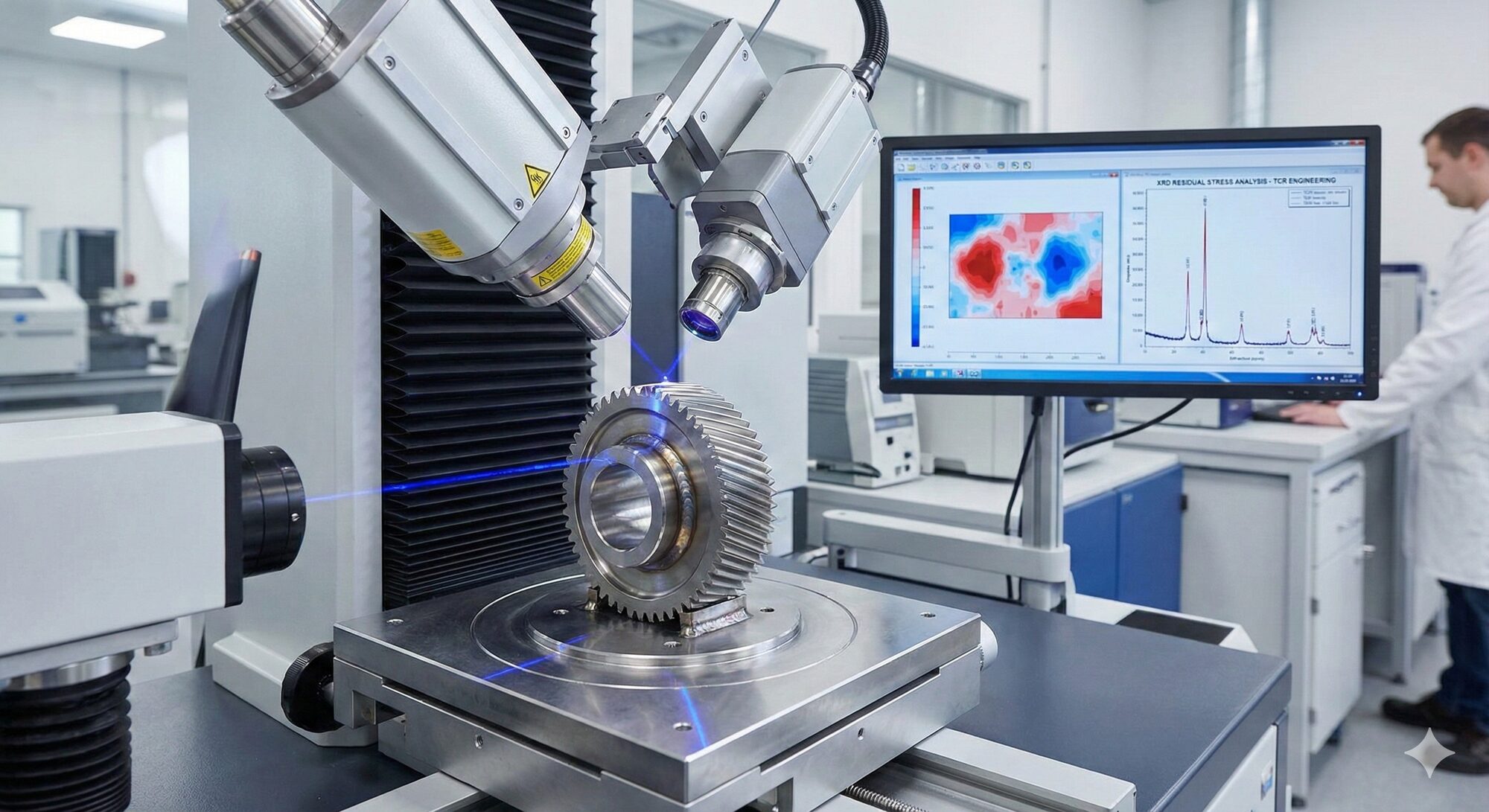
TCR Engineering's XRD residual stress measurement service provides non-destructive testing for metallic components with expert analysis.
Failure analysis metallurgical laboratory India prevents million-dollar disasters. TCR Engineering's 50+ years expertise identifies root causes.
Download the reference documents for this page. Every file is hosted on this domain and is also listed in the site document library.
Engineering Critical Analysis, interchangeably Engineering Critical Assessment, is the fracture-mechanics-led subset of Fitness for Service. It establishes alternative acceptance criteria for weld defect length versus depth, assessing pipeline girth welds per API 1104 Annex A against critical parameters such as fracture toughness, residual stresses and combined axial stresses.
ECA applies at three lifecycle stages. At design, it supports material selection, weld procedure design and defect tolerance for new construction. At fabrication, as-built defects are sentenced against a Failure Assessment Diagram so acceptable flaws remain rather than triggering repair. In service, newly detected flaws are dispositioned during turnaround inspection, with monthly tolerable-defect-height tracking.
Destructive testing on girth-weld coupons covers CTOD at the 12, 6 and 3 or 9 o'clock positions in weld and heat-affected zone, plus impact and tensile tests, six samples per API 1104 Annex A. In-house 50, 250 and 1,000 kN fatigue CTOD frames run to ASTM E1820.
Yes. TCR performed the Engineering Critical Analysis for the Saudi Aramco Jafurah Gas Compression Plants project, PWIS Package-1, covering 42-inch girth welds per API 1104 Annex A Option 2 with six CTOD tests per pipeline, delivered during 2024 and 2025 through TCR in India and TCR Arabia in Saudi Arabia.