Ultrasonic Pulse Velocity (UPV) Testing: Enhancing Civil Infrastructure Assessment
Ensure concrete integrity with UPV testing! TCR Engineering offers precise, non-destructive evaluations to detect cracks, voids, and flaws i

Group

Services · Civil and Infrastructure Testing
Nothing is cut and nothing is cored. Radar reads rebar position, embedded services, and pavement layer thickness through the surface, and pulse velocity reads homogeneity within the section, both under the IAEA-TCS-17 guidance for concrete NDT.
TCR Engineering, a NABL ISO/IEC 17025:2017 accredited laboratory (NABLT0726MH18640) in Navi Mumbai, provides subsurface investigation of concrete structures and pavements. Ground-Penetrating Radar locates rebar, embedded utilities and pavement layer thicknesses, while Ultrasonic Pulse Velocity per IS 13311 Part 1 assesses concrete homogeneity, following IAEA-TCS-17 guidance for non-destructive testing of concrete.
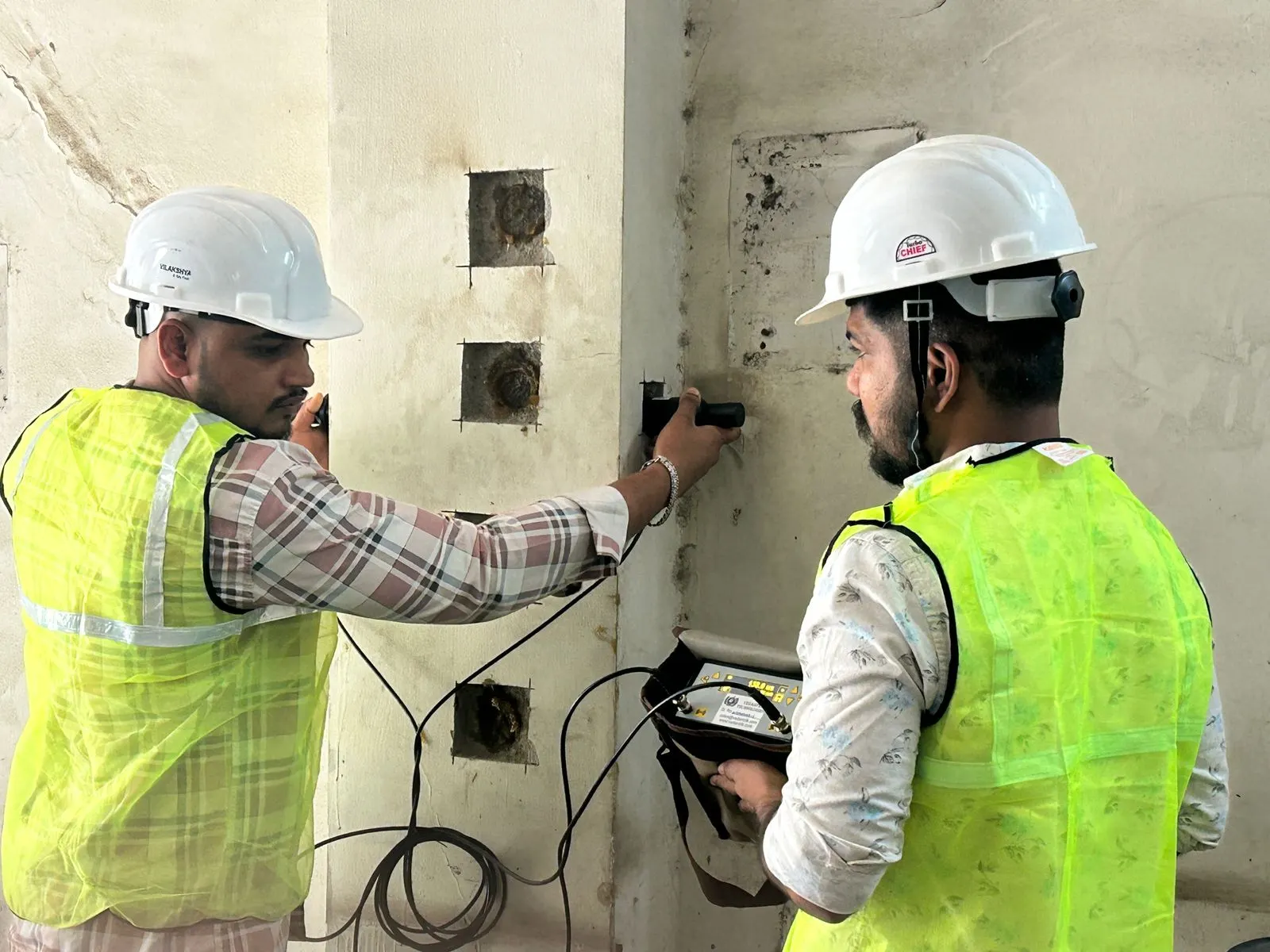
Ground-Penetrating Radar (GPR) locates reinforcement, maps embedded utilities, and profiles pavement layer thickness, while Ultrasonic Pulse Velocity (UPV) per IS 13311 Part 1 assesses the homogeneity and quality of in-place concrete. Both methods are non-destructive, so the member stays in service while it is surveyed.
TCR runs the subsurface suite under the NDT-of-concrete guidance in IAEA-TCS-17. GPR gives a plan view of rebar layout and clear cover before any coring or cutting, and UPV readings across a grid flag voids, honeycombing, and cracking that the eye cannot see. The two methods together build the evidence base for a condition assessment without breaking the surface.
The subsurface and NDT-of-concrete methods are governed by the Indian and ASTM designations below, with IAEA-TCS-17 as the overarching guidance for non-destructive testing of concrete.
| Method | What it measures | Standard |
|---|---|---|
| Ground-Penetrating Radar | Rebar location, embedded-utility mapping, pavement layer-thickness profiling | IAEA-TCS-17 (NDT of concrete guidance) |
| Ultrasonic Pulse Velocity | Concrete homogeneity and quality | IS 13311 Part 1 |
| Rebound hammer | Surface hardness correlation | IS 13311 Part 2 |
| Half-cell potential | Corrosion likelihood mapping | ASTM C876 |
The subsurface suite serves reinforced-concrete structures and pavements: rebar location and clear-cover verification before drilling or anchoring, embedded-utility detection ahead of demolition or coring, pavement layer-thickness profiling, and concrete-quality mapping on slabs, columns, beams, and bridge decks.
Cover meter surveys confirm the clear cover to reinforcement, and, where corrosion is suspected, half-cell potential per ASTM C876 maps corrosion likelihood, with linear polarisation resistance and macrocell current measurement adding quantitative corrosion-rate data.
The GPR and UPV methods are the field diagnostics behind two of TCR's largest civil programmes: the non-destructive evaluation stage of structural audits under Maharashtra Clause 77, and the 500+ bridge inspection book of work across India.
Within a bridge inspection, UPV per IS 13311 Part 1 confirms concrete homogeneity, the rebound hammer correlates surface hardness, and half-cell potential per ASTM C876 maps corrosion likelihood, alongside drone and submersible ROV imaging of the structure.
2 published insights on this site bear directly on GPR, UPV and Subsurface. They are shown below alongside the most recent Civil & Structural Testing work, and the full index carries all 36.
Ensure concrete integrity with UPV testing! TCR Engineering offers precise, non-destructive evaluations to detect cracks, voids, and flaws i
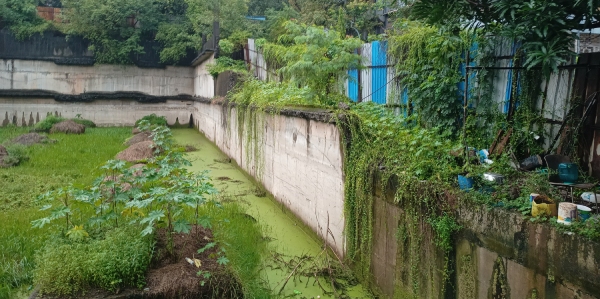
TCR supports client with structural testing of existing retaining wall and raft using UPV, rebound hammer, core tests, and audit reporting.
How bipolar corrosion inhibiting admixtures protect rebar, and the ASTM G109, RDSO M&C/PCN/126 and IS 9103 tests that prove it.
Read all 36 Civil & Structural Testing insights →All insights →
GPR locates reinforcement, maps embedded utilities, and profiles pavement layer thickness, without cutting or coring the member.
UPV is run to IS 13311 Part 1 for concrete homogeneity, under the NDT-of-concrete guidance in IAEA-TCS-17.
Half-cell potential per ASTM C876 maps corrosion likelihood, and linear polarisation resistance and macrocell current measurement add quantitative corrosion-rate data.
It forms Part B, the non-destructive evaluation stage, of a structural audit under Maharashtra Clause 77, and it also supports the 500+ bridge inspection programme.