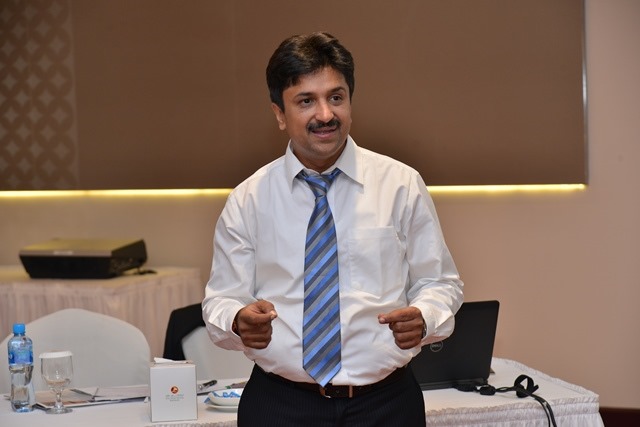
Workshop on Fitness for Service by Paresh Haribhakti
This workshop on FFS benefit plant engineers to understand the various damage mechanisms involved in failure of plant equipment

Group
Services · Asset Integrity and Engineering Consulting
HMEL Bathinda isomerization reactor 503-R-001 saw 710 degrees Celsius for one minute in March 2012. In-situ replication at 60 locations, hardness mapping, TOFD, and AUBT certified it fit for service, and it ran to 2019 without crack growth.
TCR Engineering Services Pvt. Ltd., a NABL ISO/IEC 17025:2017 accredited laboratory in Navi Mumbai, delivers Fitness for Service assessment per API 579-1/ASME FFS-1 and BS 7910 for pressure vessels, piping and storage tanks. Damage-mechanism identification is anchored in API RP 571, and assessments run to Level 3 with fracture mechanics and finite element analysis.
TCR undertakes Fitness For Service (FFS) Assessment based on Level 2 and 3 of BS 7910 standards and API 579. Our fracture mechanics methodology and its application have been successfully proven worldwide across industries, including nuclear pressure vessels to high consequence items in the exploration, refining, petrochemical and construction industry.
A process, plant, and equipment are often exposed to corrosive environments and/or elevated temperatures. Under these conditions, the material used in the equipment can degrade or age with time. Important equipment such as pressure vessels, piping, and storage tanks become older, the plant operator must decide if they can continue to operate safely and reliably to avoid injuries to personnel and public, environmental damage, and unexpected shutdowns. Fitness for service assessment procedures provide a means for helping the plant operator make these decisions on established engineering principles.
Fitness for service assessment is a multidisciplinary engineering analysis that ensures all process and plant equipment such as pressure vessels, piping, and tanks operate safely and reliably for the desired period of operation and until the next turnaround or planned shutdown occurs in the future. API Recommended Practice 579 provides a general procedure for assessing fitness for service. This assessment procedure evaluates the remaining strength of the equipment in its current state, which may have degraded from its original condition. Common degradation mechanisms include corrosion, localised corrosion, pitting and crevice corrosion, hydrogen attack, embrittlement, fatigue, high-temperature creep and mechanical distortion. Methods for evaluating the strength and remaining service life of equipment containing these types of degradation are presented and reviewed
Common Reasons for Assessing The Fitness for Service of Equipment Include:
Outcome of Fitness for Service Assessment
Fitness for Service Assessment uses Analytical Methods to Evaluate Flaws, Damage and Material Aging Based On:
API 579-1/ASME FFS-1 is organised into 14 parts; Parts 3 to 14 cover twelve damage types, each with three assessment levels:
| Part | Damage Type |
|---|---|
| 3 | Brittle fracture |
| 4 | General metal loss |
| 5 | Local metal loss |
| 6 | Pitting corrosion |
| 7 | Hydrogen blisters and HIC and SOHIC |
| 8 | Weld misalignment and shell distortions |
| 9 | Crack-like flaws |
| 10 | High-temperature components in the creep range |
| 11 | Fire damage |
| 12 | Dents and gouges |
| 13 | Laminations |
| 14 | Lining issues |
The TCR FFS service has a defined five-role team:
| Role | Responsibility |
|---|---|
| Metallurgical engineer | Damage mechanism identification, materials review, replica reading |
| Mechanical and design engineer | API 579 calculation, FEA, design review |
| ASNT Level III inspection engineer | NDT plan, witnessing, sentencing |
| Site in-charge | Onsite execution, client interface, scope discipline |
| Certified NDT technicians | UT, PAUT, TOFD, MT, PT, replica acquisition |
March 2012 temperature excursion: peak 710 degrees Celsius for 1 minute, 44 minutes above 700 degrees Celsius. Full damage-mechanism workup including HTHA per Nelson curve API 941. In-situ replication at 60 locations. Hardness mapping. TOFD. Automated Ultrasonic Backscatter Technique (AUBT). Plus a laboratory simulation experiment with welded coupons. Certified fit-for-service.
Monitored through 2019 with no CS3 crack growth, no shutdown, no replacement.
API 620 Appendix R 1978 design. A-537 Class 1 inner shell, IS-226 outer shell. 1983 construction. Leak-Before-Break fracture mechanics study using a Failure Assessment Diagram framework. Rolling regulatory and operator engagement to keep the tank in service.
TCR publishes its own work on YouTube. One film is below, recorded on the bench and in the field. Each one loads only when you press play: nothing is requested from Google before that.
17 of the 86 published insights tagged to Asset Integrity bear directly on Fitness-for-Service. The 6 most relevant are below.
This workshop on FFS benefit plant engineers to understand the various damage mechanisms involved in failure of plant equipment
Explore TCR's expert podcast on Fitness for Service (API 579/ASME FFS-1 and BS 7910)—insights, methods & case studies. Watch now!
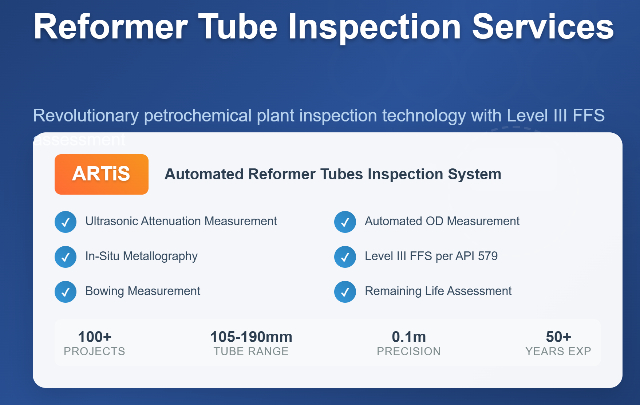
ARTiS revolutionises reformer tube inspection with Level III FFS assessment per API 579, predicting failures months ahead of traditional methods.
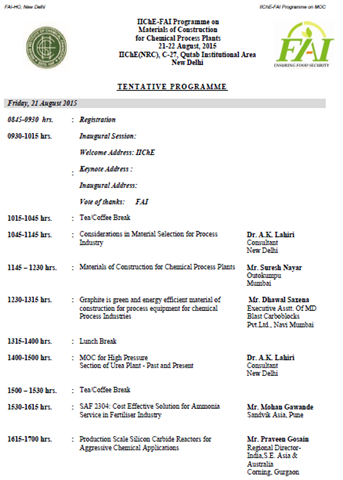
Mr. Paresh Haribhakti's paper was on Fitness for Service (FFS)
Failure analysis metallurgical laboratory India prevents million-dollar disasters. TCR Engineering's 50+ years expertise identifies root causes.
"TCR Engineering: Mumbai's IBR-approved boiler inspection experts. 50+ years experience, IBR approved. NABL certified, serving 5000+ clients…
A Fitness for Service assessment is a multidisciplinary engineering analysis per API 579-1/ASME FFS-1 and BS 7910 that evaluates whether degraded equipment such as pressure vessels, piping and storage tanks can operate safely and reliably until the next turnaround or planned shutdown, using stress analysis, NDE findings and material properties.
Common triggers are discovery of a flaw such as a locally thin area or crack, failure to meet current design standards, or plans to operate under more severe conditions than originally expected. The outcome is a documented decision to run, alter, repair, monitor or replace the equipment, with guidance on its inspection interval.
Parts 3 to 14 cover twelve damage types: brittle fracture, general and local metal loss, pitting corrosion, hydrogen blisters with HIC and SOHIC, weld misalignment and shell distortion, crack-like flaws, high-temperature creep, fire damage, dents and gouges, laminations and lining issues, each with three assessment levels.
A defined five-role team: a metallurgical engineer for damage-mechanism identification, a mechanical and design engineer for API 579 calculation and FEA, an ASNT Level III inspection engineer for the NDT plan, a site in-charge for onsite execution, and certified NDT technicians for UT, PAUT, TOFD, MT, PT and replica acquisition.