TCR's Inspection Strategies for Aboveground Storage Tanks
Tank integrity with advanced NDT solutions like AE, MFL, PAUT & robotic inspections, ensuring safety, compliance, and longevity

Group
Services · Asset Integrity and Engineering Consulting
API 653-compliant inspection of above-ground storage tanks without taking them out of service. Robotic crawlers, ATEX certified by a European notified body and PESO approved, capture up to 200,000 ultrasonic thickness readings across a full tank floor.
TCR Engineering, a NABL ISO/IEC 17025:2017 accredited laboratory (NABLT0726MH18640) in Navi Mumbai, inspects above-ground storage tanks in service and out of service per API 653, deploying ATEX and PESO certified robotic rovers, magnetic flux leakage floor scanning and acoustic emission testing with a partner-delivered robotic fleet.
The total cost of conventional inspections often far exceeds that of cleaning and inspection, with significant expenses tied to material transfer, product downgrades, and extended tank downtime. Additionally, the hidden costs of premature repairs can be substantial.
When tanks are emptied for conventional inspections, it disrupts operations, leading to the need for rapid inspections, which often carry a premium price and result in unnecessary repairs that may not be required for another five to ten years.
With TCR Engineering’s In-Tank Robotic Inspection service (deployed with our service partner company), you can drastically reduce these costs by performing API 653-compliant inspections of Above-Ground Storage Tanks (ASTs), including those filled with hydrocarbons or firewater, as well as Sumps, intake pipeline and Basins without needing to take them out of service for manual cleaning and inspection. This innovative approach minimises operational disruptions while ensuring thorough and accurate inspections.
These robots have been engineered to operate in hazardous environments, including hydrocarbon-filled tanks, with full compliance to ATEX certification by a European Notified Body and PESO approval from the Government of India. Our robotic inspection services deliver approximately 50 percent cost reduction and roughly ten times faster results against scaffolding-based methods, capturing high-density data of up to 200,000 ultrasonic thickness scans per tank, all while eliminating confined space entry and working-at-height hazards, which are major causes of industrial accidents.
The Robot is designed for in-service ultrasonic and visual inspection of storage tanks, significantly reducing the need for confined space entry. Our robotic crawlers perform high-density Ultrasonic Thickness (UT) scanning of storage tank floors, even while the tank is full, capturing up to 200,000 UT scans for comprehensive analysis. These inspections provide precise, real-time data on the tank’s condition, pinpointing areas of corrosion and quantifying remaining plate thickness without requiring the tank to be taken out of service or cleaned.
Its results provide valuable data, such as minimum remaining thickness, via extreme value analysis, and online in-depth analysis with colour mapping for easy interpretation. In line with API 653 and API RP 575, TCR's robotic solutions deliver more efficient and safer inspections of critical assets.
Our robotic systems have been successfully deployed at various reputable oil refineries and industrial sites. The ITAS Rover has completed internal inspections for over 14 in-service tanks at LNG terminals and other refineries. TCR has executed external shell inspections for 34 assets at a major petrochemical complex, demonstrating the versatility and capability of our MagRover technology. TCR can also develop custom robotic solutions tailored to specific inspection needs for pressure vessels, dome roof tanks, cross-country pipelines, jetty pile casing, pipe racks, and offshore riser pipes.
Key Benefits of TCR's In-Tank Robotic Inspection Services:
By utilising TCR Engineering’s robotic solutions, industries can ensure the integrity of their assets while minimising operational disruptions, environmental impact, and overall costs.
At TCR Engineering, we provide advanced Acoustic Emission Testing (AET) services for Above Ground Storage Tanks (AST) and other critical infrastructure, following industry standards such as API 650 and API 653. AET is a powerful Non-Destructive Testing (NDT) method used to detect and analyse sound waves emitted from structural defects or discontinuities.
This technique is highly versatile, with applications in assessing structural integrity, detecting flaws, corrosion monitoring, leak detection, and ensuring weld quality. TCR Engineering’s extensive expertise allows us to offer precise and reliable AET solutions that help industries maintain safety and operational efficiency.
Our AET process monitors tanks for active leaks, corrosion, and structural weaknesses by attaching highly sensitive acoustic sensors to the tank walls. These sensors detect stress waves generated by defects or discontinuities when the tank is subjected to pressure changes, temperature fluctuations, or external loads. After conditioning the tank (turning off heaters and agitators), we triangulate the location of potential flaws, particularly those in the tank floor, and provide a detailed assessment of the tank’s overall condition, graded from “A” to “E” for maintenance management purposes.
TCR Engineering applies AET in a wide range of industrial applications, from storage tanks and pressure vessels to pipelines and aerospace structures. Our experts utilize multi-channel acoustic systems to inspect pressurized tanks, detect leaks in real-time, and monitor for damage mechanisms like fatigue cracking, metal thinning, and corrosion. This technique is especially effective for monitoring hard-to-reach areas, providing actionable data to ensure asset integrity and compliance with safety regulations.
By leveraging Acoustic Emission Testing, TCR helps clients in the oil and gas, petrochemical, and storage industries detect critical issues early, reducing downtime and maintenance costs, while ensuring adherence to API standards and safeguarding operational safety.
At TCR Engineering, we utilize Magnetic Flux Leakage (MFL) testing as a highly effective Non-Destructive Testing (NDT) method to detect discontinuities such as corrosion, erosion, pitting, and circumferential cracks in finned ferromagnetic and carbon steel heat exchanger tubes, air coolers, and other large steel structures.
MFL is particularly well-suited for the inspection of Above Ground Storage Tanks (ASTs), especially the tank floor, due to its ability to quickly cover large surface areas. The method is recognized for its precision in identifying and sizing material loss with millimetre-level accuracy, providing valuable insights into the structural integrity of ferromagnetic assets.
Magnetic Flux Leakage (MFL) Testing is widely used in industries that require large-scale inspection, such as oil and gas, petrochemical, and storage sectors, and complies with standards like API 650 for ASTs. The method enables rapid scanning of tank floors, where a scanner equipped with an array of magnetic sensors can map material loss efficiently. This makes MFL an ideal technique for detecting corrosion and erosion in vast areas, often covering hundreds of square meters, and for ensuring compliance with relevant industry standards.
TCR’s Magnetic Flux Leakage (MFL) services are particularly useful in industries that prioritize safety and efficiency. We adhere to industry standards such as API 653 for tank inspections, ensuring that our clients meet regulatory compliance and maintain the highest levels of structural integrity. MFL is applied to a variety of use cases, including storage tanks, pressure vessels, and pipelines, providing quick and accurate results to guide maintenance and repair decisions.
By leveraging MFL technology, TCR Engineering provides clients with actionable data to identify and manage structural weaknesses, reduce downtime, and ensure the continued safe operation of critical assets.
15 of the 86 published insights tagged to Asset Integrity bear directly on Storage Tank Inspection and Audit. The 6 most relevant are below.
Tank integrity with advanced NDT solutions like AE, MFL, PAUT & robotic inspections, ensuring safety, compliance, and longevity
Expert insights on storage tank and silo condition assessment from TCR Advanced's MD Paresh Haribhakti, combining standards with innovation.
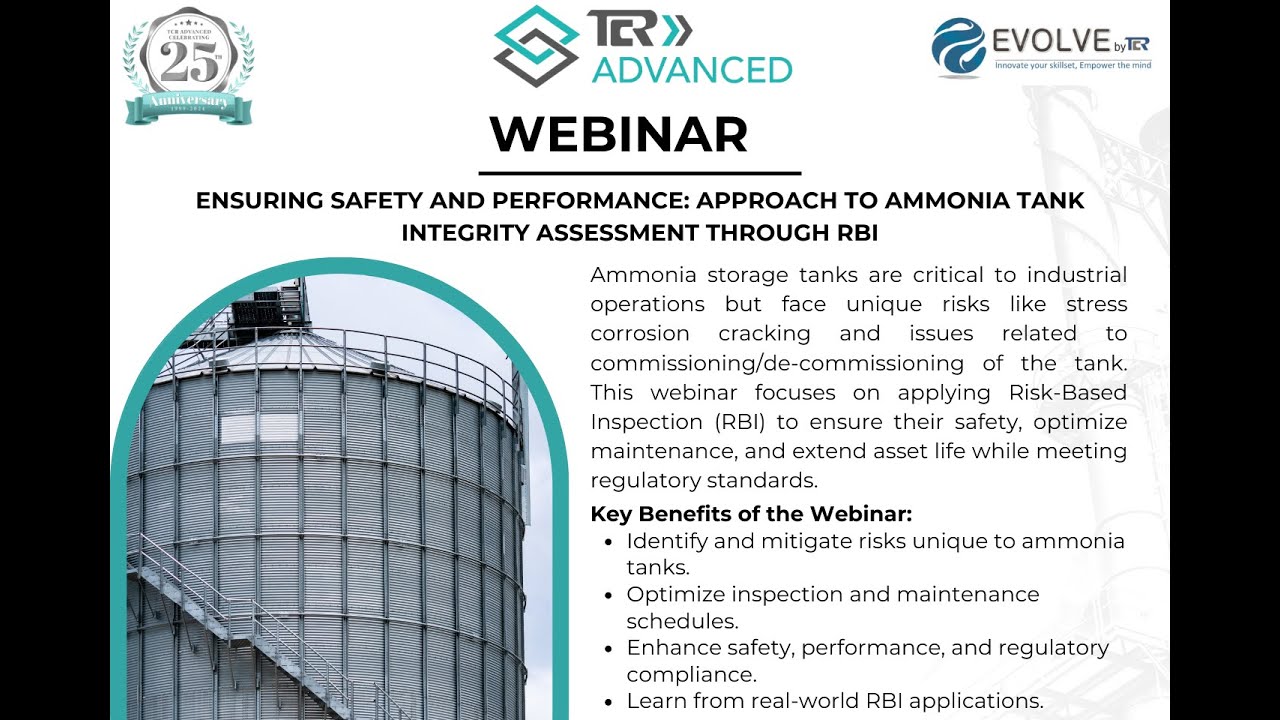
Optimize ammonia tank integrity with TCR's Risk-Based Inspection (RBI). Enhance safety, reduce downtime, and improve operational efficiency
Providing insights to damage mechanisms associated with Ammonia tank and RBI to improve integrity
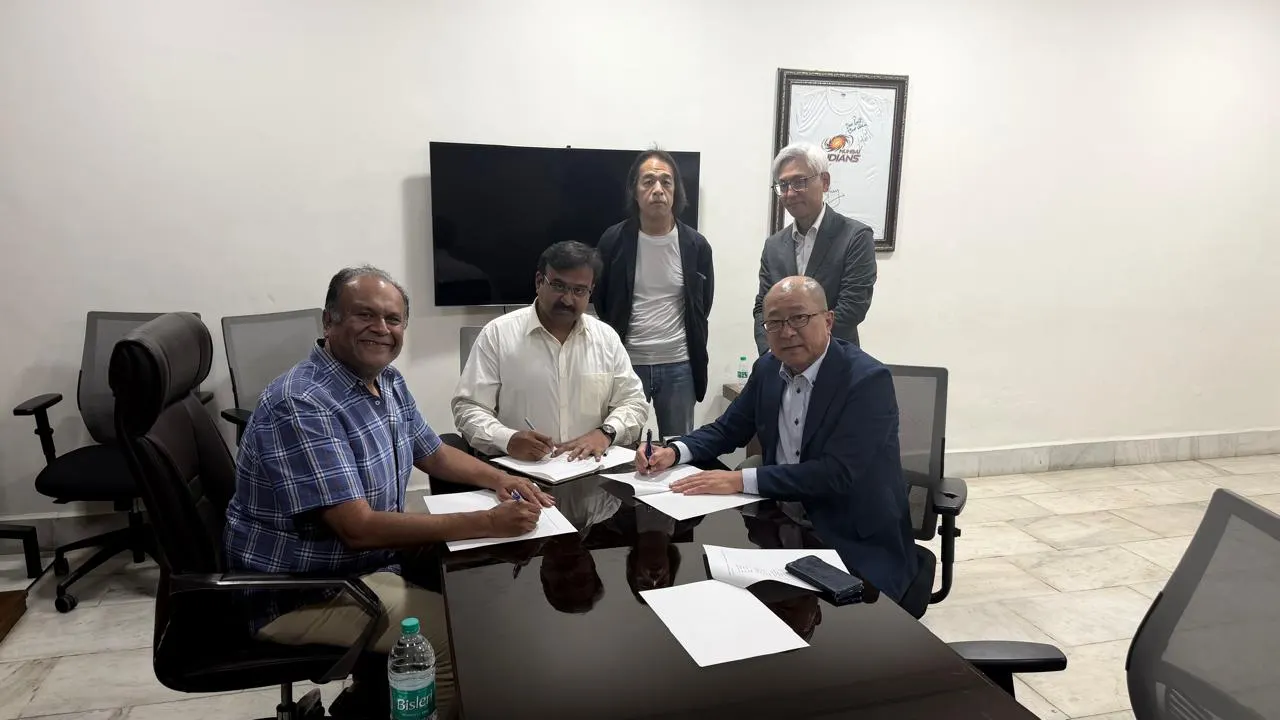
TCR Engineering and Chugai Technos sign three-party MOU on 29 April 2026 to channel inspection and asset integrity services across regions.
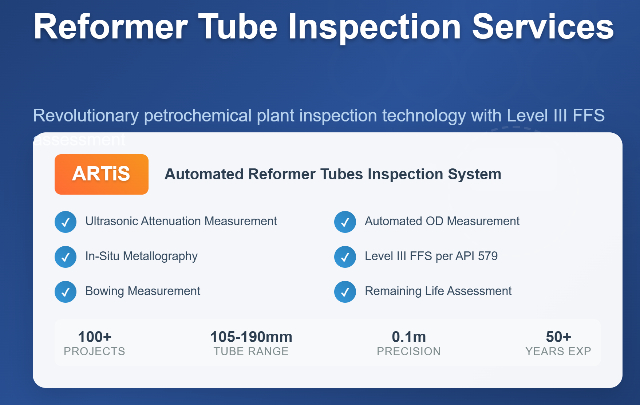
ARTiS revolutionises reformer tube inspection with Level III FFS assessment per API 579, predicting failures months ahead of traditional methods.
Yes. TCR's in-tank robotic inspection performs API 653 compliant ultrasonic thickness scanning of tank floors while the tank remains full, including hydrocarbon and firewater tanks, sumps, intake pipelines and basins. The ATEX and PESO certified robots eliminate confined space entry, manual cleaning and the downtime of conventional out-of-service inspection.
The robotic crawlers capture high-density ultrasonic thickness data, up to 200,000 UT scans per tank, reporting minimum remaining plate thickness through extreme value analysis with colour-mapped condition plots. Results pinpoint corrosion areas and quantify remaining thickness in line with API 653 and API RP 575, supporting repair decisions only where needed.
Acoustic emission testing monitors in-service tanks for active leaks, corrosion and structural weaknesses. Sensitive sensors on the tank wall detect stress waves from defects under pressure or temperature changes; flaw locations, particularly in the tank floor, are triangulated and the tank graded from A to E for maintenance management.
A scanner carrying an array of magnetic sensors sweeps the ferromagnetic tank floor, mapping corrosion, erosion and pitting across hundreds of square metres quickly, and sizing material loss with millimetre-level accuracy. TCR applies MFL under API 653 tank inspection practice to guide maintenance and repair decisions on storage tanks.