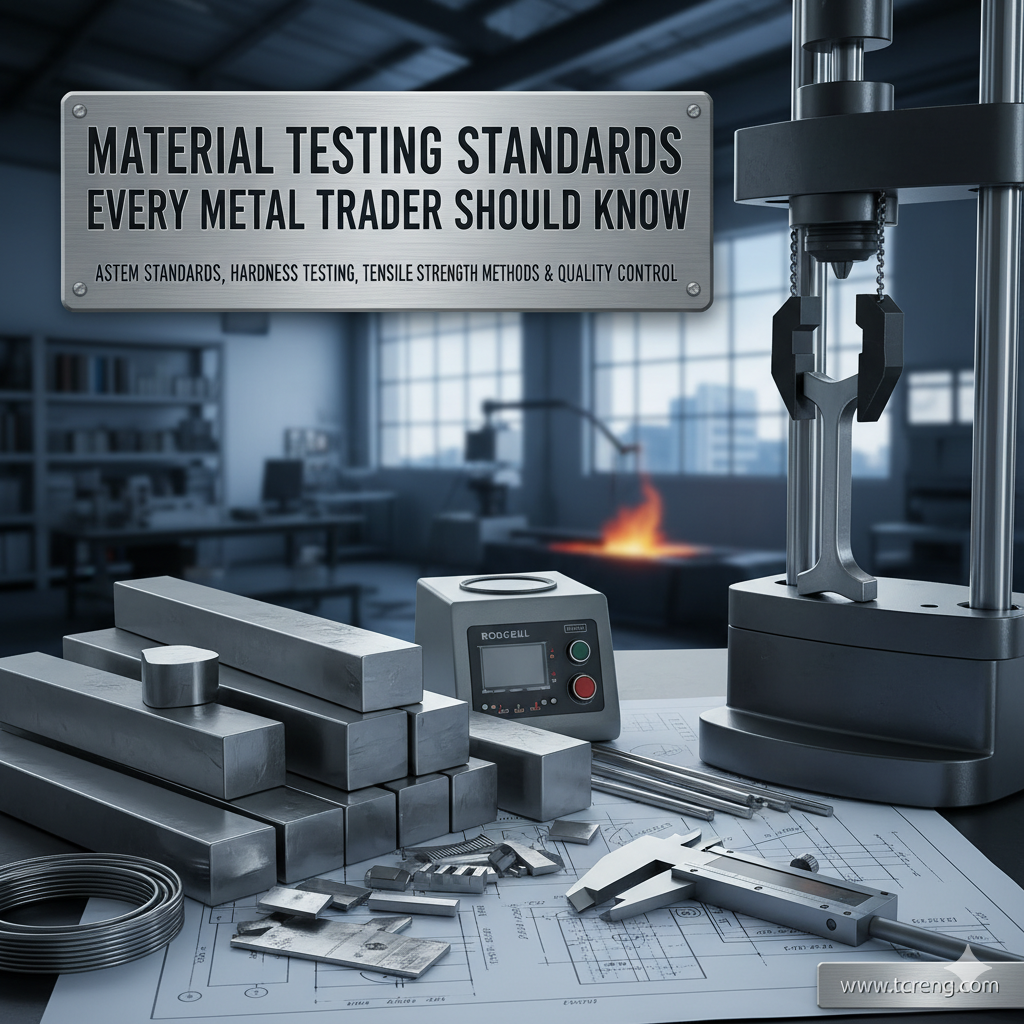
Material Testing Standards Every Metal Trader Should Know
Essential ASTM material testing standards for metal traders. From tension testing to hardness measurement—everything you need to know.

Group
Industries
A disputed assay moves real money. From the BME House office in Mumbai's Gulalwadi market, TCR runs the umpire analysis: fire assay weighed to 0.0001 g resolution, classical wet chemistry, and a certificate carrying ILAC reciprocity.
Request a QuoteThe Bombay Metal Exchange’s exclusive assayer and an ICCL/BSE-approved assayer, TCR is the neutral arbitration bench for a market of 2,500-plus bullion and non-ferrous traders with the largest classical wet-chemistry capacity in India and ILAC-recognised reports.
POTENTIAL FAILURES WE SERVICE: Disputed assays, off-specification consignments and contamination in bullion, non-ferrous and ferro-alloy trade. TCR resolves purity and composition disputes by fire assay, optical-emission and ICP spectrometry, atomic absorption and classical wet chemistry, acting as the neutral arbitration assayer for exchange-settled and physical-market consignments.
Metal trading runs on assay trust. Every consignment of ferro-alloys, scrap, ingots, or finished product changes hands against a composition certificate, and a disputed assay moves real money between buyer and seller with no room for argument by opinion. The referee in that dispute must be independent, accredited, and fast.
TCR has played that role for decades from its BME House metal market office in Mumbai's Gulalwadi trading district, backed by NABL-accredited spectrometry, classical wet chemistry, and LECO analysis, more than 700 PMI projects, and sampling protocols that stand up in commercial arbitration. For traders, the TCR certificate is not a formality; it is the instrument that settles the trade.
The Indian bullion and precious-metals trading market routes through three buyer pools.
The commodity-exchange empanelled assayer pool serves the Bombay Stock Exchange (BSE) and National Stock Exchange (NSE) bullion contracts, the Indian Clearing Corporation Limited (ICCL) settlement workflow, and the Bombay Metal Exchange Association (BMEA) BME House physical assay operation.
The jewellery and refining pool serves bullion refiners, jewellery houses, hallmarking centres, and gold and silver bar manufacturers.
The non-precious metal trading pool serves traders in copper, aluminium, lead, zinc, nickel, tin, brass, bronze, and ferro-alloys (FeV, FeMo, FeNi, FeSi, FeCr) operating off the LME-Comex price discovery and the local Bombay Metal Exchange physical settlement market.
The vertical is positioned operationally rather than on a damage-mechanism basis. The differentiators are statutory empanelment (BSE/NSE/ICCL/BMEA), classical wet chemistry capacity at scale (the largest in India), and the NABL NABLT0726MH18640 ISO/IEC 17025:2017 accreditation that gives every assay report international ILAC MRA reciprocity.
| Material Class | Examples |
|---|---|
| Industrial non-ferrous | Copper (electrolytic, fire-refined), aluminium (alloy and wrought), lead, zinc, nickel, tin |
| Brass and bronze | C260, C272, C360, gunmetal, naval brass, manganese bronze |
| Ferro-alloys | FeV, FeMo, FeNi, FeNiMo, FeSi, FeCr, FeMn, FeTi, FeNb |
| Iron ore and concentrates | Hematite, magnetite, fines, sinter feed, pellet feed |
| Specialty alloys | Inconel scrap, monel scrap, hastelloy scrap; refractory-metal scrap (Ti, Mo, W, Ta, Nb) |
| Galvanised coatings | Radiator fins, sheet G.I., wire G.I. |
| Fasteners (commodity grade) | Screws and spring washers per IS 1573 |
Fire assay: Cupellation method for gold and silver bullion; weighing on micro-balance to ±0.0001 g resolution. ASTM E1335 reference frameworks.
Optical Emission Spectrometry (OES): Bulk compositional analysis on metals and alloys to ASTM E1086, E415, E1019, E1479, E350-E353 series.
Inductively Coupled Plasma Optical Emission Spectrometry (ICP-OES): Trace element scanning, multi-element capability.
Atomic Absorption Spectrometry (AAS): Trace and minor element quantification.
Combustion Analysis (LECO): Carbon and sulphur in metals; IGA for nitrogen and oxygen.
Classical wet chemistry: Volumetric, gravimetric, and titrimetric methods for verification, arbitration, and reference-standard calibration. The largest classical wet-chemistry capacity in India.
X-Ray Fluorescence (XRF): Hand-held and bench-top units for rapid bulk identification at field-level (PMI).
Density and specific gravity: Archimedes method for bullion verification.
Hallmarking-grade testing: BIS-aligned hallmarking workflow for jewellery centres.
Non-Ferrous and Specialty: ASTM E478 (copper); ASTM E54 (aluminium); ASTM E607 (lead and tin); ASTM E663 (zinc); ASTM E76 (nickel and nickel alloys); IS 191, IS 21, IS 1944, IS 8492, IS 1366 (Indian non-ferrous specs); SAE/ASTM Unified Numbering System (UNS) per Casti Metals Red Book and Metals Black Book references.
Ferro-alloys: IS 1170, IS 1559, IS 4226, IS 4225 series; FeV, FeMo, FeNi compositional standards.
Coating and Plating: IS 1573 (galvanised coating on screws and spring washers); IS 4759 (galvanising); ASTM A123, ASTM A153 (galvanising).
Reference Materials: ARMI / MBH (USA / UK) Certified Reference Material panel (cross-listed under Industrial Research vertical); ISO 17034.
Metal trading and recycling is not a plant vertical, so the Continuum adapts to the trade cycle: pre-shipment sampling, assay, umpire analysis, and settlement support. TCR's role is the neutral laboratory signature that both sides of a trade can accept.
The recurring problems are sampling integrity on heterogeneous scrap and ferroalloy lots, assay disputes between buyer and seller certificates, and the settlement risk that follows, which is why the BSE and NSE empanelment and the bullion fire-assay operation anchor this vertical.
Pre-Shipment Sampling: Representative sampling of scrap, ferroalloy, ingot, and concentrate lots at yards, ports, and warehouses, with sample splitting and chain-of-custody discipline, supported by the TCR-BME Metal Market office serving the Mumbai ferroalloy catchment.
Assay and Analysis: Chemical analysis by classical wet chemistry, optical emission spectrometry, and X-ray fluorescence across ferrous, non-ferrous, and precious metals, including bullion fire assay, run in one of the largest classical wet-chemistry capacities in India under NABL NABLT0726MH18640.
Umpire and Dispute Analysis: Where buyer and seller certificates diverge, TCR acts as the umpire laboratory, retesting retained splits under agreed protocols and issuing the neutral certificate that settles the trade.
Settlement and Exchange Support: Assay certification supporting exchange-linked settlement, including the BSE and NSE empanelment scope, and periodic verification programmes for recurring trade counterparties.
Statutory: Bombay Stock Exchange (BSE), National Stock Exchange (NSE), Indian Clearing Corporation Limited (ICCL; ICCL/BSE Approved Assayer since November 2018), Bombay Metal Exchange Association (BMEA), Chamber of Commerce.
Industrial non-ferrous traders: BME House catchment of approximately 2,500+ traders; ferro-alloy traders supplying steel and foundry buyers; copper and aluminium traders supplying construction, automotive, and electrical buyers.
3 published insights on this site carry the Metal Trading tag. The 3 most recent are below.
Essential ASTM material testing standards for metal traders. From tension testing to hardness measurement—everything you need to know.
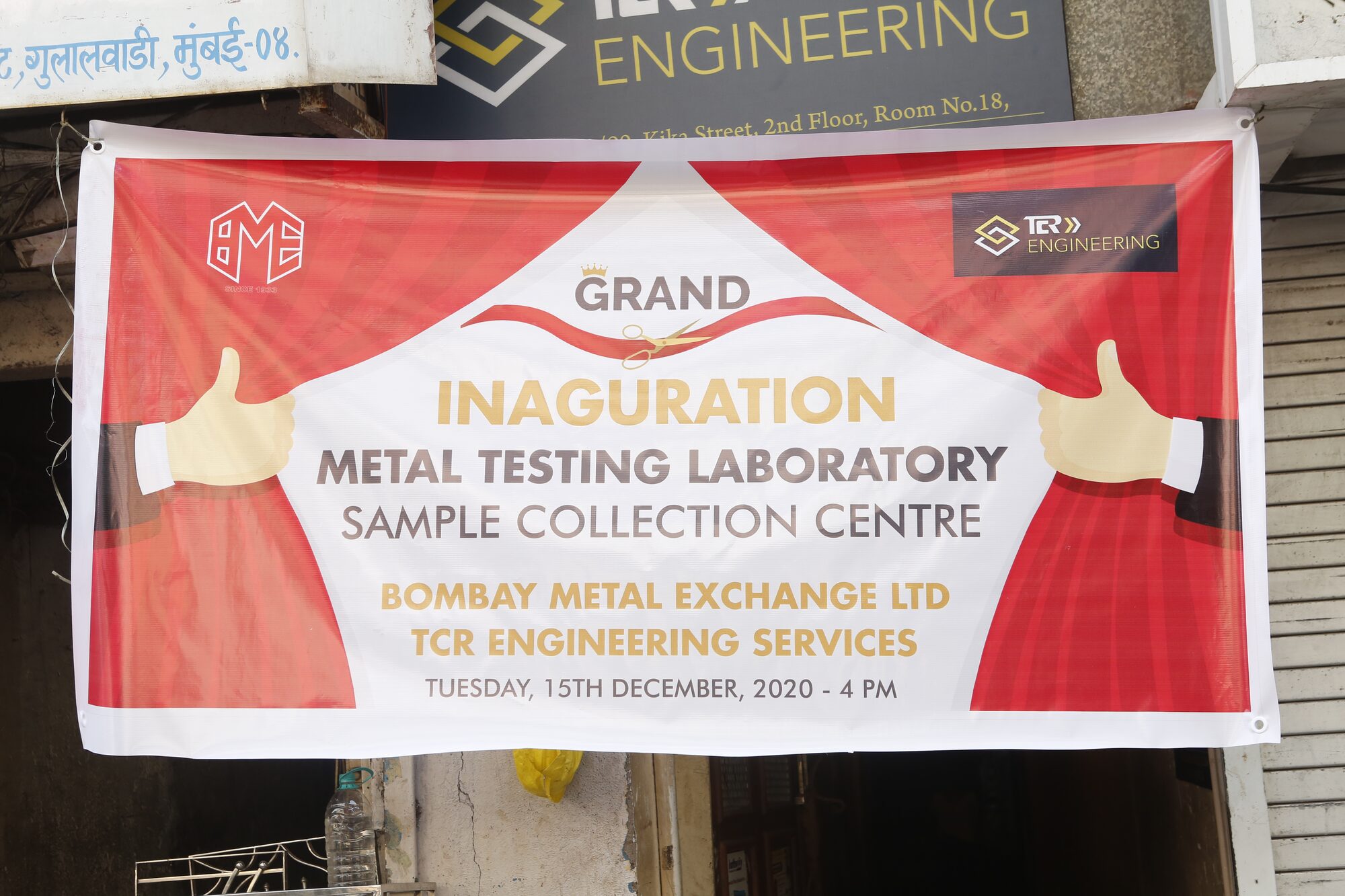
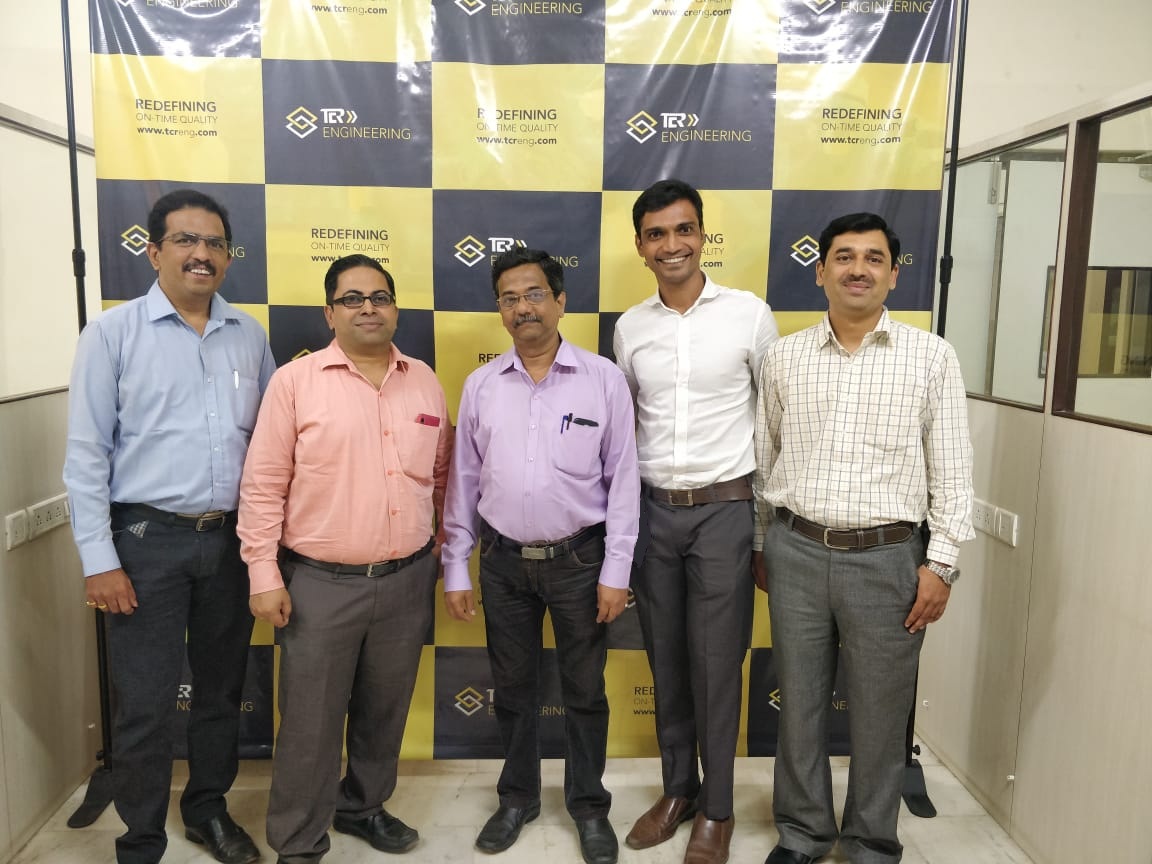
TCR Engineering with Bombay Metal Exchange (BME) opened a sample collection center
TCR will perform the functions of assaying / testing commodities in accordance with the ICCL/BSE norm
Yes. TCR has been an ICCL/BSE Approved Assayer since November 2018, serves the BSE and NSE bullion contract workflow, and is empanelled as the exclusive assayer to BSE and NSE commodity trade, operating the BME House physical assay operation in Mumbai's Gulalwadi trading district.
Bullion runs by fire assay using the cupellation method, weighed on a micro-balance to ±0.0001 g resolution against ASTM E1335 reference frameworks, supported by density verification by the Archimedes method and a BIS-aligned hallmarking workflow for jewellery centres.
TCR acts as the umpire laboratory. Retained splits are retested under agreed protocols with sample splitting and chain-of-custody discipline, and the neutral certificate that results settles the trade, backed by NABL NABLT0726MH18640 accreditation and ILAC MRA reciprocity that both sides can accept.
Optical emission spectrometry per ASTM E1086, E415 and the E350 to E353 series, ICP-OES trace scanning, atomic absorption spectrometry, LECO combustion analysis for carbon and sulphur, X-ray fluorescence for rapid identification, and classical wet chemistry, among the largest such capacities in India.
Yes. Representative sampling of scrap, ferroalloy, ingot and concentrate lots runs at yards, ports and warehouses with sample splitting and chain-of-custody discipline, supported by the TCR-BME Metal Market office serving the Mumbai ferroalloy catchment of approximately 2,500-plus traders.