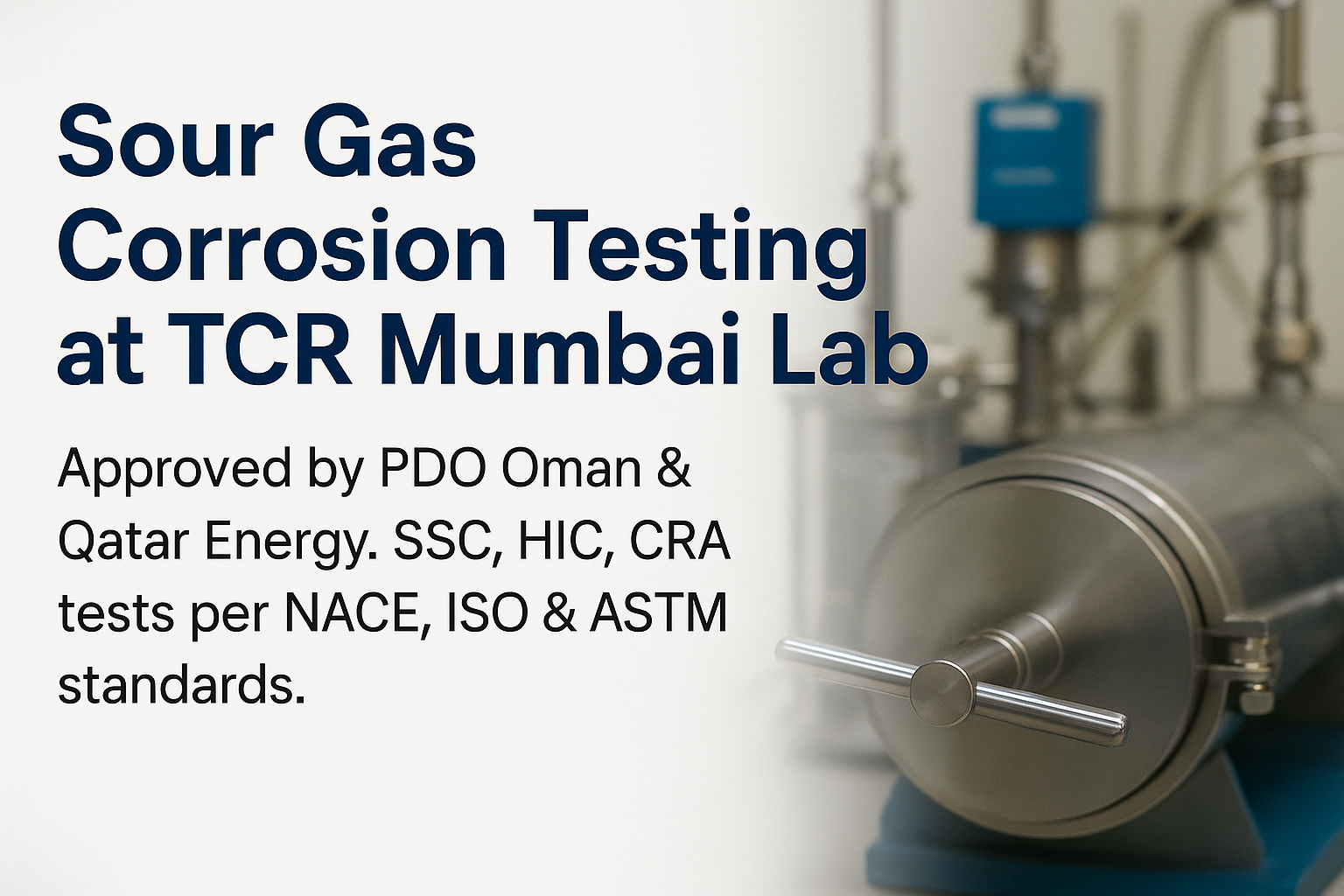
Sour Gas Corrosion Testing in India
Sour gas corrosion testing at TCR Mumbai lab, approved by PDO Oman & Qatar Energy. SSC, HIC, CRA tests per NACE, ISO & ASTM standards.

Group
Services · Materials Testing
NACE TM0177 runs across all five methods, TM0284 hydrogen-induced cracking is reported as crack length, thickness and sensitivity ratios on sectioned specimens, and a hydrogen-induced disbonding facility per ASTM G146 was commissioned in April 2026.
TCR Engineering qualifies materials for sour and corrosive service at its NABL ISO/IEC 17025:2017 accredited laboratory (NABLT0726MH18640) in Navi Mumbai. NACE MR0175/ISO 15156 anchors the programme, with SSC per NACE TM0177, HIC per NACE TM0284, four-point bend per NACE TM0316, and hydrogen induced disbonding per ASTM G146. The laboratory is PDO and OQGN approved.
Sour-gas corrosion testing is a core specialism of the group. The lab is PDO and OQGN approved, holds the NACE Excellent Laboratory in the Private Sector award, and has executed numerous sour-service projects for Shell. NACE MR0175/ISO 15156 material qualification for sour-service oil and gas applications is the anchor framework, supported by NACE MR0103 (refining), NACE TM0177 (SSC), NACE TM0284 (HIC), and NACE TM0316 (four-point bend) for upstream and downstream qualification.
Project qualification is run to client procurement specifications, including Petroleum Development Oman SP-2347 (carbon steel line pipe), SP-2337 (materials selection for production systems), and SP-2161 (materials selection and corrosion control for surface facilities).
Representative engagement. ITER-India for the Institute for Plasma Research, crevice corrosion and electrochemical study. TCR designs and builds its own autoclaves and reference specimens for non-standard corrosion studies, including the ITER-India fusion-reactor corrosion programme whose report was cross-checked by ITER France. CTOD with hydrogen-sulphide pre-charging, developed for Larsen and Toubro, charges specimens for 96 hours in NACE TM0177 Solution A and loads them within a 20-minute window per ISO 15653, ISO 12135, and BS 8571.
TCR offers a comprehensive range of material testing services for corrosion problems that include:
NACE MR0175/ISO 15156: Petroleum and Natural Gas Industries- Materials for use in H2S-containing Environments in Oil and Gas production
Additional Standards: NACE TM0177 Methods A to D and NACE TM0284 (sulphide stress and hydrogen-induced cracking), NACE MR0175 / ISO 15156 and NACE MR0103 (sour-service materials), NACE TM0316 and NACE TM0198. ASTM G28, G31, G47, G44, G48, G61, G85, G123, G42, G146, A262, B117, G8, F2129, F519, F1624. NORSOK M-710.
Project qualification: PDO specifications SP-2347 (carbon-steel line pipe), SP-2337, and SP-2161, and OQGN G14-PD-PL Version 1 (May 2024), with TCR on the PDO AVME MCI-121 approved-laboratory list and holding a multi-year JSRS certificate for the Oman market. Named line-pipe programmes include the 42-inch Fahud-Sohar Second Loop Line and the Marsa LNG gas supply, with mills served including Jindal Saw, Man Industries, and Tsingshan Steel Pipe.
NACE TM0177-2016 Methods A, B, C and D. Method A (tensile): constant-load testing in H2S-saturated solution. Method B (bent-beam): C-ring and bent-beam specimens. Method C (C-ring): for tubulars. Method D (Double Cantilever Beam): for fracture-mechanics-based evaluation. Method E (four-point bent-beam): for plate and bar stock.
Sulphide stress corrosion cracking (SSC) is a form of hydrogen embrittlement cracking which occurs when a susceptible material is exposed to a corrosive environment containing water and H2S at a critical level of applied or residual tensile stress. TCR Engineering Services conducts the NACE TM0177 tests including Methods A and B for SSCC test at their corrosion testing laboratory.
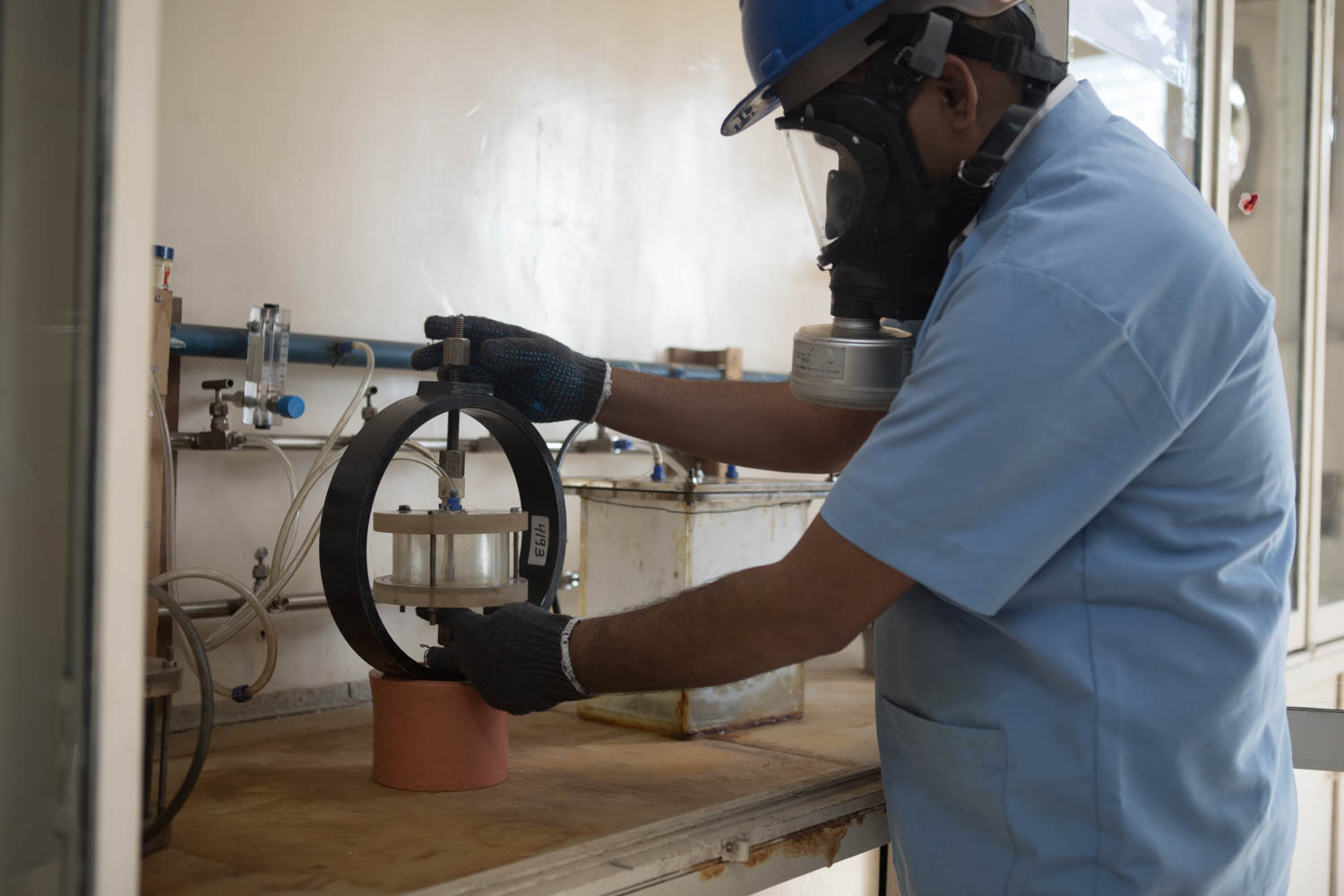
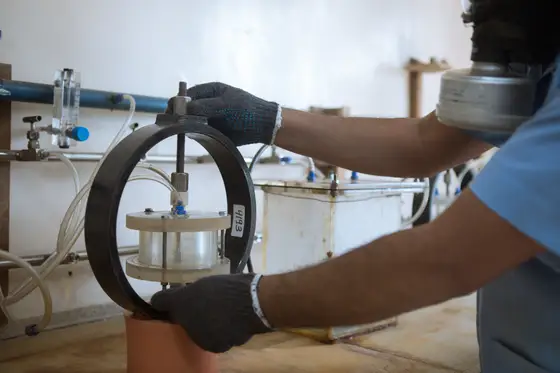
NACE TM0177 tests at TCR includes both Tensile Test (Proof Rings) under Method A and Bent Beam Test (3 or 4 Point Bends) under Method B. NACE TM0177 specifies Solution A (acidified), Solution B (acidified and buffered) and Solution C (for martensitic stainless steel). Solution A is used in Methods A unless the properties of Solution B or C are specified. In any case, H2S is bubbled through the solution constantly throughout the test period.
Testing is performed in NACE solutions A and/or B, saturated with H2S at 24º and 90º Celsius. Stressed samples are exposed to sour environment for a predetermined time, after which they are removed and analysed for crack detection. NACE TM0177 specifies test duration of 30 days (720 hours) for Method A or B test.
TCR Engineering provides a printed report for individual or cluster of tests conducted at the laboratory. The report includes a description of the test sample, details of the testing procedure and pH values of the test solution before and after exposure, along with the result of each test. TCR Engineering requires 6 weeks to complete the SSC test.
The SSC tests at TCR Engineering in India are performed routinely for customers, using tensile and bent beam specimens. For each stress level and temperature, the following sample size is required:
Plate- 16mm Thickness x 160mm long
Pipe- 160 long pieces irrespective of dia, cut strip of 16mm width
Bar- 160mm long piece irrespective of diameter
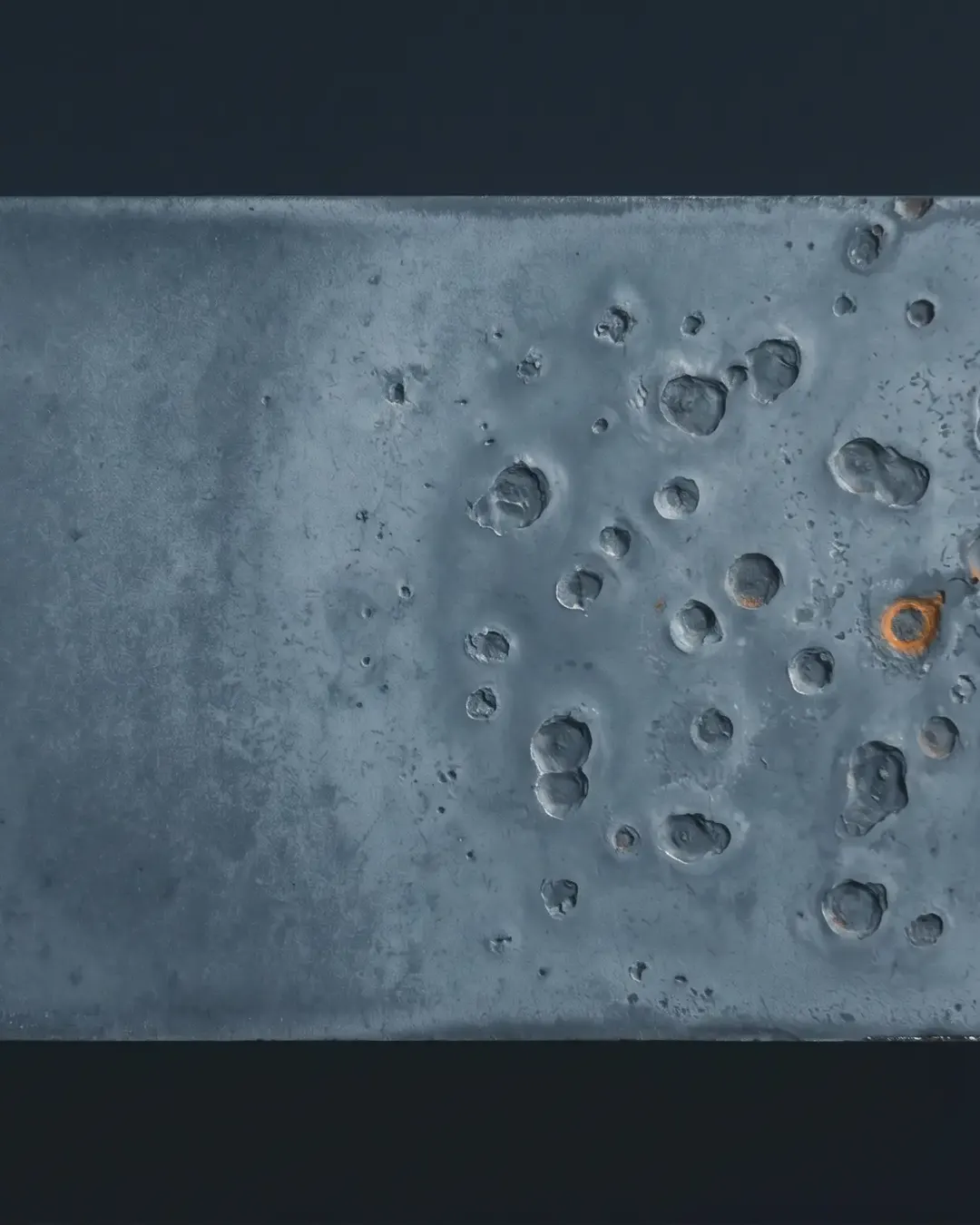
NACE TM0284 HIC testing with standard solutions (Solution A, Solution B) at controlled temperature and pressure. Crack length ratio (CLR), crack thickness ratio (CTR), and crack sensitivity ratio (CSR) measurement via optical microscopy of sectioned specimens.
TCR manufactures and holds its own HIC reference and control specimens, a capability most laboratories outsource. This lets every HIC programme be validated against in-house controls and supports qualification samples sent in by Chinese, Korean, and European mills. The sour-service rigs are backed by custom autoclave fabrication, designed and built in-house for sour, hydrogen, and non-standard research environments.
TCR Engineering Services’ corrosion testing laboratory performs HIC test to evaluate the resistance of pipelines, pressure vessel plate steels and hydrogen-induced Cracking caused by hydrogen absorption from aqueous sulphide corrosion. An unstressed test specimen is exposed to a solution at ambient temperature and pressure for a specified time, post which the test specimen is removed and evaluated.
NACE TM0284 specifies either Solution A or Solution B. Solution A is acidified brine. Solution B is simulated seawater prepared in accordance with ASTM D1141.52. In either case, H2S is bubbled through the solution constantly throughout the test period. NACE TM0284 specifies test duration of 96 hours.
TCR Engineering issues a detailed written report on completion of each test. Each report includes a description of the test sample received, the test procedure used, and the pH values of the test solution, before exposure and after the exposure. The test bars are cut into sections and examined under a microscope for hydrogen-induced cracks. The dimensions of any such cracks are recorded and used to compute the values in percentage for Crack Length Ratio (CLR), Crack Thickness Ratio (CTR) and Crack Sensitivity Ratio (CSR).
To conduct the HIC test, the following sample sizes are required:
Plate - 150mm x150mm with rolling direction marked
If the plate is more than 80mm thick - 250mm x 250mm sample size is required
Pipe - upto 2" OD - 200mm long
If the pipe is more than 2" OD pipe - 100mm long sample size is required
Bars - Upto 3" dia - 300mm long
If the Bars are more than 3" dia to 5" dia - 200mm long sample size is required
If the Bars are more than 5" dia - 100mm long sample size is required
Number of pieces to be tested:
Extended HIC testing under applied stress for sour-service line-pipe qualification. Combined NACE TM0284 and NACE TM0177 Method A protocols.
HID test facility commissioned April 2026 per ASTM G146. Anchor application: clad pressure vessels and overlays in refining and petrochemical sour service.
ASTM F519 (mechanical hydrogen embrittlement, plated and coated fasteners) plus API 20E (alloy and carbon steel bolting for use in the petroleum and natural gas industries). ASTM F1624 incremental step-load.
NORSOK M-710 Rev. 3 qualification of non-metallic sealing, sealing-related, and load-bearing materials for sour service. Test campaigns covering Zytel, ULTEM, Ryton, and other engineering polymers.
ASTM G47 alternate immersion stress corrosion cracking and ASTM G44 alternate immersion procedure for the 7xxx and 2xxx series aerospace aluminium alloys.
ASTM F2129 cyclic potentiodynamic polarisation for medical-device implant materials.
Weight-loss immersion per ASTM G31, cyclic polarisation per ASTM G61, pitting resistance per ASTM G48, intergranular corrosion per ASTM A262 Practices A through F, salt spray per ASTM B117. ASTM G28, G85, G123, G42 also covered.
Intergranular corrosion: ASTM A262 Practices A through F and ISO 3651-1 for austenitic stainless steels; ASTM A763 Methods W, X, Y, and Z for ferritic grades; and ISO 3651-2 Methods A, B, and C for ferritic, austenitic, and duplex stainless steels.
Several methodologies are available at TCR Engineering Services for testing intergranular corrosion. To conduct these tests, TCR carefully chooses a method that is suitable for steel grade and grain boundary composition. Intergranular corrosion in stainless steels may result from precipitation of carbides, nitrides or intermetallic phases.
Only in the most highly oxidising solutions can an intergranular attack be caused by intermetallic phases. When a test is restricted to carbides in materials containing nitrides or intermetallic phases, a less oxidising solution is chosen. TCR Engineering Services frequently carries out a number of tests in India as per the ASTM A262 specification:
Oxalic Acid Test, ASTM A262, Practice A (Oxalic Acid Etch)
The oxalic acid etch test is a rapid method of screening specimens of certain stainless steel grades which are essentially free from susceptibility to intergranular attack associated with chromium carbide participates. The test is used for acceptance and not the rejection of a material.
Ferric Sulphate-Sulphuric Acid, ASTM A262 - Practice B (Streicher Test)
This test is based on weight loss determinations and provides a quantitative measure of relative performance of the material evaluated. The procedure includes subjecting a specimen to a 24 to 120-hour boil in ferric sulphate - 50% sulphuric acid. This procedure measures the susceptibility of stainless steel and nickel alloys to intergranular attack associated with the precipitation of chromium carbides at grain boundaries.
Nitric Acid, ASTM A262, Practice C, (Huey Test)
The specimens are boiled for five periods, each for 48 hours in 65 percent nitric acid solution. The corrosion rate during each boiling period is calculated from the decrease in the weight of the specimens. The results, when properly interpreted can reveal whether or not the steel has been heat-treated in the correct manner. The customer must specify the maximum permissible corrosion rate and in applicable cases, provide the data on sensibilizing heat treatment.
The Huey test environment is strongly oxidising and is only used as a check to ascertain if the material has been correctly heat treated. This test is suitable for the detection of chromium depleted regions as well as intermetallic precipitations, like sigma phase in the material. The Huey test is also used for materials that come into contact with strongly oxidising agents, e.g. nitric acid. This procedure may also be used to check the effectiveness of stabilizing elements and of reductions in carbon content in reducing susceptibility to intergranular attack in chromium-nickel stainless steels.
Copper - Copper Sulphate - 16% Sulphuric acid, ASTM A262 - Practice E (Strauss Test)
This procedure is conducted to determine the susceptibility of austenitic stainless steel to intergranular attack associated with the precipitation of chromium-rich carbides. Once the specimen has been subjected to the solution boil, it is bent through 180° and over a diameter equal to the thickness of the specimen being bent. This test is based on a visual examination of the bent specimen.
Copper - Copper Sulphate - 50% Sulphuric acid, ASTM A262 - Practice F
This test is based on weight loss determination, which provides a quantitative measure of the relative performance of the material evaluated. It measures the susceptibility of "as received" stainless steel to intergranular attack.
Electrochemical corrosion: Potentiostatic and potentiodynamic anodic polarisation per ASTM G5, cyclic potentiodynamic polarisation per ASTM G61, electrochemical impedance spectroscopy for polarisation resistance and corrosion rate, immersion testing per ASTM G31, polythionic-acid stress corrosion per ASTM G35, specimen preparation per ASTM G1, pitting evaluation per ASTM G46, and corrosion-rate determination from Tafel slopes per ASTM G102.
Pitting and crevice corrosion: ASTM G48 Methods A through F, covering ferric-chloride pitting and crevice tests and critical pitting and crevice temperatures for stainless and nickel-base alloys. Chloride stress corrosion cracking in boiling magnesium chloride and calcium chloride per ASTM G36 to ONGC and EIL specifications.
Aluminium alloy stress corrosion: Alternate immersion per ASTM G44, ASTM G47, and ASTM G103; exfoliation per ASTM G66 (ASSET) and ASTM G34 (EXCO); and intergranular attack per ASTM G67 (NAMLT) and ASTM G110.
Duplex stainless steel intermetallic phase per ASTM A923 Methods A, B, and C. Copper-alloy stress corrosion per ASTM B858 (ammonia vapour) and hydrogen-embrittlement susceptibility per ASTM B577. Salt spray per ASTM B117 and neutral, acetic-acid, and copper-accelerated salt spray per ISO 9227.
Salt Spray Services
The senior technical team at TCR Engineering Services has deep industry expertise in handling diverse corrosion problems encountered in oil and gas production, oil and gas transmission, energy conversion systems, and nuclear power systems. A wide variety of corrosion related tests can be undertaken at TCR Engineering Services to determine weight loss corrosion, intergranular corrosion attack, pitting corrosion, corrosion fatigue, stress corrosion cracking, sulphide stress corrosion cracking, and hydrogen-induced corrosion cracking. TCR also performs tests listed under 3rd party inspection of LRS, TUV, DNV, ABS and other inspection agencies at their laboratory.
Salt Spray (Neutral / Fog), ASTM B117
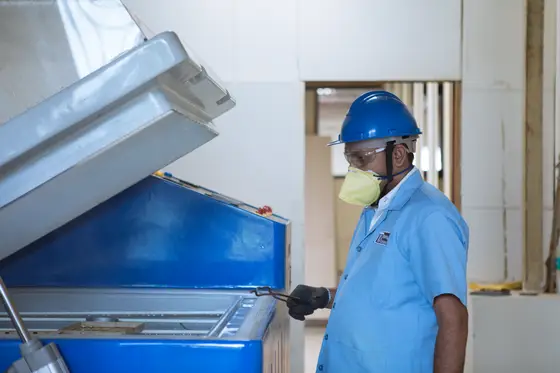
This is the most commonly used salt spray for testing inorganic and organic coatings, especially when such types of tests are used for material or product specifications. Salt Spray testing is a tool for evaluating the uniformity of thickness and the degree of porosity of metallic and non-metallic protective coatings. Several samples can be tested simultaneously depending on their size.
Corrosion Test in artificial atmospheres – Salt Spray Test, ISO 9227
This procedure is employed for the assessment of corrosion resistance of metallic material with or without permanent temporary corrosion protection. The selection of test methods that can be used in the identification and examination of rusting as well as the evaluation of pitting corrosion to determine the extent of its effect in various atmospheres with respect to Methods NSS, AASS and CASS.
46 of the 135 published insights tagged to Materials Testing bear directly on Corrosion and Sour Service. The 6 most relevant are below.
Sour gas corrosion testing at TCR Mumbai lab, approved by PDO Oman & Qatar Energy. SSC, HIC, CRA tests per NACE, ISO & ASTM standards.
NACE corrosion testing laboratory NABL certified - TCR Engineering provides HIC, SSC & SCC testing for oil & gas since 1973. 24/7 support.
Sulphide Stress Corrosion Cracking (SSC) test and HIC are specialty df TCR
TCR Engineering runs CTOD fracture toughness testing with H2S hydrogen pre-charging to ISO 15653, ISO 12135, and NACE TM0177 — for sour service weld…
NORSOK M-710 corrosion testing for composites and polymers: how the standard works, what labs must provide, and where most programmes go wrong.
TCR Engineering performs ASTM A262 and NACE RP0775 weight loss corrosion tests to assess metal resistance in harsh environments.
NACE TM0177 specifies a 30 day (720 hour) exposure for Method A tensile and Method B bent-beam tests, with H2S bubbled through the solution throughout. TCR requires six weeks to complete an SSC test, covering specimen preparation, the 720 hour exposure, crack examination, and a report with solution pH before and after.
An unstressed specimen is exposed for 96 hours to Solution A (acidified brine) or Solution B (simulated seawater) saturated with H2S. Sections are then examined under the microscope and any cracks measured to compute Crack Length Ratio, Crack Thickness Ratio and Crack Sensitivity Ratio, reported with solution pH before and after exposure.
Project qualification runs to client procurement specifications including Petroleum Development Oman SP-2347, SP-2337 and SP-2161, and OQGN G14-PD-PL Version 1 (May 2024). The laboratory is PDO and OQGN approved, holds the NACE Excellent Laboratory in the Private Sector award, and has executed numerous sour-service projects for Shell.
For SSC, each stress level and temperature needs plate 16 mm thick by 160 mm long, pipe strips 16 mm wide by 160 mm long, or bar 160 mm long. For HIC, plate requires 150 by 150 mm with rolling direction marked, with three pieces tested up to 88 mm thickness and five above.
Yes. TCR designs and builds its own autoclaves and reference specimens for non-standard studies, including the ITER-India fusion-reactor corrosion programme, and manufactures its own HIC reference and control specimens. CTOD testing with hydrogen-sulphide pre-charging loads specimens within a 20 minute window per ISO 15653, ISO 12135 and BS 8571.