+91 98335 30200  ·  sales@tcreng.com
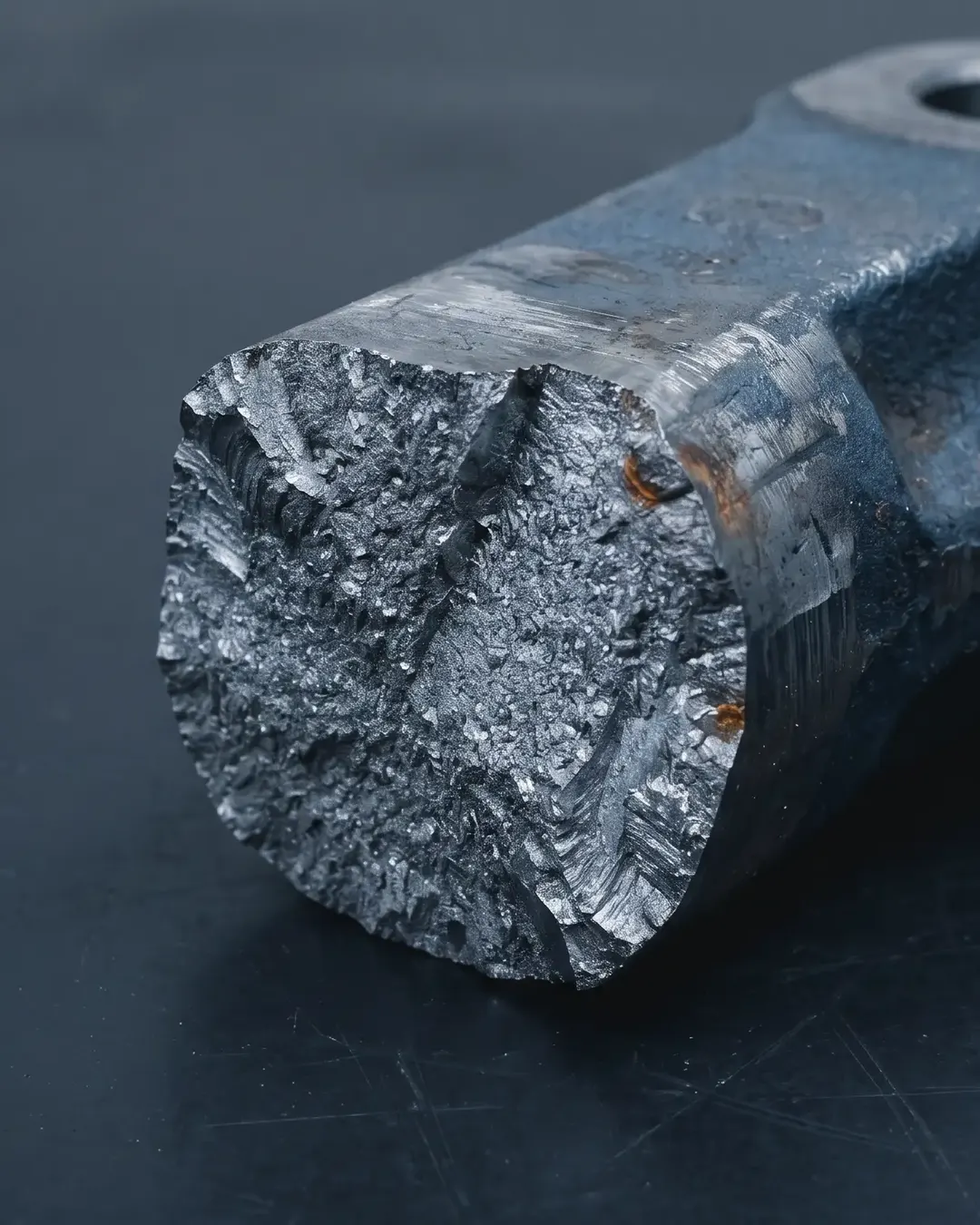
A single fractured steel component on a dark bench, lit from above, fracture face toward the lens

Industries

Insurance Referee Surveying

No equity in the insured asset, no contract with the manufacturer, no interest in the outcome. TCR reads the claim through SEM fractography at Vadodara and two ASM International titles that sit on integrity benches in 140-plus countries.

Request a Quote

Overview

When a boiler ruptures or a plant catches fire, India’s insurers and the global reinsurers, New India Assurance, ICICI Lombard, Bajaj Allianz, Tata AIG, GIC Re, Munich Re and Swiss Re, send the claim to TCR as independent neutral technical referee with the largest failure-investigation archive in India.

Overview

7 failure types investigated for insurers and reinsurers, from Boiler and pressure-equipment failure to Equipment OEM warranty. 9,000+ failure investigations, the largest independent evidence base in India, anchor TCR’s standing as the neutral referee between insurer and policyholder.

POTENTIAL FAILURES WE SERVICE: Boiler explosions, pressure-vessel ruptures, pipeline and tank fires, equipment-breakdown and process-safety incidents. TCR establishes the technical cause through root-cause failure analysis, Fitness-for-Service and pressure-equipment incident investigation per API 585, standing as the independent referee between insurer and policyholder..

Industry Context

Industrial insurance losses in India have reached a severity where forensic quality decides outcomes.

A single 2025 plant fire at Nashik was reported by the insurance market at over Rs 2,000 crore across six insurers, with about 80 percent of the loss ceded to reinsurers including GIC Re, and the post-detariffication market is repricing industrial risk on evidence rather than habit. In claims of that size, the difference between an opinion and a laboratory-proven root cause is measured in crores. TCR serves insurers, reinsurers, surveyors, and counsel as an independent referee: fire damage assessment, metallurgical failure analysis with SEM fractography, and NABL-accredited test evidence, extended into Southeast Asia through the Approved Group International alliance.

The insurance referee market routes through three buyer pools.

The general insurer pool covers the public-sector quartet (New India Assurance, United India Insurance, National Insurance, Oriental Insurance) and the private market (HDFC ERGO, ICICI Lombard, Bajaj Allianz, Tata AIG, IFFCO Tokio, Reliance General, SBI General, Future Generali, Cholamandalam MS, Royal Sundaram, Liberty General, Kotak Mahindra General, Universal Sompo, Magma HDI).

The reinsurer and broker pool covers GIC Re, foreign reinsurers operating in India (Munich Re, Swiss Re, SCOR, Lloyd's syndicates), and broker firms (Marsh, Aon, Willis Towers Watson, JLT, Howden) routing claim-investigation work to the independent third-party referee. The policyholder pool covers the operating-side buyer engaging TCR ahead of an insurance claim to establish the technical narrative (root-cause failure analysis, fitness-for-service, plant-life-extension review).

The positioning is neutral third-party referee: TCR has no equity in the insured asset, no contractual relationship with the manufacturer or EPC, and no operational interest in the outcome.

The 9,000+ failure investigation archive is the foundational evidence base. The two ASM International publications (which sit on integrity-engineering benches in 140+ countries) and the in-house Scanning Electron Microscope fleet (three SEMs at TCR Advanced Vadodara) provide the courtroom-and-arbitration credibility.

Failure Types We Investigate

Claim CategoryExamples
Boiler and pressure-equipment failureBoiler tube leak, header crack, pressure-vessel rupture, heat-exchanger tube failure, ammonia tank leak, cryogenic tank brittle fracture
Fire damageRefinery and petrochemical fire, fertiliser-plant fire, captive-power-plant fire, transformer fire, warehouse fire, residential and commercial property fire
Pipeline failureCross-country pipeline rupture, CGD distribution-network failure, offshore export-trunkline failure, third-party damage, geohazard failure, corrosion-induced leak
Structural collapseChimney and stack failure
Marine and offshoreVessel grounding, jacket-structure damage, mooring failure, jetty-pile failure
Process incidentReactor temperature excursion (the HMEL 503-R-001 case framework), urea-reactor passivation breakdown, ammonia synthesis-loop failure
Equipment OEM warrantyFirst Article Qualification dispute, manufacturing-defect verification, vendor-source-inspection dispute

Damage Mechanism Coverage

Aligned to API RP 571 (refining), the ASM Handbook Volume 11A chapter on boilers, the WRC 489 / 488 / 490 series. The full damage-mechanism taxonomy spans approximately 70 mechanisms (the AiOM platform damage-mechanism library reach).

The investigative workflow: visual, NDT, replication per ASTM E1351, hardness, mechanical and chemical, fractography (SEM and EDS), microstructural analysis, FEA where loading is in question, damage-mechanism attribution, and a written report fit for litigation, insurance, or operator action.

The 5-role team architecture (metallurgical engineer, mechanical and design engineer, ASNT Level III inspection engineer, site in-charge, certified NDT technicians) extends to the referee engagement.

Standards Coverage Matrix

Failure Analysis: ASM Handbook Vol. 11A (2021, the Haribhakti and Joshi co-authored chapter on boilers); API RP 571 3rd ed. (2020); WRC 489, WRC 488, WRC 490; ASTM E1351 (in-situ replication).

Fitness for Service: API 579-1/ASME FFS-1 4th ed. (2021); BS 7910.

Fire Damage: API 579-1 Part 11; BS 8408 (fire-damaged concrete assessment).

Insurance and Loss Adjustment: IRDAI guidelines for surveyors and loss assessors (India); Lloyd's of London Underwriting Code; Munich Re, Swiss Re, SCOR loss-adjustment frameworks where the reinsurer is the buyer.

Forensic: Locard's Exchange Principle (the foundational forensic framework); SWGMAT (Scientific Working Group on Materials Analysis); IAI (International Association for Identification) framework where applicable.

Named Clients (Indian General Insurers and Reinsurers)

Public-sector general insurers: New India Assurance, United India Insurance, National Insurance, Oriental Insurance. Reinsurer. GIC Re.

Private general insurers: HDFC ERGO, ICICI Lombard, Bajaj Allianz, Tata AIG, IFFCO Tokio, Reliance General, SBI General, Future Generali, Cholamandalam MS, Royal Sundaram, Liberty General, Kotak Mahindra General, Universal Sompo, Magma HDI.

Foreign reinsurers (operating in India): Munich Re, Swiss Re, SCOR, Lloyd's syndicates.

Brokers: Marsh, Aon, Willis Towers Watson, JLT, Howden.

Surveyor firms: IRDAI-licensed loss-adjusters and surveyors routing referee work for technical adjudication.

Marquee Engagements

Engagement ClassReference
The HMEL Bhatinda Isomerization Reactor 503-R-001 FFS fileThe 2012 temperature-excursion event later monitored through 2019 with no shutdown, no replacement

As an independent referee, TCR investigates catastrophic explosions, fires, and equipment failures for general insurers and reinsurers, with cause-and-origin findings that hold up in litigation. The evidentiary base is the 9,000-plus failure investigations in the technical database. Fire-damage assessment of refinery and storage assets, including the HMEL Bathinda VGO reactor following a 2024 fire, anchors the post-loss engineering work.

Service Applications Across the Claim Lifecycle

Insurance referee work follows the claim, not the plant, so the Continuum adapts to the claim lifecycle: incident response, damage assessment, root cause determination, reinstatement verification, and subrogation support. The recurring pressures are speed, an insurer needs a defensible technical position before positions harden, neutrality between insured, insurer, and reinsurer, and evidence quality that survives legal scrutiny.

Incident Response: Rapid site attendance after fire, explosion, machinery breakdown, or structural failure, with evidence preservation, photographic and dimensional records, and sampling protocols that keep every later finding admissible.

Damage Assessment: Quantification of damage extent: fire damage assessment per API 579-1/ASME FFS-1 Part 11 methodology on process equipment, hardness and in-situ metallographic surveys to map heat-affected zones, structural condition assessment, and the repair-versus-replace boundary drawn on measurement.

Root Cause Determination: Root cause failure analysis in the NABL-accredited laboratory, fractography, metallurgical evaluation, chemical analysis, and mechanical verification, distinguishing design, material, operation, and maintenance causes, the distinction on which liability and subrogation turn.

Reinstatement Verification: Independent verification that repairs and replacements meet specification: material certification review, weld inspection, post-repair non-destructive testing, and fitness for service confirmation before the asset returns to duty.

Subrogation and Litigation Support: Expert technical reports structured for loss adjusters, insurers, reinsurers, and counsel, with the laboratory evidence chain, standard citations, and the neutral third-party position that makes the TCR signature usable in recovery proceedings.

Why Insurers Choose TCR

  • Neutral third-party referee position. TCR has no equity in the insured asset, no contract with the manufacturer or EPC, and no operational interest in the outcome.
  • 9,000+ failure investigation archive. The single largest evidence base in India to compare a disputed event against historical patterns.
  • Published authority on the highest-stakes integrity classes. The two ASM International titles distributed in 140+ countries make the Haribhakti and Joshi names defensible in courtroom and arbitration testimony.
  • In-house SEM and EDS at scale. Three Scanning Electron Microscopes at TCR Advanced Vadodara: Pemtron SS100, Jeol JCM 6000+, and Phenom XL G2 at 60,000x magnification with CeB6 source. The fractography record sits at the appellate evidentiary threshold.
  • NABL ISO/IEC 17025:2017 accreditation with ILAC MRA reciprocity. Reports are accepted across 90+ economies without re-testing, which removes a procedural objection in cross-border claims.
  • The integrated FFS-and-RCFA workflow. TCR can issue a single end-to-end report covering damage mechanism attribution, FFS calculation against the relevant code, and remediation recommendation; the insurer does not have to coordinate multiple specialists.
  • The TCRADV/TM-66 5-role team architecture for FFS engagements applies on referee work as well, which keeps the technical-adequacy threshold aligned with the API 579 / BS 7910 framework.
  • The IBR Well-Known RLA Organisation status under Indian Boiler Regulations for boiler-related insurance referee work.

Related insights

No insight on this site is tagged to Insurance & Referee yet. The company posts below carry the capability that this sector calls on most often.

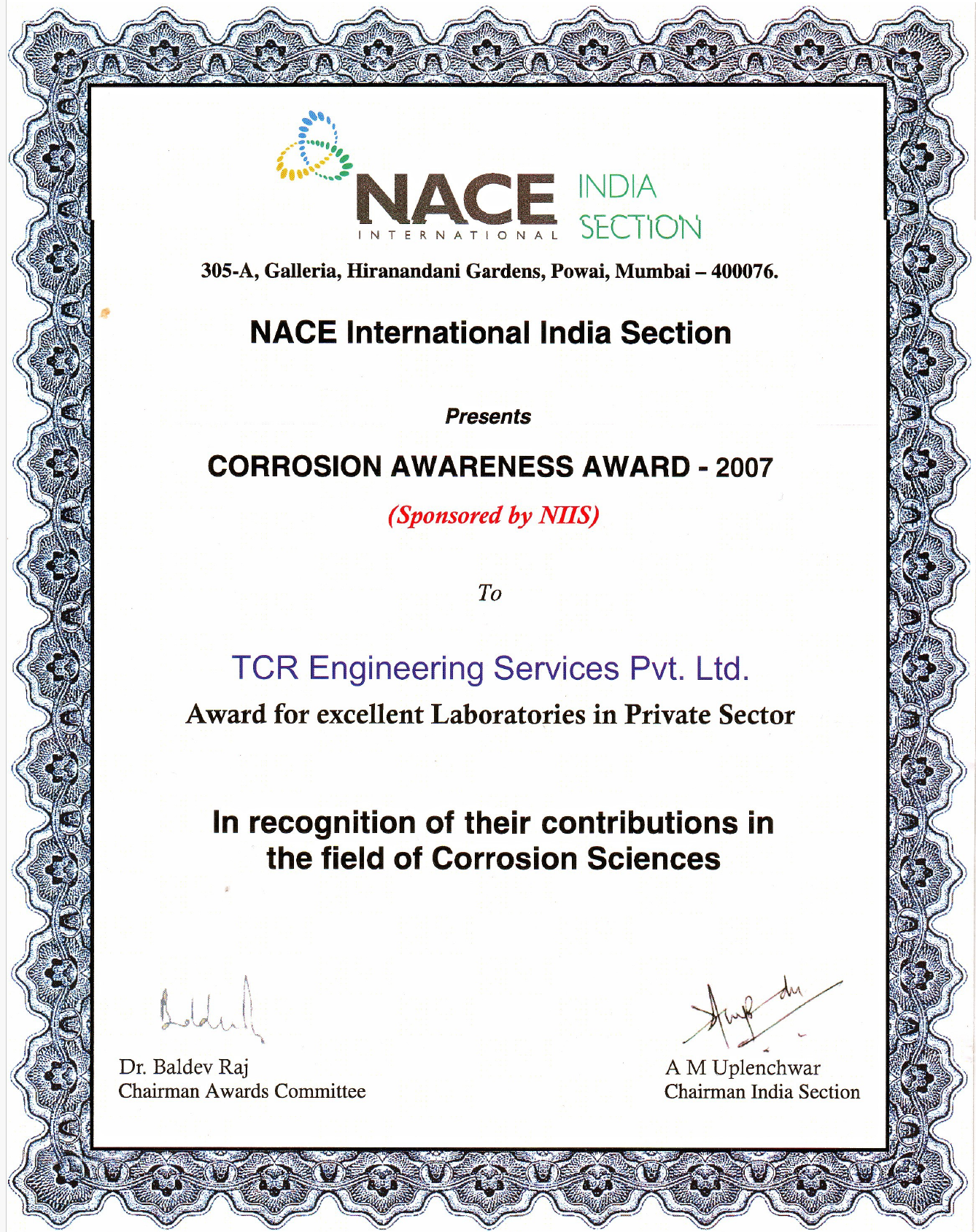
Insurance & Referee · 2007-09-17

Approved by Halliburton

TCR Engineering Services has been approved and recommended for services performed for Halliburton.

Read all insights →

Frequently asked questions

Why do insurers appoint TCR as an independent technical referee?

TCR has no equity in the insured asset, no contract with the manufacturer or EPC, and no operational interest in the outcome. The findings rest on a 9,000-plus failure investigation archive, in-house SEM fractography and NABL-accredited test evidence, structured to hold up in litigation and arbitration.

Which insurers and reinsurers work with TCR?

The buyer pool spans the public-sector quartet of New India Assurance, United India Insurance, National Insurance and Oriental Insurance, private insurers including HDFC ERGO, ICICI Lombard, Bajaj Allianz and Tata AIG, reinsurers GIC Re, Munich Re, Swiss Re and SCOR, and brokers such as Marsh, Aon and Willis Towers Watson.

Which insurers and reinsurers is the referee work written for?

The buyer pool spans the public-sector quartet of New India Assurance, United India Insurance, National Insurance and Oriental Insurance, private insurers including HDFC ERGO, ICICI Lombard, Bajaj Allianz and Tata AIG, reinsurers GIC Re, Munich Re, Swiss Re and SCOR, and brokers such as Marsh, Aon and Willis Towers Watson.

How does TCR assess fire damage?

Fire damage assessment runs per API 579-1/ASME FFS-1 Part 11 on process equipment, with hardness and in-situ metallographic surveys mapping heat-affected zones and BS 8408 covering fire-damaged concrete. The HMEL Bathinda VGO reactor assessment after a 2024 fire anchors the post-loss engineering record.

What laboratory evidence supports referee findings?

Root cause failure analysis runs in the NABL-accredited laboratory with SEM and EDS fractography on three scanning electron microscopes at TCR Advanced Vadodara, replication per ASTM E1351, mechanical and chemical verification, and damage-mechanism attribution aligned to API RP 571 and ASM Handbook Volume 11A.

Can TCR support subrogation and litigation?

Yes. Expert technical reports are structured for loss adjusters, insurers, reinsurers and counsel, with the laboratory evidence chain, standard citations and the neutral third-party position that makes the TCR signature usable in recovery proceedings, backed by ASM International publications distributed in 140-plus countries.

Settle the claim on metallurgical evidence, not on assertion.

Request a Quote