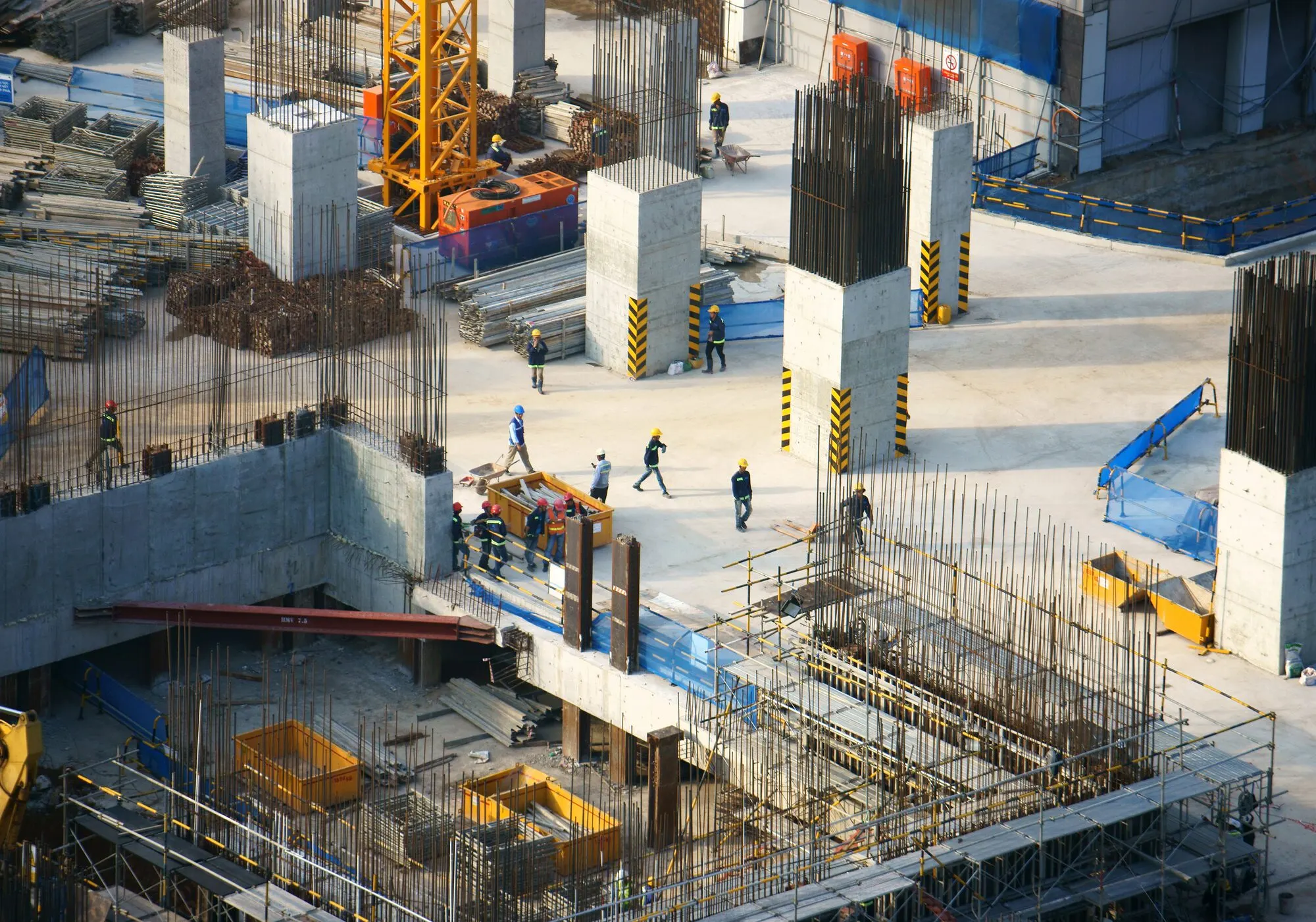
Third Party Testing of Construction Materials: Your Complete Quality Assurance Partner in India
TCR Engineering's third party testing ensures construction material quality through IS-compliant concrete, aggregate, and admixture testing.

Group
Industries
Maharashtra requires a structural audit every five years past fifteen years of age, and every three past thirty. TCR is a registered structural auditor with BMC and CIDCO, carrying the audit through to structural stability certification.
Request a QuoteGodrej Properties and Kalpataru awards TCR a three-year materials-testing rate contract spanning the entire Mumbai zone testing Concrete and Cement. IS 456 (plain and reinforced concrete); IS 1343 (prestressed concrete); IS 4031 (cement physical tests); full standards coverage matrix below.
India’s leading developers build on TCR-tested materials: Godrej Properties (a three-year, all-Mumbai-zone rate contract), plus Lodha, Shapoorji Pallonji, Kalpataru, Oberoi, K. Raheja, DLF, Prestige and Brigade, backed multiple Maharashtra Clause 77 structural audits.
POTENTIAL FAILURES WE SERVICE: Cracking, deflection and water-ingress distress in reinforced and prestressed structures, façades and waterproofing; structural-audit findings on ageing buildings. TCR investigates carbonation and chloride corrosion of reinforcement, alkali-silica reaction, sulphate attack, prestress-tendon corrosion, façade-panel and sealant failure and tile-bond loss, and verifies repair and rehabilitation under Maharashtra Clause 77.
India’s leading developers build on TCR-tested materials, anchored by Godrej’s three-year Mumbai-zone rate contract and 1,200-plus Maharashtra Clause 77 structural audits.
The built environment has a statutory inspection clock. Maharashtra's structural audit regime alone requires buildings between 15 and 30 years of age to be audited every five years and buildings older than 30 years every three years, and the redevelopment wave across Mumbai and Thane keeps thousands of structures moving through that cycle each year.
Municipal corporations will only accept audits from registered, competent agencies. TCR is a registered structural auditor with BMC and CIDCO among others, and pairs the statutory audit with the full evidence chain: visual inspection, non-destructive evaluation, materials testing in a NABL-accredited laboratory, and repair and rehabilitation consultancy through to structural stability certification.
The Indian real-estate and construction sector is the second-largest employer after agriculture and contributes approximately 7 percent of GDP. The capex pipeline runs across residential (the Pradhan Mantri Awas Yojana, the Mumbai Metropolitan Region high-rise stock, the Pune-Bangalore-Hyderabad gated community wave, the Delhi-NCR National Capital Region housing programme), commercial (Grade A office towers in Mumbai BKC, Pune Hinjewadi, Bangalore Whitefield-ORR, Hyderabad HITEC City, Gurugram, Noida), retail (mall expansion in Tier 2 and Tier 3 cities), industrial (warehousing under the National Logistics Policy, cold storage, data centres at Chennai, Mumbai, Hyderabad, Bangalore), and the monumental construction programme (cross-vertical with Infrastructure Section 11j).
The Maharashtra Clause 77 structural-audit framework on the 30,000+ Mumbai building stock is the highest-volume civic-mandate scope. The buyer pool is the property developer, the building society, the housing federation, and the local self-government (Brihanmumbai Municipal Corporation BMC). The Long-Term Rate Contracts (LRCs) with Godrej Properties (3-year, all Mumbai Zone, April 2026 onward), Kalpataru, Shapoorji Pallonji, Rustomjee, plus second-tier developers, anchor the recurring revenue stream.
Net-zero building design brings new structural-load demands (lighter mass, alternative materials), recycled-aggregate concrete qualification, geopolymer cement qualification, and embodied-carbon-driven material substitution scope (steel-to-engineered-timber, conventional concrete to low-clinker mixes). Building-integrated photovoltaics (BIPV) bring structural-steel testing for panel-mounting structures (cross-vertical with Civil and Steel). The shift to electric building services (EV charging, all-electric kitchen, heat-pump-based HVAC) brings load-density-driven structural-audit recalibration. Climate-resilience capex (flood-resistant building design, scour-mitigation engineering, cyclone-resistant façade and cladding) brings new testing scope. The Maharashtra Clause 77 structural-audit framework continues at scale as the Mumbai building stock ages.
TCR is the materials-testing, NDT, and structural-audit bench for the Indian real-estate and construction industry, with named LRCs at Godrej, Kalpataru, Shapoorji Pallonji, and Rustomjee, the BIS-accredited rebar coupler capability is the structural moat.
| Cluster | Equipment / Material |
|---|---|
| Concrete | Cast-in-place reinforced concrete (RCC) shell, post-tensioned slab, prestressed concrete beam, AAC block masonry, ready-mix concrete (RMC) plant production |
| Steel Structural | Hot-rolled structural sections (IS 2062), built-up girders, hollow structural sections (HSS), pre-engineered building (PEB) framing |
| Reinforcement | TMT rebar (IS 1786), reinforcement coupler (IS 16172, the BIS-accredited first-in-India anchor), HT strand for prestressed concrete (IS 14268), pull-out test per IS 2770 |
| Cement and Aggregate | OPC and PPC cement, fly ash, GGBFS, river sand, manufactured sand (M-sand), coarse aggregate, fine aggregate |
| Building Material | AAC blocks (IS 2185 Part 3 plus thermal conductivity per ASTM C177 / ISO 8302; the May 2026 net-new application), tile adhesive (IS 15477 comprehensive), tile, glass and glazing (IS 2553, IS 16231), aluminium formwork |
| Coating and Membrane | Waterproofing membrane (PVC, TPO, EPDM, bitumen-based), exterior paint, anti-carbonation coating, waterproof admixture per IS 2645 |
| Façade and Cladding | Aluminium composite panel (ACP), glass curtain wall, terracotta cladding, stone cladding |
| Plumbing and Drainage | Manhole and gully top (BS EN 124-5 fatigue), CPVC and PPR piping, cast-iron sewer line |
| Heritage and Restoration | Stone pieces, lime mortar, traditional roofing, structural-stability assessment of heritage buildings |
| Civic Infrastructure | Street furniture, park infrastructure, pedestrian overpass, public-toilet structural verification |
| Equipment | Mechanisms |
|---|---|
| Reinforced concrete | Carbonation-induced corrosion of reinforcement, chloride-induced corrosion (coastal exposure), alkali-silica reaction (ASR), sulphate attack, freeze-thaw, plastic and drying shrinkage, creep, delayed ettringite formation (DEF), settlement-induced cracking |
| Prestressed concrete | Stress corrosion cracking on HT strand under tendon ducts; prestress loss; grout voids in tendon ducts; corrosion at tendon anchorage |
| Structural steel | Coating breakdown, atmospheric corrosion, weld toe cracking, fatigue at riveted and bolted connections, fire-damage residual capacity |
| Façade and cladding | Sealant failure, ACP delamination, panel pull-out, glass spontaneous fracture (NiS inclusion), curtain-wall thermal-cycling fatigue |
| Tile and adhesive | Bond failure (low pull-off strength), sub-floor crack propagation, efflorescence under tile, tile fracture under traffic load |
| AAC block | Compressive-strength loss under wet condition, thermal-conductivity drift under humidity, dimensional instability |
| Waterproofing | Membrane puncture, seam failure, UV-induced ageing, root penetration, root-thermal-cycling failure |
| Plumbing and drainage | Manhole and gully top fatigue per BS EN 124-5; sewer line corrosion; trench reinstatement settlement |
| Heritage | Lime-mortar weathering, masonry-joint erosion, stone weathering, settlement-induced cracking, salt efflorescence |
Concrete and Cement: IS 456 (plain and reinforced concrete); IS 1343 (prestressed concrete); IS 4031 (cement physical tests); IS 8112 (43-grade OPC); IS 12269 (53-grade OPC); IS 1489 (Portland Pozzolana Cement); IS 516 (compressive strength); IS 1199 (sampling); IS 2386 (aggregate methods); IS 383 (aggregate specification); ASTM C39, C496, C617; EN 12390 series.
Reinforcement and Couplers: IS 1786 (TMT rebar); IS 16172 (rebar couplers, the BIS-accredited first-in-India anchor); IS 2770 (pull-out test); IS 14268 (HT strand for prestressed concrete); IS 2090 (high-tensile bars); IS 1367 (fasteners); ACI 318; ASTM A615, A416, A1064; EN 10138.
Structural Steel: IS 800 (general construction in steel, code of practice); IS 1893 (criteria for earthquake-resistant design of structures); IS 875 Parts 1 to 5 (loads); AISC 360; AWS D1.1; IS 1239 (steel tubes); IS 2062 (structural-grade steel).
Building Material: IS 2185 Part 3 (AAC blocks); ASTM C177 / ISO 8302 (thermal conductivity Guarded Hot Plate; the May 2026 net-new); IS 15477 (tile adhesive); IS 2553 (safety glass); IS 16231 (glass cladding); IS 9498 (linear thermal expansion); IS 2645 (waterproofing admixtures); IS 14209 (fly-ash bricks).
NDT for Concrete: IS 13311 Part 1 (UPV); IS 13311 Part 2 (rebound hammer); ASTM C876 (half-cell potential); ASTM C1383 (impulse-echo); BS 1881 series (testing concrete).
Drainage and Civic: BS EN 124-5 (manhole and gully top fatigue up to 900 mm); IS 3597 (manhole covers).
Structural Audit: Maharashtra Clause 77 framework; BIS guidance.
Coating (cross-vertical): ASTM D3359, D4541, D7091; ISO 12944.
For construction and the built environment the Continuum adapts to the building lifecycle: materials qualification, construction and finishing quality assurance, occupancy-stage condition assessment, redevelopment and repair, and residual life certification.
The recurring problems for developers and societies are material quality across a fragmented vendor base, finishing works defects that surface after handover, reinforcement corrosion and structural distress in the ageing Mumbai building stock, and the statutory trigger of the Maharashtra Municipal Corporation Act Clause 77 structural audit. The redevelopment decision is this vertical's turnaround: repair or rebuild, and the evidence has to survive scrutiny by societies, developers, and municipal authorities alike. TCR Engineering services all five adapted stages, with the real-estate developer interface led through the business development bench.
Stage One, Materials Qualification (Sourcing and Procurement): Building materials are qualified at intake: cement, aggregates, and concrete constituents, TMT reinforcement per IS 1786 and couplers per IS 16172, autoclaved aerated concrete blocks, tiles, aluminium formwork systems, waterproofing and finishing materials, and structural steel, with the free TCR-branded sample pickup van serving developer sites across the Mumbai Metropolitan Region.
Stage Two, Construction and Finishing Quality Assurance (Construction and Commissioning): Through the build, TCR provides cube and core testing per IS 516, non-destructive concrete evaluation per IS 13311 Parts 1 and 2, anchor and fastener pull-out testing, plumbness surveys on towers, welding inspection on structural and facade steel, and building finishing works testing, tiles, blocks, and fit-out materials, so handover happens against measured quality rather than visual acceptance.
Stage Three, Occupancy-Stage Condition Assessment (In-Service): On occupied buildings, TCR delivers structural audits under Maharashtra Municipal Corporation Act Clause 77, half-cell potential and carbonation surveys, facade and waterproofing condition assessment, ground penetrating radar for embedded services and voids, and thermography for moisture ingress and electrical hotspots, producing the condition evidence societies and municipal authorities require.
Stage Four, Redevelopment and Repair (Shutdown and Turnaround Equivalent): At the repair-or-redevelop decision, TCR provides distress mapping, repair specification support, cathodic protection of reinforced concrete, load testing of strengthened members, and post-repair verification, and for redevelopment, the dilapidation surveys and material recovery assessments that de-risk the transition.
Stage Five, Residual Life Certification (Continuum): The engineering stage delivers residual life assessment and structural stability certification, collapse and distress investigation, engineering design review of retrofit schemes, and durability engineering for the next generation of the asset, closing the lifecycle for developer, society, and authority together.
India Real Estate Developers (LRC anchors): Godrej Properties (3-year LRC, all Mumbai Zone, April 2026 onward), Kalpataru, Shapoorji Pallonji, Rustomjee, Lodha (Macrotech Developers), Oberoi, K. Raheja, DLF, Prestige Group, Brigade Group, Sobha, Embassy, Phoenix Mills, Hiranandani, Wadhwa Group, Piramal Realty, Tata Realty, Mahindra Lifespaces, Adani Realty, Sunteck Realty, Ajmera, Runwal.
India EPC and Construction: Larsen and Toubro Construction, Tata Projects, Hindustan Construction Company (HCC), Afcons Infrastructure, J. Kumar Infraprojects, Patel Engineering, Reliance Infrastructure, Dilip Buildcon, PNC Infratech, KNR Constructions, IRB Infrastructure.
India Government and Civic: Brihanmumbai Municipal Corporation (BMC; the March 2026 Roads Department registration; Maharashtra Clause 77 structural-audit empanelment); Mumbai Metropolitan Region Development Authority (MMRDA); CIDCO (Maharashtra empanelment for materials testing); Maharashtra Public Works Department (cross-vertical reference).
Cement and RMC: UltraTech Cement, ACC, Ambuja Cements, Lafarge-Holcim, Birla Corp, Shree Cement, Dalmia Cement, Heidelberg Cement, JSW Cement.
Anchor Monumental Construction (cross-vertical reference): Larsen and Toubro for Statue of Unity; Adi Shankaracharya Statue of Oneness; Antilia (Mumbai); Wankhede Stadium.
| Project | Service Anchor | Year |
|---|---|---|
| Godrej Properties (3-year LRC, all Mumbai Zone) | Long-Term Rate Contract for materials testing across Godrej Mumbai-Zone properties | April 2026 onward |
| Kalpataru, Shapoorji Pallonji, Rustomjee | Long-Term Rate Contracts | Continuous |
| 1,200+ structural audits (Maharashtra Clause 77, Mumbai building stock) | Visual condition survey, GPR, UPV, rebound hammer, half-cell potential, cover meter, drone capture, core extraction | Continuous |
| BMC March 2026 Roads Department registration | Mumbai municipal roads programme | March 2026 onward |
| Mumbai Coastal Road Project | Civil testing, sub-water bridge-pier inspection | Continuous |
| Larsen and Toubro Statue of Unity year-long onsite engagement | Continuous on-site materials and NDT | Construction era |
Godrej Properties signed a long-term rate contract for civil testing across its Mumbai zone in April 2026. Reinforcement-coupler qualification runs to the full IS 16172:2023 scope, where TCR is the first and only BIS-accredited commercial laboratory in India, and structural-audit work proceeds under Maharashtra Clause 77. The Mumbai-Ahmedabad High Speed Rail civil packages draw on the same concrete, reinforcement, and structural-steel testing.
26 published insights on this site carry the Construction tag. The 6 most recent are below.
TCR Engineering's third party testing ensures construction material quality through IS-compliant concrete, aggregate, and admixture testing.
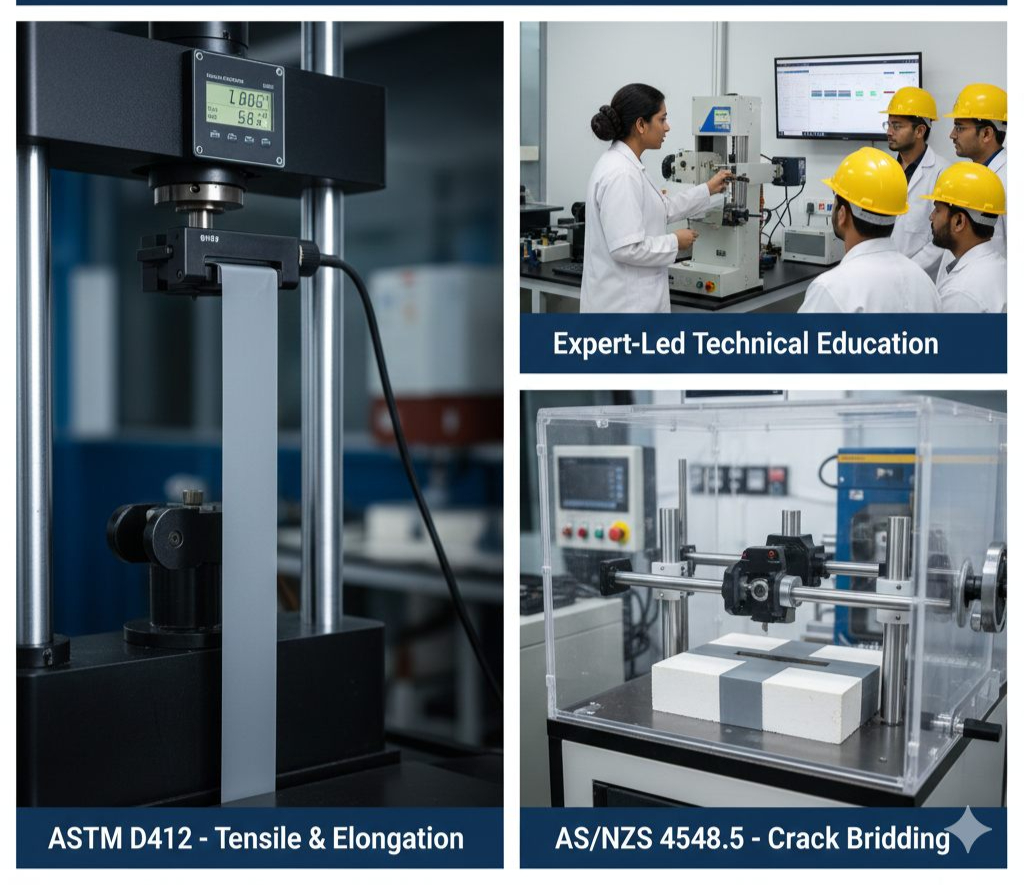
Coating and membrane testing per ASTM D412 and AS/NZS 4548.5 reveals tensile strength and crack bridging. TCR validates waterproofing performance.
TCR Engineering's pull-out test on TMT bars evaluates bond strength for Fe 550D reinforcement from 8mm to 32mm diameter following IS 2770.
TCR Engineering wins 3-year civil testing rate contract from Godrej Properties for all Mumbai Zone residential projects.
TCR Engineering's civil lab receives BMC approval for construction material testing across chemical, mechanical, and NDT disciplines.
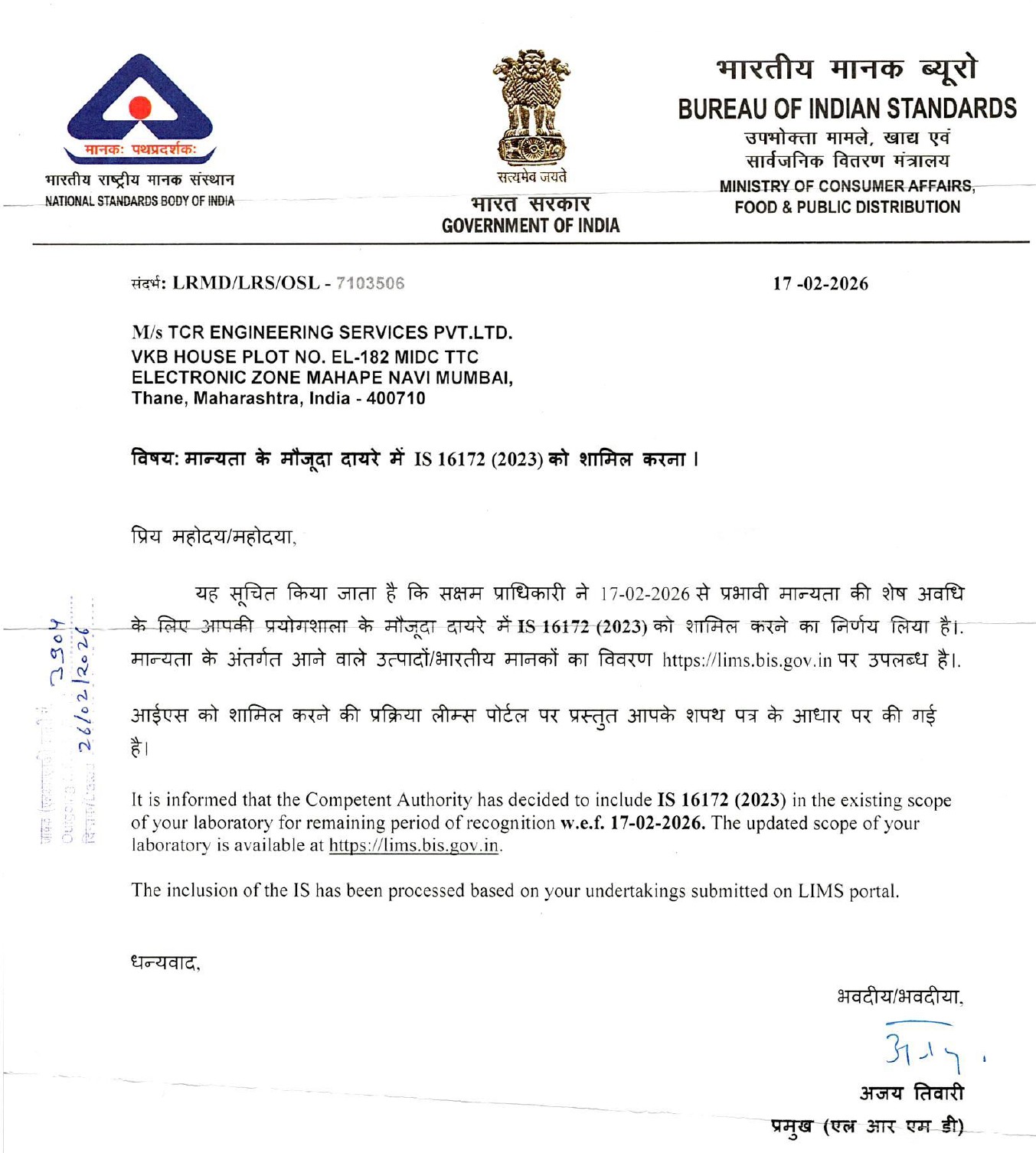
TCR Engineering is India's first commercial lab with BIS accreditation for IS 16172 rebar coupler testing — full scope, all diameters.
Yes. TCR is a registered structural auditor with BMC and CIDCO among others, with 1,200-plus structural audits completed across India. Buildings between 15 and 30 years of age must be audited every five years, and buildings older than 30 years every three years.
Yes. TCR Engineering is the first BIS-accredited commercial laboratory in India for IS 16172 rebar coupler testing, covering all diameters 8 mm to 40 mm, alongside TMT rebar per IS 1786, pull-out testing per IS 2770 and HT strand per IS 14268.
Godrej Properties signed a three-year long-term rate contract covering its entire Mumbai zone from April 2026, and Kalpataru, Shapoorji Pallonji and Rustomjee run long-term rate contracts as well. The wider developer base includes Lodha, Oberoi, K. Raheja, DLF, Prestige and Brigade.
Structural audits combine ultrasonic pulse velocity per IS 13311 Part 1, rebound hammer per IS 13311 Part 2, half-cell potential per ASTM C876, cover meter, carbonation surveys, ground penetrating radar, drone capture and core extraction, with cube and core testing per IS 516 during construction.
Yes. The laboratory tests AAC blocks per IS 2185 Part 3 with thermal conductivity per ASTM C177 and ISO 8302, tile adhesives per IS 15477, safety glass per IS 2553, waterproofing admixtures per IS 2645, and manhole and gully tops per BS EN 124-5.